
Your “swag closet” isn’t a storage solution; it’s a graveyard for your marketing budget. Most organizations treat merchandise as a last-minute line item, resulting in generic products that employees discard and logistics that overwhelm your internal teams. Effective corporate swag management in 2026 requires moving past the vendor mentality to embrace a sophisticated media strategy. You likely feel the frustration of inconsistent branding across global offices and the hidden costs of manual fulfillment, but it doesn’t have to be a logistics nightmare.
This guide will show you how to transform generic giveaways into a high-touch brand experience that drives measurable ROI. We’ll explore how a Merch is Media™ philosophy turns physical items into strategic assets that influence culture and loyalty. You’ll learn how to build a streamlined program that delivers high-quality items employees actually keep, leveraging global fulfillment without the manual effort. We’re moving beyond the logo to treat your merchandise with the same strategic rigor as any other high-stakes marketing investment.
Key Takeaways
- Shift your perspective from buying “stuff” to managing a strategic media channel that drives long-term brand equity.
- Professional corporate swag management solves the “operational gap” by replacing messy storage closets with a streamlined, global fulfillment system.
- Identify how to map products to specific audience needs to ensure your merchandise is kept, used, and valued rather than discarded.
- Learn the benefits of the “Chief Swag Officer” model, which positions your merchandise partner as a strategic extension of your internal team.
- Gain a framework for calculating ROI by treating physical brand experiences with the same analytical rigor as digital advertising spend.
What is Corporate Swag Management? Redefining the Asset Class
The term “SWAG” has long served as an acronym for “Stuff We All Get.” For high-growth brands in 2026, this definition is a failing mindset. It implies that merchandise is a generic, low-value commodity distributed without purpose. Professional corporate swag management has evolved into a holistic system that views physical products as strategic assets rather than disposable giveaways. It’s no longer about a simple checkout process on a website; it’s about a managed ecosystem of strategy, creative development, and global fulfillment.
Most companies still treat merchandise as a tactical purchase. They wait until a week before a trade show to order a batch of cheap plastic items. This creates a significant brand disconnect. In a digital-first world where most interactions happen behind a screen, the tactile touchpoint of a physical gift carries immense weight. High-quality merchandise is one of the few ways to create a physical brand experience that lasts. Strategic sourcing replaces the old “purchasing” model by focusing on the long-term impact of every item delivered.
The Difference Between Swag and Strategic Merchandise
There is a profound psychological difference between receiving a generic giveaway and a curated brand gift. A cheap, disposable pen doesn’t just fail to impress; it actively devalues your brand by signaling that you prioritize low cost over the recipient’s experience. Verified research shows that 45% of corporate buyers now cite longevity as the most important feature when selecting items. This shift reflects a move toward quality that recipients actually value.
When you view promotional merchandise as a strategic tool, you transition from a vendor-client relationship to a strategic partnership. You’re no longer looking for the lowest price per unit. You’re looking for the highest impact per impression. This requires a partner who understands your brand’s long-term objectives and can source products that align with your premium market position. It’s the difference between a product that ends up in a junk drawer and one that stays on a client’s desk for years.
Swag as a Cultural Catalyst
Physical items play a vital role in bridging the gap within hybrid and remote work environments. Without a physical office, curated merchandise becomes the connective tissue of company culture. It’s a tangible reminder of belonging. This is especially critical during employee onboarding, where a thoughtful welcome kit sets the tone for the entire employee lifecycle and aids in long-term retention.
Strategic corporate swag management ensures that every item serves a purpose. By adopting the Merch is Media™ philosophy, you treat your physical assets with the same rigor as your digital ad spend. This turns your brand into a lived experience that influences loyalty and relationships. For more on how to use these tools effectively, see our guide on meaningful employee recognition.
The Merch is Media™ Philosophy: Treating Products Like a Channel
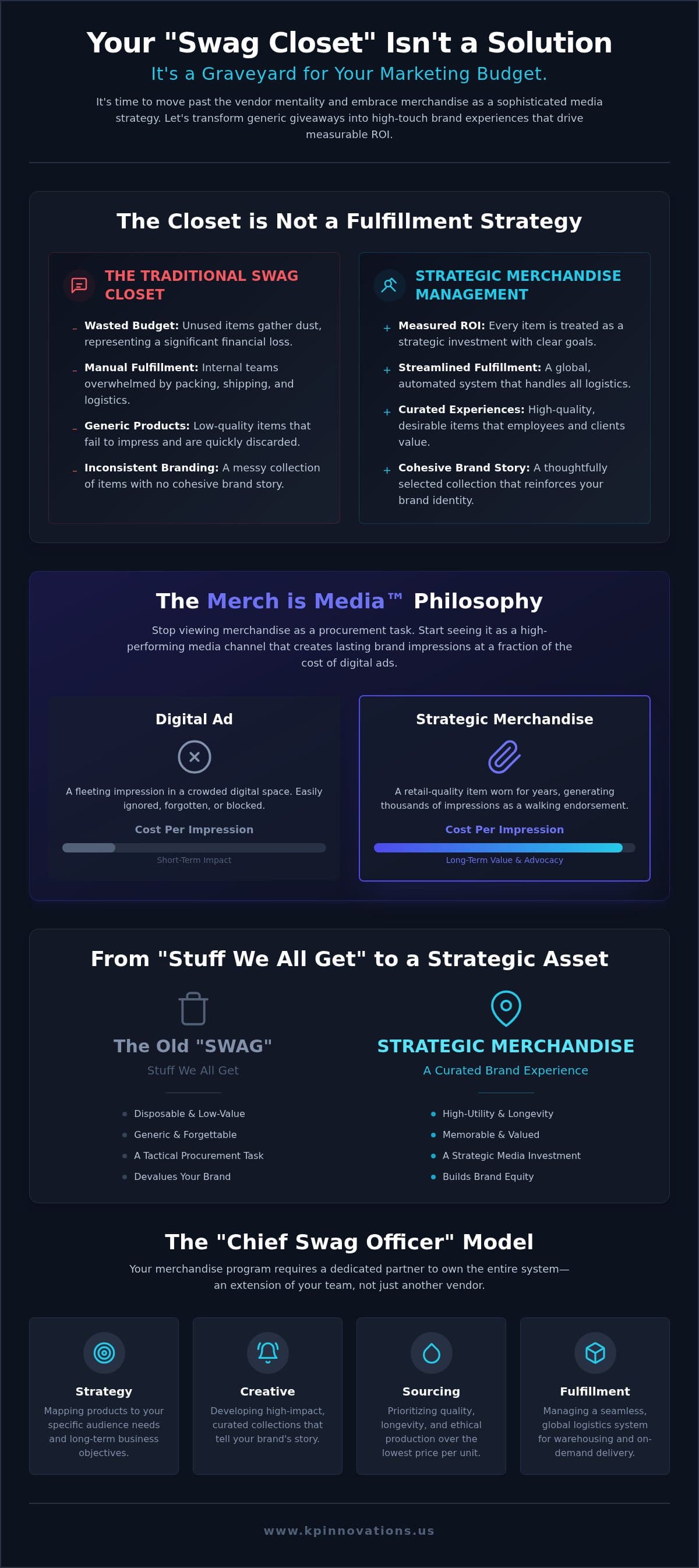
To master corporate swag management, you must stop viewing merchandise as a procurement task and start seeing it as a high-performing media channel. Just as you wouldn’t dump your entire digital ad budget into unoptimized, low-quality placements, you shouldn’t invest in physical products without a strategic framework. Our Merch is Media™ Philosophy treats every branded item with the same analytical rigor you apply to your digital marketing spend. When physical assets are deployed correctly, they function as a broadcast channel that creates lasting brand impressions at a fraction of the long-term cost of social media ads.
Consider the “Cost Per Impression” of a retail-quality jacket versus a single-click digital ad. A high-end garment that an employee wears twice a week for three years generates thousands of impressions. These aren’t just passive views; they are endorsements from organic brand advocates. By treating products as media, you move from “buying stuff” to investing in walking billboards that represent your brand in the real world. This approach requires a shift in how you allocate your budget, prioritizing items with high utility and longevity over disposable novelties.
The Tactile Advantage of Physical Brand Touchpoints
Digital fatigue is real. In an era where consumers ignore thousands of digital ads daily, physical items provide a rare opportunity for a tactile brand experience. A strategic gift creates a memory that a cold email simply cannot replicate. This is often the key to Modern Marketing With Branded Swag, where the focus is on building loyalty rather than just awareness. The unboxing experience and premium presentation of a gift signal that you value the relationship, opening doors that remain closed to traditional outreach.
Measuring the Impact of Your Physical Media
The success of your program shouldn’t be measured by the number of units ordered. Instead, focus on brand engagement metrics. Are recipients wearing the apparel? Is the drinkware visible on their desks during video calls? Tracking the lifecycle of an item tells you more about your ROI than a receipt ever could. If an item is discarded, it wasn’t a gift; it was waste. If it’s used daily, it’s a successful media placement.
Effective corporate swag management relies on strategic sourcing to ensure every product aligns with your brand standards and audience expectations. By selecting retail-aligned brands that people already love, you ensure your “media” stays in circulation longer. Merch is Media™ is the strategic marketing investment that turns physical assets into a vital channel for driving culture, loyalty, and long-term relationships.
The Closet is Not a Fulfillment Strategy: Solving the Operational Gap
Most organizations rely on a “swag closet” as their primary distribution method. This isn’t a strategy; it’s an operational failure that creates hidden costs and logistical friction. When you ask your Marketing or HR teams to manage inventory, you aren’t just buying merchandise. You’re turning high-value leaders into amateur warehouse managers. Professional corporate swag management requires a shift away from these manual, disorganized processes toward a system that values your team’s time and your brand’s reputation.
The “closet strategy” is a graveyard for your marketing budget. Items get lost, damaged, or forgotten, leading to significant inventory shrinkage. In the 2026 supply chain, the complexity of global fulfillment has only increased. With new import tariffs set at 12.5%, managing international distribution requires more than just a trip to the local shipping center. It demands a sophisticated partner who understands the nuances of customs, duties, and global logistics to ensure your brand reaches its destination without delay.
The True Cost of Manual Logistics
Consider the hourly cost of your high-level team members. When a marketing director spends three hours packing boxes for an event, the real cost of those items skyrockets. Manual tracking always leads to “out of stock” surprises exactly when you need items most. This lack of visibility is a primary driver of wasted spend. A strategic approach to Modern Marketing With Branded Swag must include a professional logistics plan to protect your investment. International shipping pitfalls, such as incorrect documentation or unexpected fees, can leave your branded assets stranded at the border for weeks.
Centralized Fulfillment Solutions
Transitioning to strategic fulfillment and logistics services eliminates the operational gap. Centralized warehousing ensures that your brand remains consistent across all global offices without the manual effort of shipping items individually. This managed system prevents fragmented purchasing, where different departments buy from various vendors and dilute your brand identity.
- On-demand production models reduce inventory risk by only creating what you need.
- Real-time inventory tracking provides total visibility, preventing last-minute rush orders.
- Automated global distribution ensures your remote employees receive the same premium experience as your headquarters staff.
Effective corporate swag management protects your brand equity. It ensures the right item reaches the right person at the right time. Ensuring the legal protection of your intellectual property is just as critical to this equity as the physical products themselves; learn more about BN Marcas & Patentes to see how they help businesses secure their trademarks. By outsourcing the entire system, you free your internal teams to focus on high-level strategy while we handle the complex execution of your physical media channel.
How to Build a Merchandise Program That Drives ROI
Building a successful program requires moving beyond transactional buying. If your current approach involves scrolling through a catalog and hoping for the best, you’re likely wasting a significant portion of your budget. Effective corporate swag management starts with a deliberate strategy designed to solve specific business problems. By following a structured process, you transform physical items from expenses into high-performing assets that drive culture and loyalty.
- Step 1: Define the Objective. Every project must have a clear purpose. Are you driving employee retention, generating sales leads, or rewarding high-performing partners? Without a defined goal, ROI is impossible to measure with rigor.
- Step 2: Audience Mapping. Research shows that 91% of recipients feel more valued when they receive items from recognized retail brands. Map your merchandise to the lifestyle and needs of your audience to ensure the items are actually used.
- Step 3: Strategic Sourcing. Prioritize longevity over volume. It’s better to give ten people a premium item they’ll keep for years than to give a thousand people a plastic gadget that ends up in a landfill within a week.
- Step 4: Creative Development. Move beyond basic logo placement. Modern merchandise should look like something a person would buy for themselves. Consider private label apparel and custom designs that reflect your brand’s sophisticated personality.
- Step 5: Automated Execution. Implement a system that allows for self-service without sacrificing control. This ensures your brand remains consistent while removing the manual burden from your internal teams.
Sourcing for Longevity and Quality
In 2026, the market has shifted decisively toward quality. Consumers and employees alike have a higher standard for the items they choose to bring into their homes and offices. Understanding what makes merchandise effective is essential for program success. Ethical sourcing is no longer an optional feature; it’s a core brand requirement. A strategic partner ensures your supply chain is transparent and your products are manufactured to the highest standards of social and environmental responsibility.
Using Technology to Scale the System
Scaling a global program manually is impossible. You need a centralized platform that provides total visibility into your spend and inventory. Custom company and team store solutions allow you to set specific budgets and permissions for different departments. This empowers your regional managers to order what they need while you maintain absolute control over the brand experience. Online stores eliminate the need for bulk pre-orders and the logistics nightmare discussed earlier, allowing for on-demand production that reduces waste and inventory risk.
To maximize your return, you need a strategic sourcing partner who understands the intersection of brand strategy and logistics. Stop settling for a vendor and start building a managed system that elevates your brand impact.
Partnering with a Chief Swag Officer: The Future of Brand Experience
Software platforms are often marketed as a complete solution for corporate swag management, but software alone cannot build a brand strategy. High-growth organizations don’t need another login; they need an outsourced merchandise department. Transitioning to The Chief Swag Officer Model means you gain a partner who owns the entire system. From initial creative concepts to complex global fulfillment, a strategic agency manages every detail so your team can focus on their core competencies.
This model allows you to reclaim valuable internal time while simultaneously increasing your brand equity. When professional oversight replaces internal guesswork, the result is a cohesive brand experience that resonates with your audience. You move away from the stress of manual logistics and toward a proactive, managed channel that delivers measurable impact. By treating your merchandise program as a strategic extension of your marketing team, you ensure that every dollar spent contributes to long-term loyalty and culture.
White-Glove Project Management
Dedicated program management eliminates the crushing stress of event deadlines and production hurdles. With access to 1.2 million products, the sheer volume of choices can be paralyzing for an internal team. A Chief Swag Officer curates these possibilities for you, selecting only the items that align with your specific business objectives and premium market position. A Chief Swag Officer manages the entire merchandise lifecycle from strategic sourcing and creative design through to inventory tracking and global distribution.
Choosing a Strategic Partner Over a Distributor
Most suppliers in the market are simple distributors. They take an order and ship a product without considering the broader brand impact. To determine if your supplier is a strategic partner or a transactional vendor, ask them about their approach to brand experience. Do they offer manufacturing from the ground up for private label apparel? Do they provide a framework for measuring ROI based on brand engagement? A strategic agency focuses on the long-term outcome, not just the unit price of a single order.
Working with an agency that understands the “Merch is Media™” philosophy ensures that your investment is protected and optimized. You aren’t just buying items; you’re building a strategic asset that represents your company in the physical world. It is time to stop acting as a warehouse manager and start leading your brand’s physical presence with professional precision.
Stop managing closets and start building a brand experience-Connect with a Chief Swag Officer today.
Transforming Your Physical Media Into a Strategic Powerhouse
The shift toward professional corporate swag management is no longer optional for brands that value their global reputation. You’ve seen how the Merch is Media™ philosophy turns physical items into high-performing assets that drive real engagement. By closing the operational gap and moving away from the chaotic “swag closet” model, you reclaim your team’s time and protect your budget from unnecessary waste.
As a strategic agency, we provide more than just products. We offer a managed system that includes access to over 1.2 million strategic items and expert global fulfillment services. This approach ensures your brand remains consistent across every touchpoint without the burden of manual logistics. It’s time to transition from a transactional vendor relationship to a partnership that prioritizes your long-term brand equity.
Elevate your brand strategy; Partner with a Chief Swag Officer for your next program. We’re ready to help you build a merchandise program that truly represents your high ambitions.
Frequently Asked Questions
What is the difference between swag and strategic merchandise?
Strategic merchandise is a high-performing media channel designed to solve specific business problems, whereas swag is often viewed as a generic, low-value giveaway. Swag typically prioritizes volume and low cost, which often leads to items being discarded. Strategic merchandise focuses on quality, utility, and longevity to create a lasting brand impression. This approach ensures every item serves as a meaningful brand touchpoint rather than a disposable afterthought.
How do I calculate the ROI of my corporate merchandise program?
You calculate ROI by measuring brand engagement, recipient retention, and cost per impression rather than just tracking units ordered. For example, a retail-quality jacket that an employee wears for three years generates thousands of organic impressions at a lower long-term cost than digital advertising. Tracking how often items are used versus discarded provides the most accurate data on the effectiveness of your corporate swag management efforts.
What are the most popular strategic items for 2026?
The most popular items for 2026 focus on retail-quality apparel and wellness-oriented gear that recipients actually value. Trends show a massive demand for heavyweight fleece, relaxed-cut tees, and premium insulated drinkware from recognized brands. For those curating these high-growth categories, you can learn more about Prest Packaging to see how bespoke beverage and health packaging can complement your premium merchandise. Buyers are moving away from cheap tech accessories in favor of “cozy gear” like plush blankets, with 45% of corporate buyers now prioritizing product longevity above all other features.
How can I manage global fulfillment without high shipping costs?
You manage global fulfillment efficiently by utilizing a centralized distribution system that leverages regional hubs to minimize cross-border fees. Instead of shipping individual items from a single headquarters, a managed program uses localized warehousing and strategic logistics. This approach helps navigate the complexity of international customs and the 12.5% import tariffs set for 2026, ensuring your global team receives a consistent experience without excessive logistical markups.
Why should I use a company store instead of ordering in bulk?
Online company stores eliminate the need for bulk pre-orders and the resulting “swag closet” logistics nightmare. A store model allows for on-demand production and self-service ordering, which significantly reduces inventory risk and storage costs. This technology provides total visibility into department spending while ensuring that every item ordered meets your brand’s high standards for quality and design without the burden of manual tracking.
Is it better to buy cheap items in volume or premium items in low volume?
It is always better to invest in premium items in lower volumes to ensure the merchandise actually stays in the hands of the recipient. Cheap, high-volume items are frequently discarded, which devalues your brand and creates environmental waste. By prioritizing retail-quality products, you ensure that your brand is associated with quality and utility, leading to higher loyalty and a much better return on your strategic investment.
How do I ensure brand consistency across different types of merchandise?
You ensure consistency by partnering with a strategic agency that manages the entire creative development process from the ground up. Rather than letting different departments buy from various vendors, a centralized corporate swag management program enforces strict guidelines across all categories. This includes professional oversight of color matching and product selection to maintain a cohesive, sophisticated image across your entire global organization.
What does a Chief Swag Officer actually do for my business?
A Chief Swag Officer acts as an outsourced merchandise department that owns the entire lifecycle of your program, from strategy to fulfillment. They move beyond the role of a vendor to become a strategic partner who manages 1.2 million product possibilities on your behalf. This role eliminates the operational burden on your Marketing and HR teams, allowing them to focus on high-level goals while we handle the complex execution.