
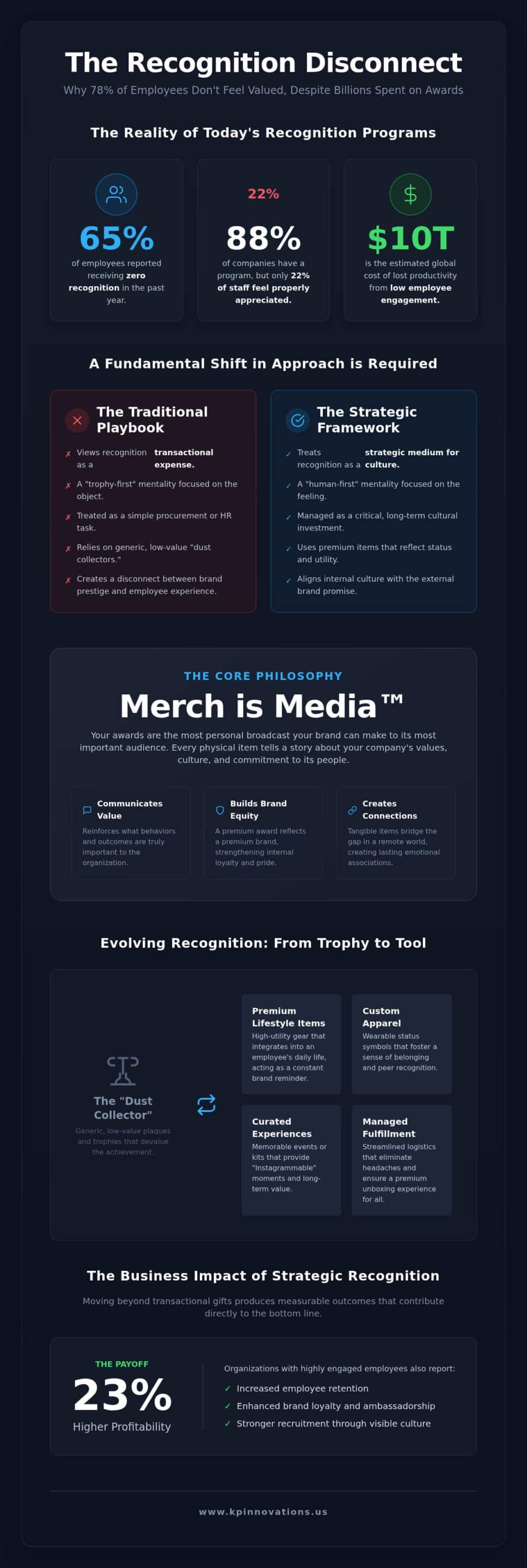
If 65% of your workforce reported receiving zero recognition in the past year, why is your team still investing in generic trophies that eventually gather dust? It’s a staggering reality that while 88% of organizations have a program in place, only 22% of staff feel they receive the right amount of appreciation. Most corporate recognition awards fail because they’re treated as a transactional expense rather than a strategic medium for internal culture. At KP Innovations, we believe Merch is Media™, and your awards are the most personal broadcast your brand can make to its most important audience.
You likely realize that a standard glass plaque won’t fix high turnover or the logistical headache of rewarding a remote workforce. We agree that when recognition feels like a box-ticking exercise, it often highlights a disconnect between your brand’s promise and the actual employee experience. This article will teach you how to transform your awards from a line-item cost into a strategic cultural asset that drives deep employee loyalty. We will preview how a managed program approach ensures your fulfillment is streamlined and your brand’s premium status is reflected in every moment of recognition.
Key Takeaways
- Move beyond transactional gifting by adopting a strategic framework that treats every award as a vital piece of company media.
- Understand why the most effective corporate recognition awards prioritize utility and status through premium lifestyle items and custom apparel.
- Stop relying on “the closet” for distribution and learn how a managed fulfillment program eliminates logistical headaches for remote teams.
- Discover how to align your recognition strategy with measurable business outcomes like increased employee retention and brand loyalty.
- Learn to evaluate the “brand impression” of your physical awards to ensure your program reflects a premium corporate identity.
The Problem with Traditional Corporate Recognition Awards
Most organizations treat the selection of corporate recognition awards as a simple checklist item for HR or procurement. They prioritize unit price and shipping speed over actual cultural impact. This trophy-first mentality focuses on the physical object rather than the human outcome. When you treat recognition as a procurement task, you signal to your employees that their contributions are a commodity. It’s a fundamental misunderstanding of how physical items influence brand loyalty. Low employee engagement costs the global economy an estimated $10 trillion in lost productivity, yet companies continue to settle for rewards that fail to engage.
Cheap recognition has a hidden cost. It erodes trust. If your brand positions itself as a premium leader but your internal awards feel like an afterthought, you create a brand disconnect. Challenging this status quo requires a shift in perspective. You have to stop asking what you can buy and start asking what you want your people to feel. Traditional vendors want to sell you a product; a strategic partner wants to help you build a culture. This distinction is the difference between a program that people ignore and one that people talk about for years. You aren’t just buying a trophy; you’re making a cultural investment.
The ‘Dust Collector’ Syndrome
Generic acrylic blocks and mass-produced plaques are the default for many companies. These items often end up in a desk drawer or the trash. There’s a psychological disconnect when a high-value achievement is paired with a low-value physical item. If a high performer hits a major milestone and receives a generic plastic token, the recognition moment is effectively poisoned. Poor-quality merchandise devalues the milestone. It makes the recipient feel like their effort wasn’t worth the investment of a thoughtful gift. When the physical item doesn’t match the weight of the accomplishment, the recognition feels hollow and transactional.
Recognition as a Strategic Brand Experience
We believe that Merch is Media™. Every award is a broadcast. It tells a story about what your company values and who you are as a leader. Shifting from a vendor mindset to a strategy-first agency approach means viewing every award as a vital touchpoint in the employee journey. While there’s an extensive business and industry awards landscape for external validation, your internal programs are what sustain your team. Organizations with highly engaged employees report 23% higher profitability, proving that a merchandise strategy is a business necessity, not a luxury. Executing meaningful recognition requires high-touch service that prioritizes strategic intent over off-the-shelf products.
Merch is Media™: Applying Strategy to Recognition
Your awards are more than just shelf decorations. They are a broadcast. When we talk about corporate recognition awards, we’re discussing a medium that communicates your core values to every person in the organization. The Merch is Media™ philosophy challenges the idea that merchandise is an expense. Instead, we view it as a high-impact channel that influences internal brand equity and employee sentiment. If the items you distribute don’t reflect your brand’s premium status, the message you’re sending is one of mediocrity. You aren’t just giving a gift; you’re managing a media touchpoint.
Physical items create lasting neural associations with achievement. When an employee looks at a high-quality award, they don’t just see glass or metal. They remember the late nights, the successful launch, and the feeling of being seen by their leadership. This tangible connection is why physical rewards remain one of the most effective ways to recognize employees. In an era of remote work, these physical touchpoints bridge the gap between a digital task and a meaningful human experience. They also provide “Instagrammable” moments that bolster your external recruitment efforts by showing the world how you treat your talent.
Aligning Awards with Corporate Culture
A strategic recognition program matches the material and design of an item to your brand’s specific identity. Consider the difference between a tech firm and a law firm. A SaaS company might reward top performers with sleek, minimalist lifestyle items that fit a modern, mobile lifestyle. A law firm might favor materials that project heritage, weight, and prestige. We often see custom apparel serve as a powerful form of peer-to-peer recognition. When you move beyond the logo and create high-end, private-label pieces, you’re providing a status symbol that employees actually want to wear. This organic visibility turns your staff into brand ambassadors.
This level of strategic alignment is why we operate as your “Chief Swag Officer” rather than a simple vendor. We own the entire process from concept to delivery to ensure your brand narrative remains consistent. If you’re ready to move beyond generic catalogs, focusing on strategic sourcing is the first step toward building a recognition program that actually resonates.
Beyond the Trophy: Modern Recognition Categories
In 2026, the definition of a reward has evolved. Employees no longer want items that simply clutter their shelves; they want premium lifestyle tools that integrate into their daily routines. Traditional corporate recognition awards like heavy glass plaques or crystal pyramids often fail this test of utility. We advocate for a “fewer, better things” approach that focuses on high-status items that carry your brand’s legacy into the recipient’s everyday life. This transition toward useful awards reflects a deeper understanding of the modern employee’s desire for quality and relevance.
When an award serves a practical purpose, it creates more frequent brand impressions. A high-end piece of equipment or a sophisticated home accessory becomes a constant reminder of a career milestone. You aren’t just giving a physical object. You’re providing a tool that enhances their lifestyle while reinforcing their value to the organization. This strategic shift ensures that your investment doesn’t end up in a desk drawer, but instead remains a visible part of their personal success story, much like how professional resources from Hanging with the Kiddos help families create lasting memories during their most important celebrations.
Strategic Apparel and Private Label Solutions
A custom-designed, high-performance quarter-zip carries more cultural weight than a generic plaque ever could. It’s a wearable badge of honor that signals membership in an elite group. By utilizing private label clothing, you create a sense of belonging that feels like a lifestyle brand rather than a corporate uniform. This is about building team identity through items people are proud to wear outside the office. Quality is the primary driver here. A single high-end garment is more valuable to brand equity than a dozen low-quality shirts that lack retail appeal.
Tech and Wellness Recognition
Innovation deserves tech-driven rewards that solve real-world problems. Premium noise-canceling headphones or high-capacity power banks aren’t just gadgets; they’re tools that support the future of work. Similarly, wellness-centric items like ergonomic accessories or high-quality hydration tools promote a healthy office culture. These choices demonstrate that you value the person, not just their output. When you select items that reflect the recipient’s actual needs, you’re broadcasting that your company is forward-thinking and human-centric. It’s a sophisticated way to show that you’re paying attention to what truly matters to your top performers.
Building a Managed Recognition Program That Scales
Storing your awards in a back-office closet is a recipe for operational failure. It leads to damaged inventory, forgotten milestones, and a disjointed experience for your remote team. A scalable strategy requires moving beyond manual processes. By implementing automated recognition programs, you ensure that every career milestone is met with the same level of precision and brand alignment. This systematic approach transforms recognition from a chaotic task into a seamless extension of your corporate culture.
A truly managed program leverages online company stores to facilitate employee-choice awards. This model allows your team to select items that fit their personal lifestyle while you maintain total control over the brand’s visual identity. It removes the guesswork from corporate recognition awards and ensures the recipient actually values what they receive. When the logistics are handled by a dedicated system, the focus shifts back to the human element of appreciation rather than the frustration of shipping labels and tracking numbers.
The Chief Swag Officer™ Model
Our “Chief Swag Officer” model is designed to alleviate the operational burden on your internal teams. We manage the entire ecosystem, from strategy and sourcing to fulfillment. This partnership ensures consistency across multiple offices and remote teams. By outsourcing the system, your HR department can focus on people rather than boxing up merchandise. We provide a high-touch service that treats your internal awards with the same rigor as a major marketing campaign.
Fulfillment and Global Logistics
Global distribution is often the point where recognition programs break down. Shipping corporate recognition awards internationally involves navigating complex customs regulations and varying duties. Our white-glove project management handles these details, providing real-time inventory reporting and tracking. This ensures that an award arrives in London as seamlessly as it does in Los Angeles. We manage the entire supply chain so your brand impact remains consistent, regardless of where your employees are located.
If you’re tired of managing a messy inventory of trophies, it’s time to rethink your strategic sourcing and fulfillment process to build a program that actually scales with your growth.
Measuring the ROI of Your Recognition Strategy
To justify the investment in corporate recognition awards, you must shift the conversation from cost per unit to return on engagement. Many executives view awards as a sunk cost because they lack the framework to measure their impact. However, the data is clear. Organizations with strategic recognition programs report 23.4% lower turnover rates than those without them. When you treat recognition as a strategic asset, you’re investing in the long-term stability of your workforce. This isn’t a procurement task; it’s a retention strategy with a measurable impact on your bottom line.
We measure the value of physical awards through “Brand Impressions.” A high-quality lifestyle item or a piece of premium apparel generates visibility every time it’s used or worn. Unlike a digital shout-out that disappears in a Slack feed, a physical award acts as a permanent broadcast of your company’s appreciation. This ongoing presence reinforces the employee’s connection to the brand. By tracking engagement metrics and employee sentiment alongside your merchandise spend, you can demonstrate exactly how these physical touchpoints influence your culture.
Impact on Recruitment and Retention
Recognition is a powerful tool for talent acquisition. When prospective hires see your team wearing high-end private label apparel or sharing their milestone awards on social media, it validates your culture. This visibility directly influences your employee Net Promoter Score (eNPS). High-quality merchandise creates a “Loyalty Dividend,” where the sense of belonging and value felt by the employee reduces the likelihood of them seeking external opportunities. Employees who feel consistently recognized are 56% less likely to be actively looking for a new job, proving that a well-executed program pays for itself through reduced hiring costs.
Conclusion: The Future of Corporate Recognition
The transition from a trophy-first mentality to a strategy-first approach is what separates industry leaders from average employers. Stop viewing corporate recognition awards as one-off purchases from a vendor. Instead, embrace a partnership with a strategic agency that understands your brand’s ambitions. The future of recognition lies in managed programs that scale, fulfill globally, and resonate deeply with every recipient. Your brand deserves a merchandise strategy that is as sophisticated as your business goals.
Ready to transform your recognition program into a strategic cultural asset? Schedule a strategy session with a Chief Swag Officer today to learn how we can help you elevate your brand experience.
Elevate Your Recognition Strategy from Transactional to Strategic
A successful program requires moving beyond the physical object to focus on the human impact. We’ve established that corporate recognition awards are not just items; they are powerful media assets that broadcast your company’s values. By prioritizing utility, status, and desirability, you transform a simple gift into a lasting neural association with achievement. Organizations that treat recognition as a strategic cultural investment see higher engagement and lower turnover rates, turning a standard expense into a measurable asset.
Managing this complexity doesn’t have to be your burden. Through our Merch is Media™ methodology, we provide white-glove project management and global fulfillment expertise to ensure your brand’s premium status is maintained at every touchpoint. When you work with your own dedicated Chief Swag Officer, you gain a partner who owns the entire system from strategy to global logistics. It’s time to stop managing inventory and start building a culture that top talent never wants to leave. Partner with KP Innovations for a strategic recognition program and experience the difference of a managed agency approach. Your people are your greatest asset; let’s make sure they feel that way.
Frequently Asked Questions
What are the most effective corporate recognition awards for remote employees?
Effective awards for remote teams focus on premium lifestyle items that bridge the digital divide. These items should be shipped directly to the recipient’s home through a managed fulfillment system. By selecting products like high-end tech accessories or custom apparel, you provide a tangible touchpoint that reinforces company culture regardless of location. This strategy ensures that remote staff feel just as valued as those in a central office.
How do I start an employee recognition program without it becoming a logistical burden?
You start a program by partnering with a strategic agency that manages the entire lifecycle from sourcing to distribution. Most logistical headaches stem from trying to manage inventory internally, often referred to as “the closet” strategy. By outsourcing this to a dedicated partner, you eliminate the operational burden on your HR team. This allows you to focus on the human element of recognition while your partner handles the supply chain.
Why is the quality of an award more important than the frequency of recognition?
High-quality corporate recognition awards create lasting neural associations with achievement that frequent, low-value rewards cannot match. When recognition feels cheap or generic, it devalues the milestone and erodes trust in the brand. A single, high-status item delivered at the right moment carries more cultural weight than multiple transactional gifts. Quality signals that you value the person, while frequency without quality often feels like a box-ticking exercise.
Can corporate awards be customized for specific industries like healthcare or tech?
Awards should always be customized to match the specific professional identity of your industry. A tech firm might utilize sleek, minimalist designs that reflect innovation, while a healthcare organization might focus on wellness-centric items that promote a culture of care. We match materials and aesthetics to your brand’s specific narrative. This ensures the physical item feels relevant to the recipient’s daily professional reality and reinforces your industry standing.
What is the ‘Merch is Media’ philosophy and how does it apply to awards?
The Merch is Media™ philosophy treats physical items as a broadcast channel for your company’s values. Instead of viewing merchandise as a transactional expense, we see it as a vital part of the brand experience that influences loyalty and relationships. When you apply this to corporate recognition awards, you’re using physical objects to tell a story about your culture. Every item becomes a touchpoint that reinforces your internal brand equity.
How do I choose between a physical trophy and a lifestyle recognition gift?
Choose a physical trophy when you want to symbolize legacy and prestige for a major career milestone. Opt for lifestyle recognition gifts when you want to create frequent brand impressions through daily utility. The best programs often utilize a mix of both, using high-end apparel or tech for performance rewards and traditional materials for tenure. The goal is to select the tool that best solves the specific cultural problem you’re addressing.
Is it better to have a one-off award or an ongoing recognition program?
Ongoing recognition programs are far superior to one-off awards because they build a consistent culture of appreciation. Transactional gifting feels hollow and lacks the strategic depth needed to influence long-term employee sentiment. An ongoing program allows you to track engagement metrics and measure the return on your investment over time. This systematic approach ensures that recognition becomes a core part of your brand identity rather than a sporadic event.
How can I automate our company’s years of service awards?
You can automate years of service awards by implementing an online company store integrated with your HRIS platform. This system triggers a notification when an employee hits a milestone, allowing them to choose a premium award from a curated selection. We manage the inventory and global fulfillment, ensuring the award arrives exactly when it’s supposed to. This removes the manual labor from the process while maintaining a high-touch, personalized experience for the employee.