
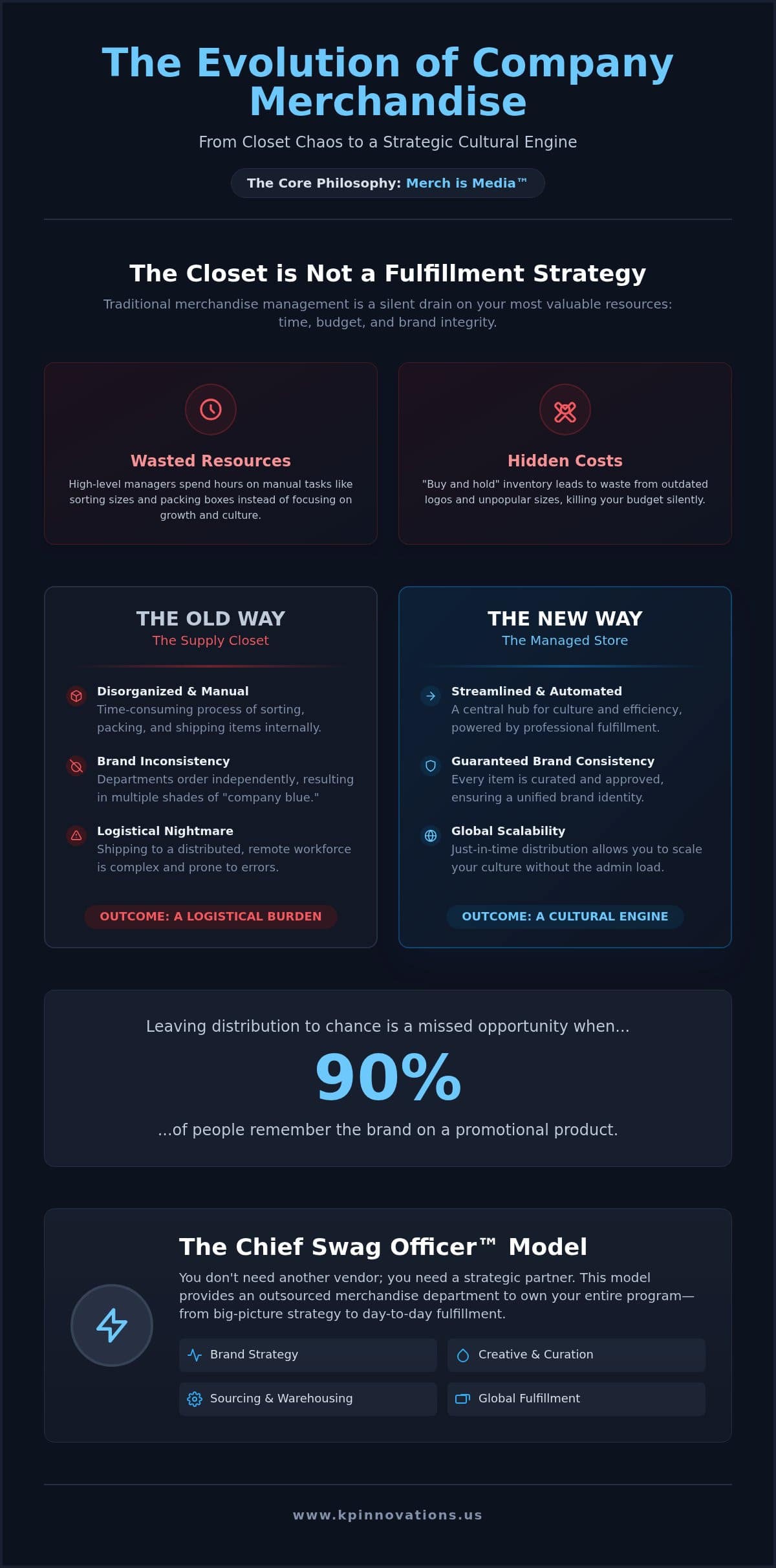
What if your company’s branded merchandise was treated with the same strategic rigor as your digital marketing budget, rather than a disorganized collection of boxes in a supply closet? You likely already know the frustration of managing physical inventory or realizing that the items you ordered are things your team would never actually wear. For many leaders, launching an online company store for employees seems like a technical hurdle; however, it’s actually the solution to those logistical headaches that drain time and dilute your brand’s impact. In an era where 90% of people remember the brand on a promotional product, leaving your distribution to chance is a missed opportunity.
We believe that Merch is Media™. This article will show you how to move beyond the closet. You’ll learn how a managed system transforms operational burdens into a streamlined cultural engine that drives authentic brand loyalty and measurable efficiency. We’ll explore how to automate distribution, maintain global brand consistency, and use data-driven insights to ensure your merchandise serves as a powerful medium for your internal culture. By the end, you’ll understand how to turn physical items into strategic assets that represent your brand with precision and purpose.
Key Takeaways
- Stop treating merchandise as a logistical burden and start viewing it as a strategic cultural engine for your brand.
- Learn why an online company store for employees is the only way to maintain brand consistency while automating global distribution.
- Discover the Merch is Media™ philosophy and how it shifts your focus from buying products to building lasting brand experiences.
- Apply the “weekend test” to your product curation to ensure your team actually values and wears your branded apparel.
- Understand the benefits of a managed merchandise department that owns the entire process from strategy to fulfillment.
The Closet Is Not a Fulfillment Strategy: Why Traditional Merchandise Management Fails
The “closet” is a relic of a bygone era. For decades, the concept of a company store was limited to a physical room filled with dusty boxes of apparel and plastic pens. In 2026, this manual approach isn’t just outdated; it’s a drain on your organization’s most valuable resources. When your marketing or HR teams are forced to spend their afternoons sorting sizes and packing mailers, you aren’t just losing time. You’re sacrificing the strategic focus those leaders should be applying to growth and culture.
Traditional merchandise management often results in a “buy and hold” nightmare. You order 500 shirts to get a price break, only to realize two years later that 200 of them are in sizes nobody wears or feature a logo that was retired last quarter. These hidden costs of inventory waste and brand dilution are the silent killers of a merchandise budget. A digital-first online company store for employees replaces this chaos with a controlled, strategic environment that treats physical items as a sophisticated communication medium.
The Operational Burden of Manual Merchandise Management
Consider the true cost of employee hours. If a high-level manager earns $50 per hour and spends five hours a week managing merchandise requests, that’s $13,000 a year in lost productivity. This doesn’t include the frustration of “out of stock” messages or the logistical nightmare of shipping to a distributed, remote workforce. When departments order their own items independently, brand standards inevitably slip. You end up with five different shades of “company blue” and a fragmented brand identity that confuses your team and your clients. This is the antithesis of our Merch is Media™ philosophy, which demands that every physical touchpoint reinforces brand excellence.
Transitioning to a Strategic Inventory Model
Scaling a brand requires moving away from the “closet” and toward a managed fulfillment system. By utilizing professional warehousing and just-in-time distribution, you ensure that every item sent is relevant, high-quality, and perfectly branded. This shift allows you to scale your culture globally without increasing your internal administrative load. A strategic online company store for employees serves as a centralized hub for brand culture and operational efficiency, ensuring every touchpoint is intentional and every dollar is tracked. By partnering with a dedicated agency that operates through a Chief Swag Officer model, you move beyond managing vendors to executing a high-level merchandise strategy that delivers results.
Merch is Media™: Turning Your Employee Store into a Cultural Engine
Most organizations treat merchandise as an afterthought. We view it as media. It is a vital part of your brand experience that influences culture, loyalty, and internal relationships. When you launch an online company store for employees, you aren’t just opening a website. You are creating a distribution channel for your company’s values. Every item in that store should tell a story, whether it’s a high-performance jacket for a veteran sales rep or a curated onboarding kit for a new hire. This is the essence of our Merch is Media™ philosophy.
There is a massive difference between “stuff with a logo” and strategic brand assets. Cheap, disposable items eventually end up in a landfill. They send a message that your brand is equally disposable. Conversely, high-quality merchandise that employees actually want to use acts as a cultural engine. It fosters a sense of belonging and pride. When your team wears your brand on the weekend, they aren’t just employees; they are ambassadors of your brand’s identity, both in person and through digital career platforms like LYNKP. By leveraging an online company store for employees, you gain visibility into the internal health of your brand culture.
Influencing Culture Through Strategic Sourcing
Quality is the foundation of respect. If you provide low-quality items, you are telling your team that their experience doesn’t matter. Strategic sourcing ensures that every product aligns with your core values. If innovation is a pillar of your brand, your store should feature products that reflect that mindset. If you prioritize sustainability, your selection should include eco-friendly materials and ethical manufacturing. Utilizing strategic sourcing allows you to move beyond off-the-shelf options and into private label apparel that feels like a premium retail brand rather than a standard giveaway.
Measuring the Impact of Your Merchandise Program
A strategic store provides more than just logistics. It provides data. Instead of measuring success by the number of boxes shipped, you can analyze employee sentiment and engagement. Which items are being chosen most often? Which departments are most active? This data reveals what your team actually values. It allows you to refine your strategy over time. Merchandise becomes a tool for relationship building and retention. It proves that you understand and appreciate your workforce. This transforms a simple transaction into a meaningful touchpoint in the employee journey.
Beyond the Catalog: Essential Features of a Strategic Online Store Platform
A strategic platform is far more than a digital list of products. It is a sophisticated tool for brand governance and operational efficiency. While many vendors focus on technical specifications, we prioritize the user journey and brand integrity. An online company store for employees should mirror the seamless experience of a high-end consumer retail site. If the interface feels outdated or difficult to navigate, your team will perceive the brand as equally behind the curve. A premium platform ensures that every interaction reinforces your position as a forward-thinking leader.
Strategic control is the foundation of a managed program. Our model allows marketing leaders to maintain absolute brand control by managing multiple logos and department-specific permissions from a single dashboard. You can ensure that only approved assets are used across the organization. Integrated reporting and analytics provide real-time data on spending patterns, inventory levels, and product popularity. This visibility allows you to treat your merchandise budget with the same financial rigor as any other marketing investment. By connecting the store to your existing HRIS or SSO systems, you provide secure, one-click access that removes administrative friction for your team.
The Importance of a Managed User Experience
Modern teams expect a mobile-friendly design that works wherever they are. Your storefront should be a digital reflection of your specific brand identity, utilizing customized layouts rather than generic templates. We focus on streamlining the checkout process to meet diverse organizational needs. Whether you utilize a points-based recognition system, payroll deductions, or standard credit card transactions, the experience must be intuitive. This level of detail transforms a simple transaction into a rewarding brand touchpoint that employees actually enjoy using.
Logistics and Global Fulfillment Capabilities
Global distribution is a non-negotiable requirement for today’s remote and hybrid workforces. A remote developer in Tokyo should receive the same high-quality experience as an executive in Chicago. Professional fulfillment and logistics ensure that your brand impact isn’t limited by geography. Real-time inventory tracking and automated reorder alerts prevent the frustration of out-of-stock items, ensuring your cultural engine never stalls. By outsourcing these complex logistics to a dedicated partner, you ensure that every package delivered is an intentional, perfectly executed extension of your brand story.
Selection and Strategy: Building a Store Your Employees Actually Want to Visit
A successful online company store for employees is not a digital graveyard for leftover trade show items. It is a curated boutique that reflects your brand’s standards and understands your team’s lifestyle. To determine if your merchandise is effective, apply the “weekend test.” If your employees wouldn’t choose to wear your branded apparel during their personal time, the item has failed as a brand asset. When merchandise is viewed as a strategic medium, every product must earn its place in the catalog by solving a problem or enhancing the user’s daily experience.
The primary objection to corporate merchandise is often the fear of creating “clutter.” We solve this by moving away from generic giveaways and toward high-utility, retail-inspired collections. Curating a mix of apparel, tech, and lifestyle items requires a deep understanding of your internal audience. By focusing on quality over quantity, you transform your store into a destination that employees value rather than a chore they ignore. This shift in perspective ensures that your merchandise budget is an investment in culture rather than a sunk cost in inventory.
Curating a Premium Product Mix
The transition toward high-end private label options is essential for modern brands. Employees immediately recognize the difference between a generic promotional shirt and a premium garment with a thoughtful fit and feel. We prioritize functionality in every category. Tech and office essentials must perform at a professional level to be useful. Furthermore, incorporating meaningful recognition items into your store allows you to celebrate achievements with products that carry genuine emotional weight. This approach elevates the store from a simple fulfillment tool to a platform for appreciation.
Operationalizing the ‘Drop’ Model
Static catalogs often lead to employee disengagement. To keep the experience fresh, we utilize a “drop” model inspired by premium retail brands. This strategy uses scarcity and exclusivity to drive excitement and internal buzz. By aligning limited-edition product launches with company milestones or seasonal shifts, you create a sense of belonging and anticipation. Managing these launches through pre-orders allows you to gauge interest accurately, which significantly reduces inventory risk and waste. It ensures that you are only producing what your team is actually excited to own. To build a collection that truly resonates with your workforce, you need a partner who understands the nuances of strategic product sourcing.
The Chief Swag Officer Model: Why Your Brand Needs a Managed Merchandise Department
A software platform is a tool, not a solution. Many organizations make the mistake of purchasing a subscription and expecting their logistical headaches to vanish. In reality, they’ve often just moved the mess from a physical closet to a digital database. An online company store for employees requires strategic management to be effective. A standard software vendor sells you a login; a strategic partner manages the entire ecosystem. The Chief Swag Officer model represents a shift from reactive ordering to proactive brand management, where we own the entire system from creative strategy to final delivery.
This managed approach reduces the administrative friction that typically drains HR and Marketing resources. Instead of your team chasing tracking numbers or debating fabric weights, they can focus on high-level cultural initiatives. We act as your strategic advisor, ensuring that every item in your store reinforces your brand’s premium market position. The outcome is a measurable, high-impact brand experience that treats merchandise as a vital marketing investment rather than a disposable expense.
Outsourcing Your Merchandise Strategy
High-growth companies rarely have the internal bandwidth to manage the complexities of global sourcing and fulfillment. By utilizing an outsourced merchandise department, you gain access to expert project management that handles every detail. We provide white-glove service that includes deep-level customization and manufacturing from the ground up. This ensures your products are unique to your brand rather than off-the-shelf items with a logo slapped on them. We manage the vendor relationships, quality control, and international customs so your team doesn’t have to.
Getting Started: The Path to a Professional Program
Building a professional program begins with identifying your primary business objectives. You must decide if you’re solving for employee recognition, standardized uniform programs, or high-end client gifting. Once your goals are clear, we guide the transition from a disorganized “swag closet” to a sophisticated online company store for employees. Our process includes migrating existing inventory, integrating your brand assets, and setting up automated reorder points. This structured approach ensures a smooth launch and long-term operational efficiency. A managed company store represents the ultimate tool for brand elevation and operational sanity.
Elevate Your Brand Strategy Beyond the Supply Closet
Transforming your merchandise from a logistical headache into a strategic asset requires a fundamental shift in perspective. By embracing the Merch is Media™ philosophy, you stop managing inventory and start building a cultural engine. A managed online company store for employees eliminates the hidden costs of manual distribution while ensuring your brand remains consistent across every global touchpoint. With access to over 1.2 million product options and seamless global fulfillment, your team can finally receive the premium experience they deserve without the administrative burden on your HR or marketing departments.
The transition from a disorganized closet to a sophisticated, data-driven system is the key to measuring your brand impact with the same rigor as any other marketing investment. Our Chief Swag Officer model provides the white-glove management necessary to ensure every physical item serves a strategic purpose. It’s time to treat your merchandise as the powerful communication medium it is. Schedule a consultation with our Chief Swag Officer to build your strategic store and begin your journey toward operational sanity and brand excellence. We look forward to helping you build a program that truly resonates with your team.
Frequently Asked Questions
What is an online company store for employees?
An online company store for employees is a private, customized e-commerce portal designed for internal distribution of branded merchandise. It acts as a centralized hub where your team can access pre-approved apparel, awards, and equipment. Unlike a public retail site, this platform is built to reinforce company culture and streamline operations. It transforms the way you handle internal requests by automating the entire process from order placement to final delivery.
How much does it cost to set up a custom employee store?
The investment required for a custom store depends on your specific operational needs and integration requirements. A professional program involves costs related to platform development, strategic product sourcing, and ongoing fulfillment management. Rather than a one-size-fits-all price, we focus on building a system that delivers a measurable return on your brand investment. This approach ensures your budget is spent on high-impact assets rather than technical overhead or wasted inventory.
Can we manage different budgets for different departments in one store?
Yes, you can easily manage departmental budgets through advanced administrative controls. Our platform allows you to set specific spending limits, assign credits, or use points-based systems for different teams. This ensures that every department stays within its allocated budget while providing leadership with real-time visibility into spending patterns. It’s a powerful tool for financial accountability that prevents the disorganized spending typical of decentralized, manual merchandise management.
Do I have to store the inventory at my office?
You don’t need to dedicate office space to inventory when using a managed fulfillment model. We handle the warehousing, picking, and packing in professional facilities designed for high-volume logistics. This shift removes the physical burden from your HR and marketing teams, allowing them to focus on strategy instead of shipping boxes. It also ensures that your merchandise is stored in a clean, climate-controlled environment, preserving the quality of every item sent to your team.
How long does it take to launch a professional online store?
A strategic launch generally requires a timeline of several weeks to ensure every detail is perfect. This period covers the creative development of the storefront, the strategic sourcing of a premium product mix, and the technical integration with your internal systems. We prioritize a methodical rollout that builds trust with your employees from day one. This timeline ensures that your store is a polished reflection of your brand excellence rather than a rushed technical project.
Can we ship items to remote employees globally?
Global fulfillment is a standard feature of a professional online company store for employees. We manage the intricate logistics of international shipping, including customs documentation and duty management, to reach your team wherever they work. Whether your employees are in a local office or working remotely across the globe, they receive a consistent brand experience. This capability is essential for maintaining a unified culture and ensuring every team member feels valued in a distributed workforce.
What kind of products should I include in my employee store?
Your store should feature a curated selection of high-utility products that employees actually value. We recommend a mix of premium private label apparel, functional tech tools, and lifestyle items that solve specific problems. The best products are those that pass the weekend test, meaning your team would choose to use them outside of work hours. By focusing on quality over quantity, you ensure your merchandise serves as a meaningful medium for your brand culture.
How do I ensure my branding stays consistent across all products?
Brand consistency is maintained through centralized governance and strict quality control. By using a managed platform, you ensure that only approved logos, color palettes, and brand assets are applied to your products. We act as your brand guardians, overseeing the production process from design to delivery. This eliminates the risk of fragmented branding that occurs when different departments order from multiple vendors without a unified strategy or the oversight of a dedicated partner.