
A gift can support a cause and still miss the mark. If the recipient doesn’t value it or the impact is hard to understand, the gesture can feel more performative than meaningful. The strongest gifts that give back program ideas connect a useful, thoughtful gift with a clear cause and a moment that matters to the relationship.
That takes more than choosing a product with a charitable connection. The gift, the recipient, and the impact story need to fit together. Employees, clients, and key partners may value different choices, and a welcome gift calls for a different approach than recognition or a milestone thank-you.
This article explores practical ways to shape a gifting program around those differences, communicate the cause with clarity, and make each gift feel considered. Because Merch is Media™, gifting is part of the brand experience, not simply a transaction. With a consistent strategy behind it, Client Gifting can help create meaningful experiences across relationship stages, supported by thoughtful sourcing and program management.
Key Takeaways
- Use gifts that give back program ideas as adaptable formats for employee, client, and campaign moments, rather than a generic product list.
- Match each gift program to its audience, relationship stage, intended experience, and cause fit.
- Make the impact credible by distinguishing documented program information from a supplier’s general cause claim.
- Build a repeatable process that defines the purpose, communicates the connection clearly, and reviews the program over time.
- See how KP Innovations’ Chief Swag Officer model brings strategy, Product Sourcing, and Program Management together across Client Gifting.
What Makes Gifts That Give Back Programs Meaningful for Businesses?
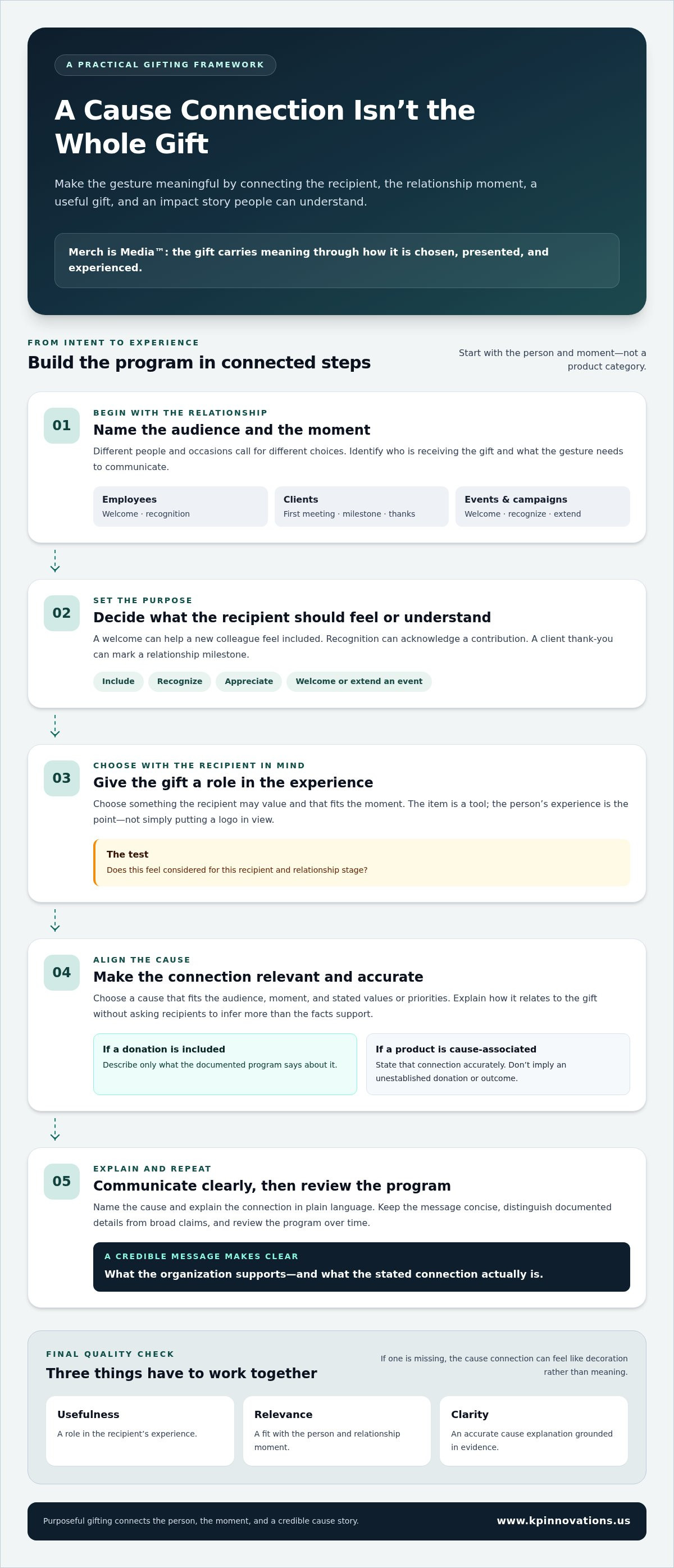
A cause connection doesn’t make a gift meaningful on its own. The recipient still needs to feel considered, the gift needs a purpose in their experience, and the impact story needs to be clear enough to trust. Without those elements, a charitable reference can feel like decoration added to an otherwise ordinary giveaway.
A gifts-that-give-back program is purposeful corporate gifting that connects a defined recipient and relationship moment with a clearly explained cause. It may support an employee welcome, recognize a contribution, or mark an important client milestone. The cause is part of the experience, not a substitute for understanding what the recipient would value.
Cause-related corporate gifting connects a considered gift to a stated cause in a way that gives recipients context, without promising an impact the program can’t document.
How does corporate giving-back gifting differ from a typical giveaway?
A typical giveaway may be chosen mainly to put a logo in view. Purposeful gifting starts with a different question: what should this moment communicate to the person receiving it? The answer guides the gift, the timing, and how the cause connection is explained.
A welcome gift, for example, can help a new employee feel included. A client thank-you can acknowledge a relationship milestone. In both cases, the gift is a tool; the recipient’s experience is the point. A carefully chosen item delivered with a relevant message may feel more thoughtful than a more prominent logo on something disconnected from the moment.
That distinction reflects the idea that Merch is Media: merchandise carries meaning through how it is chosen, presented, and experienced. A coordinated program carries that intent across occasions, rather than treating each gift as an isolated purchase. The wider business context connects with Corporate Social Responsibility (CSR), which describes how organizations consider their responsibilities to society.
What makes a cause connection feel credible?
Credibility depends on clear, specific communication. Name the cause and explain its relationship to the gift in plain language. If a program includes a donation, describe only what the documented program actually says about it. If the connection is that a product is associated with a cause, state that accurately without implying a donation or outcome that hasn’t been established.
Separate verifiable program details from broad statements such as “this gift changes lives.” Recipients should be able to understand what the organization is supporting and what the stated connection is, without being asked to infer more than the information provides.
- Usefulness: Choose a gift with a role in the recipient’s experience, not just a place for a logo.
- Relevance: Match the gesture and cause to the recipient and relationship moment.
- Clarity: Explain the cause connection accurately and keep impact claims within the evidence.
When all three work together, the gift can express care for the recipient and a considered brand perspective. That’s the foundation for turning a one-time gesture into a consistent experience people can understand and remember.
Gifts That Give Back Program Ideas for Employees, Clients, and Campaigns
The most useful gifts that give back program ideas start with a relationship moment, not a product category. Ask what the recipient should feel or understand, then shape the gift and cause connection around that purpose. These concepts are formats to adapt to your audience and brand, not promises of a particular charitable outcome.
A cause connection can add meaning to a gift when it supports the recipient experience and is explained with care. Keep the person at the center. The cause should add context, not turn the gift into a platform for the company to congratulate itself.
What are cause-connected employee gifting ideas?
For onboarding, connect a welcome gesture to a stated community, environmental, or social purpose that reflects the organization’s values. Explain the connection simply, then focus the message on helping a new colleague feel included. For recognition, pair appreciation for a contribution with a clear note about the cause the program supports. Recognition should still acknowledge the person’s work, not make them a vehicle for a corporate message.
These formats can complement a thoughtful employee recognition program: the cause connection adds context, while the recognition itself remains specific to the colleague and moment. For remote team members or office milestones, selecting quality workspace decor from makers like Panther Print can provide a tangible, lasting reminder of appreciation.
What are client gifting ideas that give back?
Match the gesture to the relationship stage. A first-meeting follow-up, project milestone, or expression of thanks each carries a different tone, so choose a cause connection that feels relevant rather than interchangeable. A cause-aligned gift set can be designed around a shared value or a client’s stated priorities, with a concise explanation of what the connection means. Treat the set as a flexible concept, not a named product or guaranteed donation.
Thoughtful Client Gifting connects choices to relationship moments, helping a brand express appreciation without implying that a gift alone will create loyalty or business results. When focusing on sustainability, incorporating durable, waste-reducing goods from brands such as Reset Razor offers a practical way to align gifting with environmental values.
How can a campaign make giving part of the brand experience?
For an event, campaign, or brand activation, define the recipient’s purpose first. Is the gift meant to welcome attendees, recognize participation, or extend the experience afterward? That decision helps the cause connection feel integrated rather than bolted on. A short message can name the cause, explain its relationship to the campaign, and clarify the program details without making the recipient sort through a long impact statement.
Keep the story in proportion. The cause can deepen the meaning, but it shouldn’t overshadow the recipient or the reason for the interaction. To align the gift with the campaign’s purpose and audience, strategic Product Sourcing can help translate the intent into considered choices.
Across employees, clients, and campaigns, consistency comes from repeating the decision-making approach, not sending the same gift to everyone. Start with the moment, shape the recipient experience, and communicate the cause connection accurately. The result is a more coherent brand experience, without claiming that merchandise alone generates leads, loyalty, or referrals.
Match Giving-Back Gift Programs to Your Audience and Goal
The same cause and gift format won’t carry the same meaning in every setting. An employee welcome, a client milestone, and a public campaign have different audiences and different jobs to do. Use the comparison below to narrow your options before considering specific items. It’s a practical way to turn gifts that give back program ideas into choices shaped by the experience you want to create.
Audience: Employees
Moment: Onboarding or recognition
Intended experience: Help a new colleague feel welcomed, or make appreciation specific to a contribution
Cause fit: A purpose that connects to stated company values and can be explained clearly to employees
Audience: Clients
Moment: A relationship milestone or thoughtful follow-up
Intended experience: A relevant, considered interaction that respects the relationship
Cause fit: A connection that aligns with the brand and feels appropriate for the client relationship
Audience: Campaign participants or event attendees
Moment: A campaign, event, or brand activation
Intended experience: Extend the interaction with a clear recipient purpose
Cause fit: A cause that supports the campaign’s message without taking focus away from the participant
Which program ideas suit employee experiences?
For onboarding, focus on welcome and belonging. A cause connection can help introduce shared values, provided the explanation is direct and doesn’t presume every employee has the same personal interests. Recognition calls for a different emphasis: tie the moment to a specific contribution or milestone so the employee understands why they’re being acknowledged. If consistency across teams matters, structured Employee Programs can help establish a repeatable approach while leaving room for relevant context.
Which program ideas suit client relationships?
Client gifting works best when the gesture reflects where the relationship is, rather than defaulting to the same choice for every contact. Consider the purpose of the interaction, the client’s context, and how the gift will be presented. A concise cause explanation can add meaning, but it should suit the relationship and avoid assuming the recipient shares the company’s preferences. Thoughtful presentation supports the experience; it doesn’t replace genuine relevance.
How should a team choose a cause and gift format?
Start by naming the audience, the moment, and the intended experience. Then ask whether the cause fits the organization’s stated values and whether the connection can be explained accurately. Compare possible formats against three practical questions:
- Recipient relevance: Does the format suit the person and the occasion?
- Clarity: Can the cause connection be described without vague or unsupported claims?
- Operational fit: Can the team deliver the experience consistently across the people or moments involved?
Finally, define the business outcome as something to assess, not a result the gift guarantees. A team might review whether the experience supported its intended purpose, such as strengthening an employee recognition moment or creating a more considered client interaction. That distinction keeps the program grounded in recipient experience and makes future choices easier to refine.
How to Make a Gifts That Give Back Program Credible and Repeatable
A program earns trust through more than a well-chosen gift. Teams need a shared purpose, a clear explanation of the cause connection, and an owner who can keep decisions consistent from selection to delivery. Without that structure, cause-related gifting can drift into disconnected gestures or claims that are difficult to explain later.
Transparent impact language builds trust because it lets recipients understand what a program supports without asking them to accept more than the evidence shows.
What should a team clarify before launching?
Before selecting merchandise, define who will receive it, what moment it marks, and what the gift should communicate. Then set expectations for the cause connection using information the team can substantiate. Decide who owns the recipient experience, including the message that accompanies the gift. Clear ownership helps HR, marketing, and operations work from the same intent instead of making disconnected choices.
How can teams communicate impact without overclaiming?
Distinguish a supplier’s cause claim from documented details about the specific program. A broad statement that a brand “gives back” doesn’t explain what this gift supports or how. Use the information available about the giving mechanism and its stated scope, and don’t imply that each purchase creates a particular result unless that connection is documented. Keep recipient-facing language concise and proportionate.
How can a program become easier to manage over time?
Record the audience, gifting moment, intended experience, cause rationale, and approved wording for each program. This creates a useful reference when the next campaign or recognition moment comes around. It also helps teams assess whether a choice still fits the brand and recipient. A clear Merchandise Strategy can connect those decisions to a consistent program rather than leaving each occasion to start from scratch.
A practical process keeps the work moving in a deliberate order:
- Define the purpose. Identify the recipient, moment, and experience the gift should support.
- Set the cause connection. Choose a connection that fits the organization’s stated values and can be explained with substantiated information.
- Assign ownership. Name who approves the choice, maintains the supporting details, and coordinates recipient-facing communication.
- Coordinate execution. Treat sourcing, production, fulfillment, and reporting as connected program stages, so the original intent carries through delivery.
- Review and refine. Compare the experience with its original purpose, note recipient or team feedback, and document what should inform the next cycle.
Reviewing a program doesn’t mean claiming a gift caused a business result. Instead, assess whether it reached the intended audience, communicated the cause clearly, and supported the planned experience. This gives teams a more grounded basis for improving future choices and discussing outcomes.
To bring the program’s purpose into the selection process, explore Product Sourcing for your gifting program.
How KP Innovations Turns Gifts That Give Back Into a Brand Experience
A meaningful gift program can lose its intent when different teams make decisions in isolation. The cause, recipient experience, creative, and delivery may each be handled separately, leaving no one responsible for how the pieces work together. KP Innovations approaches merchandise as a strategic brand channel, with a Chief Swag Officer model that provides a single point of ownership across the merchandise ecosystem.
That’s a different role from a traditional vendor focused mainly on selecting products and arranging delivery. As an outsourced merchandise department, KP Innovations connects strategy, creative, sourcing, production, fulfillment, and reporting. The gift remains a tool. The goal is a considered experience that reflects the brand and the relationship.
What does strategic ownership add to a gifting program?
Strategic ownership begins by defining what each gifting moment needs to do. Merchandise Strategy helps establish the program’s purpose and direction. Product Sourcing translates that intent into considered choices, while Program Management keeps decisions coordinated across occasions. For example, a client welcome and a project milestone can feel distinct while still expressing a consistent brand perspective. A cause connection then has a role in the experience, rather than being an unrelated message attached to a gift.
How does the Chief Swag Officer model support the experience?
The Chief Swag Officer model is a way to own the merchandise program across its lifecycle, not a product or a single gifting tactic. Creative Development shapes how the experience is expressed; Production Management coordinates its development; and Fulfillment supports delivery. Connected to strategy and sourcing, these stages help preserve the program’s intent from planning through the recipient’s experience.
For cause-related gifting, that continuity matters. The language used to describe the cause should align with the choice itself, and the experience should make sense for the relationship moment. Coordinated ownership helps teams avoid treating each gift as a standalone task, while keeping the cause connection clear and the recipient at the center.
What is a practical next step for a business team?
Bring a clear starting brief: who the recipients are, which gifting moment matters, how the cause connects, and what the program is meant to support. Those decisions give the team a useful foundation for discussing options and managing execution. They also help distinguish a considered program from a product request that has no defined audience or purpose.
With gifts that give back program ideas, the strongest starting point is not a catalog. It’s a shared understanding of the audience, the relationship, and the experience the brand wants to create. KP Innovations can bring those elements into a strategic sourcing conversation, connecting Product Sourcing with the broader program rather than treating it as a standalone purchase. Discuss a sourcing project grounded in your gifting audience, moment, cause connection, and goals.
Make Your Next Gifting Moment More Intentional
Cause-related gifting can be a reason to bring employee experience, client relationships, and operations into the same planning conversation. Aligning those perspectives helps your team decide where a thoughtful gesture belongs and what it should communicate. From there, you can shape a direction that feels coherent without making every gift or occasion identical.
The best next step is a focused discussion about what your organization wants recipients to remember and how a cause connection fits that intention. Treat that decision as the starting point for a sourcing project, not a commitment to a particular product or promised outcome.
Discuss a strategic sourcing project with KP Innovations and move your next gifting initiative forward with clarity and purpose.
Frequently Asked Questions
Can corporate gifts support a cause without donating part of every purchase?
Yes. A company can make a separate contribution, organize a volunteer activity, or invite employees to direct a company-funded donation to a cause. These approaches keep charitable support distinct from the gift purchase. For example, an organization could give a welcome gift and separately provide employees with information about its volunteer program. Describe the actual arrangement accurately, so recipients understand whether support came from the company, a supplier, or a purchase-linked mechanism.
How can a company tell whether a gift that gives back has a credible impact claim?
For a U.S. charity, start by checking its status through the IRS Tax Exempt Organization Search. For additional context, Candid, Charity Navigator, and the BBB Wise Giving Alliance provide independent information about charities. These resources can help assess the organization, but they don’t establish that a specific gift caused a particular result. Keep the charity’s standing separate from claims about the gift’s own impact.
What are gifts that give back ideas for employee onboarding?
Consider pairing a new-hire welcome with an invitation to learn about employee-led community efforts or volunteer opportunities. That gives the cause connection a place in the employee experience beyond the gift itself. A team could introduce a relevant employee resource group during onboarding or include a short guide to ways colleagues participate in community initiatives. Keep participation voluntary, and make the welcome useful even for someone who doesn’t join a cause activity.
How can client gifts support a cause without feeling promotional?
Use the client’s communication style as a guide for presentation. A discreet note or a personal delivery can feel more appropriate than turning the cause connection into a sales message. If the client has publicly shared a cause commitment, that may inform a thoughtful choice, but don’t assume it represents every person at the organization. The gesture should stand on its own as a considerate expression of the business relationship.
Are gifts that give back appropriate for a corporate event?
They can be, especially when the gift has a clear role in the attendee experience. Think about whether it belongs at registration, as a participant takeaway, or in a post-event follow-up, and plan how it will fit into the event flow. For audiences with different preferences, a non-gift option can make the experience more comfortable. The event’s main purpose should remain clear, with the cause connection as supporting context.
How should a company explain the charitable connection to gift recipients?
Use wording that distinguishes the type of connection rather than relying on a broad phrase such as “giving back.” A simple template is: “This gift is connected to [cause] through [specific documented arrangement].” If the company made a separate contribution, say so only when that is accurate; if the item is associated with a cause in another way, describe that instead. This helps recipients understand what the statement does and doesn’t claim.
Can a gifts that give back program work across multiple teams or locations?
Yes. A useful approach is to pilot the program with one team or location, then gather feedback from recipients and the staff responsible for delivery before expanding it. Ask what was easy to understand, what felt relevant, and what created extra work. Use those findings to refine the next rollout. A measured expansion lets the organization learn from real experience instead of assuming a single approach will suit every audience.