
A branded tool should do more than display a logo. Branded tools and hardware, from multi-tools and tape measures to custom-logo tool kits and screwdrivers, can make practical gifts employees and customers will want to keep close. Choose with the recipient and the experience you want the gift to create in mind.
It’s easy to focus on the imprint and overlook the item’s role in a relationship. A useful tool can support a welcome kit, recognize a team, or give a customer a tangible reminder of your business. Choose an item that suits the recipient and the moment, not just the merchandise order.
This guide explains how multi-tools, tape measures, custom-logo tools, and screwdrivers can meet different gifting needs, and what to consider when choosing among them. Look beyond the product itself so the tool becomes a deliberate part of the brand experience, not just another item with a logo.
Key Takeaways
- Choose a tool based on the recipient, setting, and purpose of the gift, not just its imprint area.
- Compare multi-tools, tape measures, and screwdrivers by the practical role each can play in a team or customer experience.
- Plan logo placement and presentation so the item feels connected to your brand, not like an afterthought.
- Help tools last longer by keeping them clean, dry, and stored appropriately for their materials and use.
- Make merchandise part of a broader brand experience, with a clear purpose for the recipient and the relationship.
Multi-tools
A multi-tool makes sense when it supports a specific relationship moment. For a new employee, it can signal that practical needs matter from day one. For a customer, it can mark a project milestone or service interaction. Decide what the recipient should feel or remember, then choose a format that fits that purpose rather than selecting a tool simply because it carries a logo.
The 6-in-1 Quest Multi-Tool Pen includes built-in bits. Its combination of a pen and tool functions may suit a welcome gift where usefulness and a work-ready message belong together. The 6-in-1 Multi Tool with LED Light offers another direction for a gift tied to practical tasks. These examples can shape a program’s intent, but the recipient and moment should determine the choice.
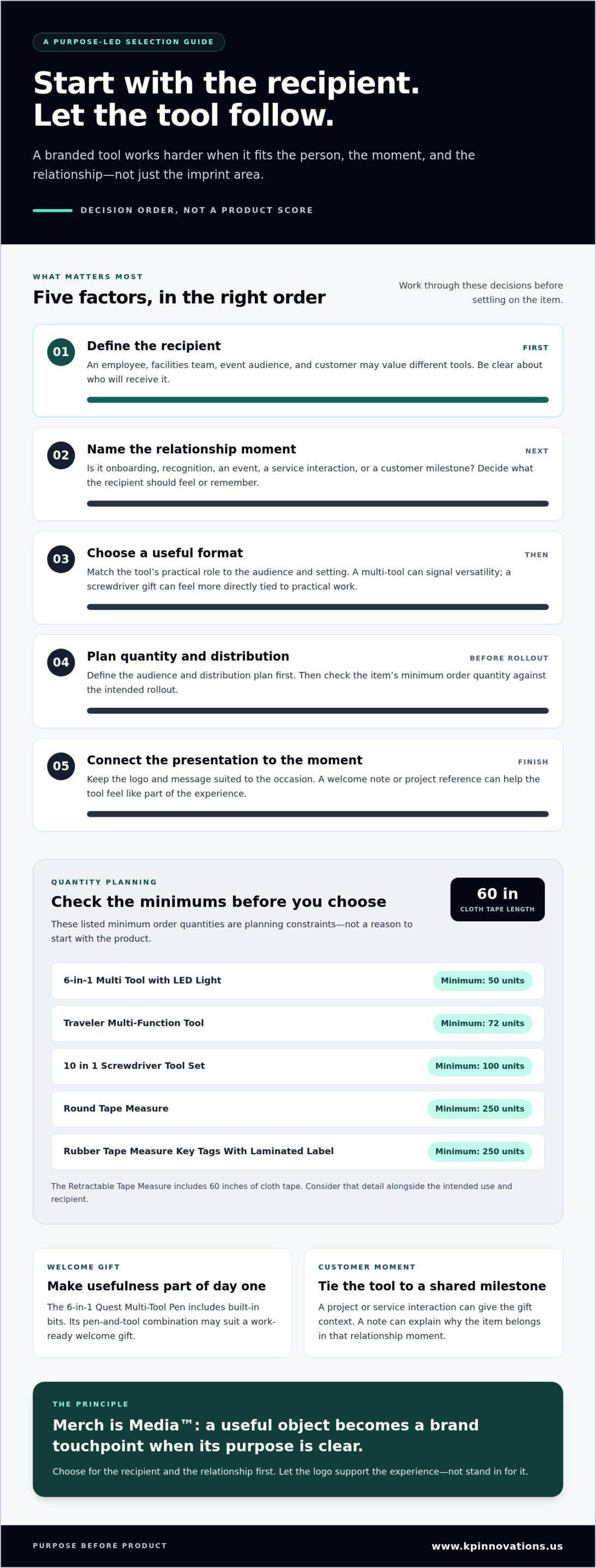
Quantity planning should follow the audience definition. The 6-in-1 Multi Tool with LED Light has a minimum order quantity of 50 units. The Traveler Multi-Function Tool has a minimum order quantity of 72 units. Those thresholds matter when planning a department welcome, event distribution, or customer initiative. Define who receives the gift first, then align the rollout with the selected item.
- For onboarding: Choose an item that supports the employee’s first-week experience.
- For a customer milestone: Tie the tool to a specific moment in the relationship.
- For an event: Match the format and quantity to the intended audience.
A multi-tool and a screwdriver can communicate different kinds of usefulness. A multi-tool may represent versatility in a broad employee or customer program. A screwdriver-focused gift can feel more directly connected to practical work. The 10 in 1 Screwdriver Tool Set has a minimum order quantity of 100 units, a useful planning detail for a larger distribution. Choose based on the experience you want, not the feature count alone.
Presentation connects the object to the experience. Pair a welcome gift with a note that explains its place in the employee journey. For customer gifting, link the item to a shared project or relationship milestone. Keep the logo and message suited to the moment. That way, the tool expresses the relationship instead of serving as a standalone reminder of the company name.
Use a simple decision sequence: define the recipient, identify the moment, choose a fitting format, and plan distribution. An operations team’s onboarding kit, for example, may call for a different choice than a customer event. This purpose-led approach makes a multi-tool more than a convenient giveaway. It becomes a considered touchpoint in the broader brand experience.
Tape measures
A tape measure can make a gift relevant to someone’s work or daily projects. For a new employee in a field-facing role, it can help welcome them with a practical item tied to their responsibilities. For a customer, it can mark a project milestone with a useful reminder of the relationship. Identify the moment first, then choose a format that suits the audience and distribution.
Consider what the recipient will do with the gift after receiving it. A compact key-tag style may suit an event where people need an easy-to-carry memento. A larger format may fit a team kit intended for repeated use. The Retractable Tape Measure includes 60 inches of cloth tape, a concrete detail planners can weigh against the intended use. The product serves the program best when its format makes sense for the person receiving it.
Quantity planning should reflect the group and the occasion. The Round Tape Measure has a minimum order quantity of 250 units, as do Rubber Tape Measure Key Tags With Laminated Label. These thresholds can help shape an event or customer distribution plan. Build the recipient list and define the program’s purpose before selecting an item, so the volume supports a deliberate experience instead of driving the decision.
- For employee onboarding: Connect the tape measure to the recipient’s role and welcome materials.
- For customer appreciation: Tie the gift to a project, service interaction, or shared milestone.
- For events: Choose a format and quantity that fit the audience and distribution plan.
A coordinated gift feels more considered when its design reinforces the message of the other program materials. For example, a home-services company could pair a tape measure with a welcome note for new team members and use consistent branding across the kit. The tool is one touchpoint in the experience. Its usefulness gives the recipient a reason to keep it, while the message explains why it was chosen.
Logo treatment should support the item’s purpose. Keep the mark legible and place it in a way that complements the gift or kit’s overall design. If an event includes a welcome card or other branded materials, use a consistent visual approach across each piece. This can make a practical object feel like part of a thoughtful interaction rather than an isolated giveaway.
Before choosing a model, document the audience, purpose, distribution method, and brand message. Then compare tape formats against those needs. A focused sourcing process for merchandise can help align the selected item with the intended employee or customer experience.
Promotional tools with custom logos
A custom logo can make a tool part of a deliberate brand experience. Start the design process with the recipient, not the imprint. A facilities team, new employee, and customer may value different tools. The House Shape Tool Kit, for example, links its form to a home-improvement theme. That association may suit a service milestone or customer welcome, but feel less relevant to another audience.
Use a simple selection sequence before finalizing the item. First, define the moment: onboarding, recognition, an event, or client gifting. Next, identify what recipients should remember. Then choose a tool whose function supports that message. The Verto 19-Piece Tool Set With rPET Case offers a clearly defined piece count. Its case also provides a distinct presentation surface for the set. Consider how that packaging fits the occasion and brand character.
Custom logo work starts with a clear design brief. Record the approved logo file, brand colors, and supporting message. If the imprint area is limited, decide which element matters most. Keep the design readable and avoid details that distract from the main mark. Before production, review the artwork in context with the chosen tool. A logo that looks balanced on screen may need adjustment to suit a compact object.
- House Shape Tool Kit: Consider it for home-related themes or service moments.
- Verto 19-Piece Tool Set With rPET Case: Use its defined set format when presentation matters.
- Tool Set With Rechargeable LED Flashlight: Consider it when the flashlight feature supports the gift’s purpose.
The Tool Set With Rechargeable LED Flashlight can anchor a practical gift, while the surrounding message gives it context. For an employee milestone, pair it with a note recognizing the person’s contribution. For a customer relationship, connect the gift to a service interaction. This makes the logo one part of a larger experience instead of the whole message.
Plan quantities and distribution alongside the design. A tool intended for a team may need consistent presentation across locations, while an event gift may need packaging that is easy to hand out. Map recipients, delivery points, and the moment of use before approving the artwork. This helps align the custom design, the object, and the experience. The logo identifies the brand, while the tool’s relevance gives recipients a reason to remember it.
Review the budget alongside the design so the choice reflects both the intended experience and the available spend. Compare the listed ranges with the gift’s purpose rather than treating price as the only measure of fit. A clear decision process helps teams explain why one format suits a particular audience or occasion.
Before confirming an order, make sure the selected item, approved artwork, and distribution plan support the same goal. Keep the message focused and review how the finished logo will appear on the chosen product. This final check can prevent a mismatch between the impression you intend to make and the item recipients receive.
Screwdrivers
A screwdriver gift makes the most sense when it connects to a real task. A facilities or maintenance team may value a different format than event attendees or customers. While compact hand tools handle quick adjustments, teams working in technical or workshop settings often reference resources like ridiculousmachinetools.com for specialized hardware and workholding equipment. Identify the recipient and setting first, then choose between a compact single tool, a small set, or a multi-function design. The choice affects how practical the gift feels after the first interaction.
The 6-in-1 Screwdriver offers a multi-function format. The 4 Piece Mini Screwdriver Set gives recipients a set rather than one tool. The 10 in 1 Screwdriver Tool Set is another option for a program built around a broader tool format. Compare the names and intended audience before considering the imprint. The best match depends on whether the gift should be compact, varied, or presented as a more complete set.
Quantity can influence the rollout. The 10 in 1 Screwdriver Tool Set has a minimum order quantity of 100 units. Use that threshold to plan a defined distribution, such as a department initiative or customer event. Build the recipient list first, then match the total to the format. This avoids selecting a tool before understanding how many people the program serves.
- For compact gifting: Consider the 4 Piece Mini Screwdriver Set.
- For a multi-function option: Compare the 6-in-1 Screwdriver with the 10 in 1 Screwdriver Tool Set.
- For a pocket-oriented format: Review the Dual Pocket Screwdriver with Reversible Blade.
The Dual Pocket Screwdriver with Reversible Blade gives planners a distinct format to assess. The Spidey 8 In One Screwdriver Flashlight combines screwdriver and flashlight wording in its name. These examples show why product descriptions matter: they help clarify the format without assuming every recipient needs the same item. Match the name and intended use to the audience’s context.
Logo placement should preserve the tool’s identity and remain readable. Prepare artwork with one clear priority, such as the company mark or a short campaign message. On a compact item, avoid crowding the visible surface with multiple elements. Review the design against the product’s actual shape before approval. A consistent mark across the gift and its presentation can connect the tool to onboarding, recognition, or customer appreciation.
For a team welcome, a mini set could suit a practical first-day kit. For a customer touchpoint, a multi-function tool may play a more substantial role. Decide on the moment first, then align the tool, quantity, and message. This turns branded tools and hardware from KP Innovations into a purposeful part of the recipient’s experience, not an isolated logo impression.
Transforming these considerations into a choice you can assess against the available budget requires careful planning. Compare the listed ranges with the planned quantity and the role of each gift before settling on a format. The right fit supports the occasion and stays within the program’s budget.
How should branded tools be maintained and stored to extend their lifespan?
A useful tool remains part of the brand experience only while it is usable. Share simple care guidance when you hand it over, especially for multi-tools, screwdrivers, and tape measures. Start with a basic routine: remove visible dirt, dry the tool, and put it in a suitable storage place. For example, a damp screwdriver left in a work bag needs attention before storage.
Match care to the tool’s materials and moving parts. Use a clean, soft cloth to remove dust from a multi-tool or screwdriver. For a tape measure, clear debris from the blade or tape before retracting it. Don’t force a mechanism that feels stuck. Follow any care instructions supplied with the specific tool, since finishes and components can vary.
Storage matters as much as cleaning. Keep tools in a dry, orderly place where heavier items won’t crush them. A designated drawer, case, or toolbox helps recipients find each item and put it back after use. Store screwdrivers so their tips don’t rub against other objects, and keep a tape measure closed or retracted when it’s not being used. Similar care applies whether managing promotional hand tools or outdoor and gardening equipment from suppliers like Bakyard Australia, where dry storage prevents rust and preserves long-term functionality.
- After use: Wipe away dirt from a screwdriver or multi-tool.
- Before storage: Dry the tool and check for visible debris.
- For tape measures: Clear the tape before retracting it.
- For team storage: Assign tools a consistent place, such as a labeled drawer.
- During review: Look for loose parts, damage, or a mechanism that no longer works smoothly.
Care instructions can travel with a company gift. Add a concise card to a tool kit or include guidance in an employee welcome message. Make the advice specific: explain where to store the item, how to keep it clean, and whom to tell if it becomes damaged. A clear handoff shows recipients the tool has a role beyond carrying a logo.
Storage also affects how branded items move through a workplace. Keep shared tools in a known location and return them after use. For example, a facilities team can assign a drawer for screwdrivers and multi-tools. A distributed team may benefit from a short care note inside each kit. Consistent routines help keep tools together and ready for their next use.
Future selections can account for how recipients will carry, clean, and store each item. Align those practical needs with the gift’s purpose through thoughtful tool sourcing for your program.
KP Innovations: Promotional Products
KP Innovations helps organizations make promotional merchandise serve a clear purpose in the employee or customer experience. Its outsourced Chief Swag Officer model acts as a merchandise department, bringing together Merchandise Strategy, Creative Development, Product Sourcing, and Fulfillment instead of simply selling products.
Promotional Products can support a welcome, recognition, or client gifting program. KP Innovations connects those choices to the wider brand experience, giving each item a role in the relationship. Turn to the team when your merchandise program needs consistent direction from planning through Fulfillment.
To discuss a merchandise program for your team or customers, contact KP Innovations or visit www.kpinnovations.us.
Make the Next Gift Part of a Larger Experience
Start by defining what you want the recipient to feel, remember, or do after receiving a tool. That intention can guide the product choice, brand treatment, and the item’s place in a wider employee or customer experience. A useful object earns its place; a thoughtful program gives it meaning.
Branded tools and hardware work best when they support a clear relationship goal rather than simply fill an order. Consider how the item connects with your team’s culture, customer journey, or recognition approach. Then create a consistent plan for selecting and distributing merchandise instead of treating every gift as a separate decision. That’s how merchandise can act as media for your brand.
KP Innovations can help align product selection with your program’s purpose. Talk with KP Innovations about sourcing tools for your brand and shape a merchandise experience with intention. Your next gift can start a stronger connection.
Frequently Asked Questions
What are branded tools and hardware?
Branded tools and hardware are practical items, such as screwdrivers or measuring tapes, customized with a company’s logo or message. Businesses use them as gifts, team resources, or part of an employee or customer experience. For example, a company could include a logo-marked screwdriver in a welcome kit for new facilities staff, connecting the item to their role and the organization’s identity.