
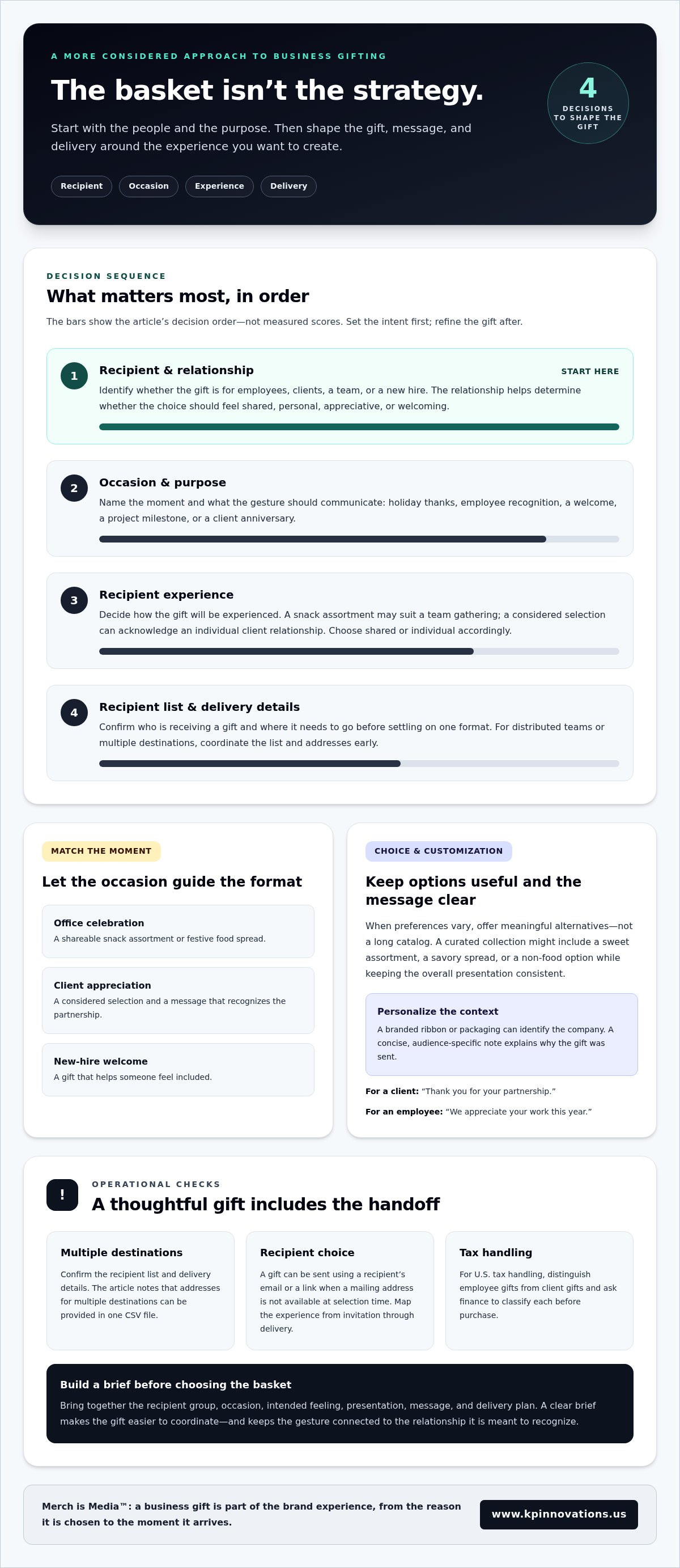
The basket isn’t the strategy. To choose holiday gift baskets for businesses, start with who will receive them, what the gift should communicate, and how it will reach each person. A clear brief around those details helps narrow the choices and gives a gift specialist the context to recommend a fitting option.
It’s easy to focus on the treats, but a corporate gift also represents the relationship behind it. A thoughtful choice can recognize employees, thank clients, or welcome new team members without feeling like a last-minute box checked off a list.
This guide explains how to match a basket to its recipient and purpose, what to consider when selecting food, presentation, and customization, and how to coordinate delivery across multiple addresses. It also shows how to treat gifting as part of the brand experience, so the gesture feels considered from selection through arrival.
Key Takeaways
- Start with the recipient and the purpose of the gift, then narrow the basket options to fit the relationship.
- Consider recipient-choice formats when preferences vary, and plan how gifts will be delivered across multiple addresses.
- Match food, sweets, wine, snacks, or wellness themes to the experience you want the gift to create.
- Assess business gifting providers by how well they handle customization, coordination, and fulfillment, not just product selection.
- Treat holiday merchandise as part of the brand experience, with each item supporting a deliberate relationship or recognition goal.
How can I get assistance with choosing the right corporate gift?
Start with three decisions: recipient, occasion, and message. Holiday gift baskets for businesses can range from shared food assortments to individually selected gifts. The right choice depends on who will receive them and what the gesture should communicate.
For U.S. tax handling, distinguish employee gifts from client gifts and ask your finance team to classify each before purchase. Record the recipient group and business purpose so your team can apply its tax process consistently.
Gift Basket Options by Recipient
Corporate holiday and Christmas baskets can recognize employees, thank clients, or serve both groups with distinct presentations. Consider the relationship, the recipient’s setting, and whether the basket will be shared. A snack assortment suits a team gathering, while a more personal selection can acknowledge an individual client relationship.
Use a short brief to guide the choice: name the recipient group, the occasion, and the intended feeling. For employees, that may mean appreciation after a demanding year. For clients, it may mean gratitude for a continuing partnership. Then choose contents and presentation that support that purpose.
Start with a decision process, not a product list. Ask the internal project lead to gather input from HR, marketing, and the account owner. HR can clarify employee recognition goals, while the account owner can explain the client relationship. This brief gives the gift a clear business purpose.
Next, define how recipients will experience the gift. A basket sent to an employee’s home feels different from refreshments placed in a shared office. For a distributed team, confirm the recipient list and delivery details before selecting one shared option. This helps prevent mismatched gifts and makes fulfillment easier to coordinate.
Gift Ideas for Different Occasions
Choose the occasion before choosing the basket. A holiday thank-you may call for a festive food spread, while a new-hire welcome may suit a gift that helps someone feel included. A project milestone, client anniversary, or employee recognition moment each carries a different message, so avoid treating every event as a December exchange.
Match the format to the moment: shareable snacks for an office celebration, a considered assortment for a client, or a welcome gift for a new colleague. Keep the purpose visible in the note and presentation. That connection makes the gift feel intentional rather than interchangeable.
Use this practical sequence to refine options:
- Identify the recipient: employee, client, team, or new hire.
- Name the occasion: holiday, milestone, welcome, or appreciation.
- Set the experience: shared, individual, celebratory, or personal.
- Review the details: recipient list, delivery destination, and message.
Finally, consider the range of recipients. A single basket may suit a close-knit office, while separate employee and client selections can better reflect different relationships. Keep the reason for each gift clear, and the basket becomes part of a thoughtful customer or employee experience, not just a seasonal delivery.
Custom gift collections recipients can choose from
A curated collection gives recipients options while keeping the company’s gesture coordinated. For a corporate program, define the gift’s purpose, set a consistent presentation, and let recipients choose among suitable gift types. That balance keeps the experience personal without making every selection feel disconnected from the company.
Choice can also simplify gifting across varied teams or client groups. A recipient might prefer a sweet assortment, a savory spread, or a non-food item. A useful collection offers meaningful alternatives, not a long catalog that shifts the decision burden onto the recipient. Keep the message and overall standard consistent across choices.
Some gifting programs let a company send a physical gift using only the recipient’s email or a link. That approach can help when an address isn’t available at the time of selection. For gifts going to multiple destinations, companies can upload one CSV file with the addresses, creating a single handoff for the order.
Before choosing a format, map the recipient experience from invitation to delivery. Decide what the recipient sees, how they make a selection, and what happens afterward. For example, a client might receive a link, choose a food collection, and see a short message explaining the company’s appreciation.
For business gift ideas, corporate customers can call the corporate sales team at 888-394-0394 to discuss holiday gift baskets for businesses. Prepare the recipient type, occasion, and desired tone before calling. Those details help focus the conversation on relevant choices rather than browsing without a clear goal.
Customization should support recognition, not overwhelm it. A branded ribbon can make the package recognizable, packaging can carry the company’s visual identity, and a concise message can explain why the gift was sent. Keep the message specific. “Thank you for your partnership” gives a client context, while “We appreciate your work this year” speaks directly to an employee.
Build one shared design system, then adapt the wording by audience. Keep logo placement and core colors consistent while tailoring the message for clients, customers, or employees. This helps the gift feel connected to the company without making a personal gesture read like an advertisement.
For a custom collection, write down its audience, selection logic, presentation, and message before sourcing begins. A thoughtful sourcing process from KP Innovations can connect those choices to the items selected. The result is a collection with a clear purpose, rather than a mix of gifts assembled without a shared experience in mind.
These tailored examples can help match a gift format to its recipient and occasion while keeping the available choices within a planned budget when ordering holiday gift baskets for businesses.
Gourmet food, wine, snacks, sweets, and wellness baskets
Food and drink gifts can feel generous, but recipient preferences shape the experience. Ask about dietary needs, allergies, and alcohol preferences before selecting a basket. Include clear ingredient information and a nonalcoholic alternative where appropriate.
Gourmet Food and Drink Options
A gourmet basket might pair coffee, crackers, preserves, and chocolates, while a savory option could include cheese, nuts, and snacks. Wine may suit some client relationships, but it won’t fit every recipient or workplace culture. Decide whether the gift is for an individual or a shared team spread, then choose items and presentation that suit the setting.
Fresh fruit offers a different direction from packaged gourmet treats. Consider a fruit-led basket for recipients who may prefer a lighter mix, or combine fruit with sweets and pantry items for variety. For a shared office gift, choose an assortment that can be set out and enjoyed by a group. For a client gift, consider a selection that feels complete on its own.
Dietary and Allergy Considerations
Dietary needs can affect the entire selection, not just one item. Before placing orders, identify known restrictions, review ingredient details, and avoid assuming that one “healthy” basket suits everyone. For example, a recipient avoiding nuts needs a different assortment from someone seeking vegetarian treats. Clear product information helps recipients make informed choices.
Alcohol deserves its own decision. A bottle of wine may fit a client relationship, while a coffee, tea, or sparkling juice selection can work for a broader audience. Consider the recipient group and setting before choosing. A mixed team gift should not make alcohol the only centerpiece, especially when recipients’ preferences are unknown.
Wellness-themed baskets can focus on tea, fruit, or other nonalcoholic treats. Keep the theme practical rather than making health promises. For instance, a tea-and-snack assortment suggests a quiet break without claiming a medical benefit. Pairing a clear message with the contents helps explain why that gift was chosen.
Packaging and delivery also shape food gifting. A basket shipped to a home has a different context from one delivered to a reception desk or shared office. Match the assortment to the destination, and provide useful contents information with the gift. For distributed orders, organize recipient details and delivery destinations before finalizing the selection.
Use a simple review before approving the basket: confirm the audience, dietary information, alcohol choice, and message. Then consider whether the assortment works as an individual gift or a shared spread. These steps help make gourmet food, wine, snacks, sweets, or wellness themes feel considered rather than interchangeable.
Holiday business gift baskets
Holiday gifting works best when the basket reflects the relationship, not just the season. Plan the selection, recipient experience, and delivery together so the gesture feels deliberate.
Holiday Basket Offerings
Holiday baskets can bring together sweet treats, savory snacks, cheese, and seasonal items. Choose a shared assortment for an office gathering or a more personal gift box for an individual recipient. A signature item can give the basket a recognizable center, while a concise note explains why the company is sending it.
For a client, a balanced mix can communicate appreciation without feeling overly familiar. For employees, a basket intended for sharing can support a team celebration. Match the contents and presentation to the setting, then consider whether the gift needs a customized ribbon, packaging, or message.
Comparing Gift Basket Companies
Compare providers by how clearly they explain the assortment, customization, and order process. A business order may involve separate recipients, different messages, and multiple destinations. Look for a process that lets your team review selections and delivery information clearly.
Also assess whether the presentation fits your company’s intent. A polished box with a short, specific message may suit a client relationship; a generous savory spread may work better for an office event. Don’t compare contents alone. Consider how the gift is coordinated from selection through delivery.
Advance Ordering Timing
Order once the recipient list, basket selection, and intended delivery date are established. The lead time depends on the degree of customization, the chosen assortment, the number of destinations, and how quickly recipient details are ready. A standard gift box involves fewer decisions than a custom presentation sent to many addresses.
Build the schedule backward from the planned arrival. Allow time for internal approval, finalizing the message, collecting accurate addresses, and resolving delivery details. If recipients choose their own gifts, include the selection period in the plan. A complete schedule helps your team avoid rushed decisions during the holiday period.
For a more organized holiday program, assign one person to own the recipient list and approvals. Keep a single working record of names, delivery addresses, gift selections, and any custom messages. That structure makes it easier to spot missing details before orders are submitted.
Think through the recipient journey, too. A client opening a gift box at home has a different experience from employees sharing cheese and savory snacks in a meeting room. Choose the format for that moment, and make sure the signature item and message support the relationship.
Holiday gift baskets for businesses become more meaningful when the selection, message, and arrival work as one experience. Make the business purpose clear, coordinate the details early, and choose a basket that feels appropriate for its recipients.
What are the best holiday gift basket companies for businesses in the U.S?
There isn’t one best choice for every business. The right partner depends on whether you need ready-made baskets, recipient choice, custom presentation, or coordination across a broader gifting program. Start by defining the goal: a client thank-you, an employee recognition gift, or a holiday experience for a whole team.
Then compare companies by how well their process fits that goal. A catalog-focused seller may suit a simple order of similar baskets. A more complex program may need support connecting selection, branding, recipient details, and delivery. For example, a company sending gifts to clients and employees may need distinct messages while maintaining a consistent standard.
Review the recipient experience, not just the product photos. Consider how recipients see the gift, whether they can choose among options, and how the message appears with the package. A polished presentation can still feel generic if the note says only “Happy Holidays.” A specific thank-you tied to a partnership or team achievement gives the gift context.
Operational fit matters, too. Consider how the ordering process handles address collection, personalization, and changes to recipient details. Decide who on your team will manage those tasks. If one coordinator must track every selection manually, the process may create more work than the gift program warrants. A defined workflow should make responsibilities clear.
For a useful comparison, assess each option against the same criteria:
- Selection: Do the gift formats suit your recipients and occasion?
- Customization: Can presentation and messaging reflect your business?
- Coordination: Are order details and approvals straightforward to manage?
- Fulfillment: Does the process suit your destinations and delivery plan?
- Program fit: Can gifting connect to broader recognition or client experience goals?
Use those answers to distinguish a basket purchase from a managed business program. A single team celebration may only require choosing an assortment and delivery date. A recurring client or employee initiative may benefit from consistent standards, clear ownership, and a way to review what works after each occasion.
Choose the company whose process makes the recipient experience and internal workload clear. If sourcing decisions are the sticking point, develop a focused sourcing plan around your audience, purpose, and operational needs. That gives your team a practical basis for selecting holiday gifts without treating the basket itself as the entire strategy.
KP Innovations: Promotional Products
KP Innovations helps businesses treat merchandise as part of the brand experience, not an isolated purchase. For holiday gifting, this approach can connect a basket with other moments of recognition, from employee milestones to client appreciation.
Promotional products, custom apparel, awards and recognition items, and print and display materials can each support a distinct audience or occasion. The right mix depends on the experience your team wants to create and how each item reinforces the relationship. Merchandise is media: what people receive can shape how they remember your organization.
Turn to KP Innovations when holiday gifting needs to fit a broader merchandise program or consistent brand experience. Contact KP Innovations or visit its website to explore the next step.
Make the Next Gift Part of the Brand Experience
A seasonal gift can support more than one moment of appreciation. Treating merchandise as media means considering the impression it leaves and the relationship it should strengthen, not just the package itself.
For holiday gift baskets for businesses, a useful next step is to connect the gift’s purpose with the broader experience you want recipients to have. KP Innovations can help shape that thinking through Merchandise Strategy and Product Sourcing, keeping the intended audience and brand experience in view.
Define what the gift should communicate, then explore a strategic sourcing approach with KP Innovations. A clear purpose gives your next gifting decision a stronger foundation.
Frequently Asked Questions
How much do corporate holiday gift baskets cost per recipient?
Per-recipient pricing depends on the gift and order details, and is provided after a quote request. Key factors include the assortment, custom packaging or messaging, delivery destinations, and fulfillment requirements. For a useful estimate, define whether recipients receive the same basket or choose from options. Also separate gift costs from delivery and customization needs in your planning brief.
Can businesses customize gift baskets with branded packaging, logos, or personalized notes?
Customization varies by basket and order format, so treat each request as a separate requirement. Decide whether recipient choice, a personal note, or visible brand elements matter most. If a logo is essential, make it a selection criterion rather than assuming every basket supports it. Review the chosen format against those requirements before committing, so the final gift aligns with your expectations.
What are the best holiday gift basket options for different budgets and recipient counts?
The best fit balances the available budget with the recipient experience. For a broad employee group, choose a consistent assortment that’s easy to distribute. For a smaller client list, reserve more room for personalization or recipient choice. Compare options by contents, presentation, shipping, and customization, then set a per-recipient allocation before finalizing the list.
Do corporate gift basket companies offer bulk discounts and direct-to-recipient shipping?
Some business gift orders can be shipped directly to recipients, and bulk discount terms depend on the order. Ask for the full quote to distinguish product, customization, and delivery costs. Before submitting an order, assign an owner to reconcile the recipient list with shipping details. Keep employee and client records separate to reduce address and message mix-ups.