
A logo is only the starting point. Branded merchandise for global teams can be customized through product selection, color, artwork, decoration placement, packaging, and apparel design. The strongest choices connect these details to a clear purpose and the experience you want recipients to have.
That distinction matters when teams work across locations and merchandise supports recruiting, onboarding, recognition, or customer relationships. A logo creates visual consistency, but an item’s relevance and how it reaches people also shape the experience. Planning these decisions together keeps merchandise purposeful instead of turning every order into a separate task.
This guide explores how to customize merchandise beyond logo decoration, choose gifts for different business moments, and organize selections through employee stores. It also considers how branded apparel can support remote and hybrid teams. You’ll find practical ways to approach product choice, employee experience, and program coordination, so merchandise can do more than display a mark. It can become a considered part of how your organization builds connections across teams and with the people it serves.
Key Takeaways
- Centralize product choices, ordering, and workflows to create a more consistent merchandise experience across locations.
- Choose corporate gifts for their purpose and usefulness, not just their logo placement.
- Plan giveaways and swag bags around the experience you want recipients to remember.
- Use an online merch store to give employees a clear way to select items and support fulfillment.
- Build apparel programs around fit, comfort, and how employees will wear the pieces across remote and hybrid teams.
Are there other ways to customize my items beyond logo decoration?
Yes. Customization can include product design, color, materials, decoration placement, packaging, and labels. For example, a welcome item might feature a team color, a custom message, and packaging that introduces the organization’s culture. The logo is just one element. The complete presentation makes the item feel chosen for its purpose.
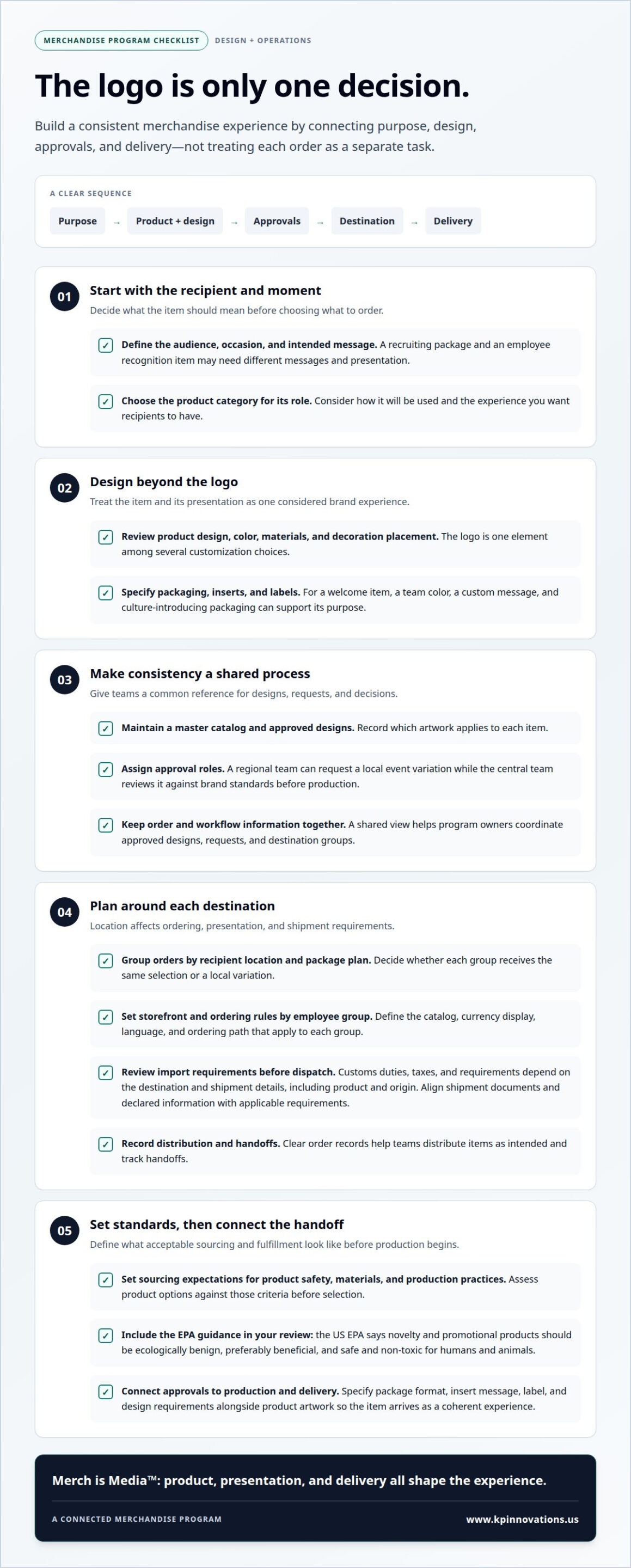
Start with the experience, then map the decisions needed to deliver it. Define the recipient and occasion, select the product category, approve the artwork and decoration, then set packaging and distribution requirements. A recruiting package and an employee recognition item may share a brand system but call for different messages and presentation. Documenting those choices helps teams make consistent decisions across orders.
Centralized product, order, and workflow management gives program owners a shared view of approved designs, requests, and destination groups. Establish a master catalog, assign approval roles, and record which artwork applies to each item. For example, a regional team can request a local event variation while the central team reviews it against brand standards before production.
Global merchandise production and delivery require planning by destination. Organize orders around where recipients are located, how items will be packaged, and whether each group receives the same selection. A campaign might use consistent artwork while adapting an insert or package for a local event. Clear order records help teams distribute items as intended and track handoffs.
Customs duties, taxes, and import requirements depend on the destination and shipment details, including the product and its origin. Build a destination-specific review into the workflow before dispatch so shipment documents and declared information align with applicable requirements.
Sustainability and ethical sourcing standards should address product safety, materials, and production practices. The US EPA says novelty and promotional products should be ecologically benign, preferably beneficial, and safe and non-toxic for humans and animals. Set sourcing expectations before selecting products, then assess the options against those criteria.
Global merchandise platforms can support multiple currencies, languages, and locations through localized storefront settings and destination-based ordering workflows. For example, employees can view product information in a familiar language while order records capture their delivery location. Program owners should define which catalog, currency display, and ordering path apply to each employee group.
Custom packaging and private-label details add further control. Specify the package format, insert message, label, and any design requirements alongside the product artwork. A turnkey design, production, and delivery process connects approvals with fulfillment, helping each item arrive as a coherent brand experience.
Corporate gifts and promotional merchandise
A corporate gift should express something specific about the relationship. Start by identifying the recipient, occasion, and intended message. A thank-you after a completed project might call for a useful item paired with a personal note. A conference giveaway serves a different purpose: it should be easy to distribute and relevant to the audience. Decide the role first, then choose the merchandise.
Everyday items and premium gifts can support different moments within the same program. A broadly distributed item can keep a brand present in daily routines, while a more personal gift can recognize a meaningful business relationship. Premium doesn’t have to mean elaborate. Thoughtful selection, considered packaging, and a message tied to the occasion can make a gift feel intentional.
Drinkware and coffee gifts are useful choices when they match recipients’ routines. The 25 oz CamelBak Thrive™ bottle is made with Tritan™ Renew. The Intrepid Stainless Steel Tumbler has a 40-ounce capacity, and the Lagom Insulated Stainless Steel Tumbler has a 16-ounce capacity. These examples illustrate why format matters: consider whether recipients need a bottle for carrying or a tumbler suited to a desk or coffee break.
For client gifting, tailor the item to the relationship stage and reason for reaching out. A project kickoff, successful launch, and thank-you after collaboration each create different opportunities. Include a concise message that names the moment. The gift then supports the relationship instead of feeling like an unrelated object. For recipients in different locations, plan how the package will be presented and delivered.
Employee recognition also benefits from a clear link between the gesture and the contribution. An award or selected gift can acknowledge a team achievement, while an accompanying note explains what the organization appreciates. Set a consistent process for nominations, approvals, and distribution. This helps managers make recognition meaningful without making every gesture feel identical.
Plan the program around the occasion and audience. Separate recurring gifts from event-specific items, decide which selections need advance production, and reserve on-demand ordering for seasonal or specialized needs. This approach can help teams manage stock while keeping choices relevant. Review which items were selected and how recipients responded, then use those observations to refine future gifting.
Product sourcing should connect each choice to its intended use, presentation, and delivery plan. A considered merchandise sourcing approach helps keep those decisions aligned. Choose the gift for the relationship it should support, not just the logo it can display.
What is company swag?
Company merchandise can create brand experiences, support relationships, and bring teams together. Its impact depends less on the logo than on the reason, timing, and recipient.
Giveaways and Swag Bags
Marketing giveaways introduce a brand through useful items distributed at events, meetings, or community activities. A swag bag groups selected items around one audience or occasion, such as a conference kit with a notebook, bottle, and event guide. Before choosing products, define who receives the bag and what they should remember. Then select items for that moment instead of filling space.
Holiday and quarterly drops give distributed teams a shared moment. A company can coordinate a quarterly shipment so remote employees receive merchandise at the same time. For a holiday package, choose a theme that fits the company culture, then add a card explaining the gesture. Schedule the drop around the moment it supports and plan how recipients will receive it across locations.
Creative merchandise can feel more personal without making every order unique. For example, a team could add a welcome message, a location-specific insert, or artwork tied to an internal campaign. Wellness and self-care selections can support a defined employee program: a journal for reflection, a reusable bottle for daily hydration, or a comfort item for a care package. Match each item to the program’s purpose.
When comparing global company merchandise platforms, consider catalog controls, localized browsing, order workflows, and fulfillment coverage. A platform should make clear which products employees can select, how orders are routed, and how delivery is managed across locations. Comparing these functions shows whether the experience can serve distributed teams, rather than simply display merchandise.
Company Swag Stores
A company merchandise store lets employees browse and order branded apparel and merchandise online, with fulfillment and delivery managed through the store workflow. Companies can provide access through stipends, gift codes, or reward points. Evaluate the employee journey: Can people find relevant options, understand how to use their allowance, and place an order without navigating an unclear catalog?
Print-on-demand produces items when employees order them, which can reduce inventory waste and support distributed or global teams. A store can offer apparel, drinkware, desk accessories, tech gear, fitness and outdoor items, and seasonal merchandise. Set the catalog around employee needs, then choose whether recipients select items freely or from a focused collection.
Use a simple review process for merchandise programs: define the audience, connect each drop to an occasion, select useful items, and assess participation afterward. If employees repeatedly choose bottles but ignore novelty items, adjust the next collection. That feedback makes merchandise more relevant, supports lasting engagement, and gives each program a clear purpose.
Online merch stores for employee selection
An employee store makes merchandise selection a structured part of the employee experience. It can connect welcome gifts, recognition, and team apparel through one online catalog.
A virtual team store lets employees browse and order branded apparel and merchandise online, while fulfillment and delivery are managed through the store workflow. Companies can provide access through stipends, gift codes, or reward points. For example, an employee might use a gift code to choose a jacket rather than receive the same standard item as everyone else.
Selection works best when the catalog has a clear purpose. Group options by occasion, such as onboarding, team apparel, or seasonal recognition. Keep descriptions practical so employees understand what each item is for and how to choose it. Print-on-demand produces items when employees order, which can reduce inventory waste and support distributed teams.
Recognition, Appreciation, and Welcome Gifts
Recognition stores can give employees a tangible way to mark contributions, work anniversaries, or team achievements. For example, a five-year work anniversary could be recognized with a jacket. Pair the item with a message explaining the achievement, so the employee understands why the gesture matters.
For a welcome kit, combine useful items such as a notebook, water bottle, apparel, or tech accessory. A handwritten welcome letter or branded stickers can add a personal touch. Decide whether new employees choose from the store or receive a curated kit. That choice helps HR align the gift with onboarding goals.
Employee Identity and Comfort
Apparel can help employees feel connected to a team, especially during a product launch or shared company event. For example, remote colleagues wearing the same branded shirt can create a visible shared moment. Offer choices suited to how employees work, such as a jacket for cooler settings or a comfortable shirt for casual team gatherings.
Comfort depends on relevance and employee choice, not just a logo. Letting people select from a focused range can make the experience feel more personal. For morale, pair apparel with meaningful recognition or a clear team purpose. Avoid treating a store as a warehouse of unrelated items; each option should support belonging or meet an employee need.
Build the store around a simple process: define eligible employees, select the catalog, assign access, and explain how orders work. Then review which items employees choose and use that feedback to refine future selections. A well-managed store connects gifts and apparel with moments employees value, while keeping ordering and delivery organized.
Branded apparel for remote and hybrid teams
Apparel can help distributed colleagues feel connected, but only when people want to wear it. Treat each garment as part of the employee experience, not simply a moving logo. Start by identifying its use: a product launch, team gathering, customer-facing role, or everyday workplace wear. Branded merchandise for global teams works best when apparel suits different roles and work settings.
Custom apparel gives teams control over color, decoration placement, and design details. A consistent visual system can connect employees across locations while allowing for practical choices. For example, offer a coordinated shirt and layer, then let employees select the piece that suits their work setting and personal style. Planning branded merchandise for global teams starts with balancing shared identity and individual usefulness.
Outerwear can support employees working across changing climates or traveling between locations. Before selecting a jacket or vest, consider where people will wear it, how it layers, and whether the decoration suits the garment. A design that works on a shirt may need different placement on heavier fabric. These choices make the apparel more relevant to its intended use.
Fit is central to whether employees use apparel. Make sizing information easy to understand, and let employees select sizes through a clear ordering process. For teams in different locations, review size guidance and the ordering experience before opening access. The goal is useful apparel people can choose confidently, without assuming every employee has identical preferences.
The Richardson Recycled Trucker Cap is described as being made from 100% sustainable polyester. A cap can complement a broader apparel program, but it should fit the team’s use and visual direction. Consider whether its shape, color, and decoration suit the intended setting before adding it to the collection.
Drinkware and bags can extend an apparel program into everyday routines. Pairing a branded shirt with a bottle or tote can create a coordinated welcome or event set. Choose each item for a distinct role, then align the colors and artwork so the group feels intentional rather than assembled from unrelated products.
For a remote product launch, teams might wear coordinated apparel during a shared virtual meeting. For hybrid teams, the same design can appear at an in-person gathering and in employee photos. Giving apparel a clear occasion helps employees connect the item to a shared experience.
Before production, approve the design, confirm garment choices, and organize the employee ordering process. A focused catalog makes custom apparel easier to select without requiring everyone to receive identical items. To develop a sourcing approach for apparel that fits your team and program goals, explore merchandise sourcing.
KP Innovations: Promotional Products
KP Innovations helps organizations connect merchandise choices to the experiences they want employees and customers to remember. Promotional Products, Custom Apparel, Awards & Recognition Items, and Print & Display Materials can support different moments, from welcoming a new team member to recognizing an achievement.
Turn to KP Innovations when product selection, creative decisions, and delivery need to work as one coordinated program. The strategic question is not simply what to put a logo on. It’s how each item can reinforce the brand experience and serve a clear purpose. That’s the thinking behind “Merch Is Media™.”
For a merchandise program shaped around your organization’s needs, visit KP Innovations.
Make the Next Merchandise Choice More Intentional
Treat merchandise as part of the experience you’re designing, not as a separate purchasing task. Before planning a launch, welcome, or recognition moment, decide what you want recipients to feel and remember. That purpose can guide the creative direction, product choices, and distribution plan for branded merchandise for global teams.
A focused sourcing process connects those decisions. Consider how each item fits the audience, the occasion, and the way people will use it. Then align product selection with the broader brand experience, so every choice has a reason behind it.
KP Innovations can help organizations develop a merchandise approach around those priorities. Explore merchandise sourcing with KP Innovations as you shape your next program.
Start with the experience you want to create. The right choices can make your brand more present in the moments that matter.
Frequently Asked Questions
What Can Be Included?
A company merchandise program can include promotional products, custom apparel, awards and recognition items, and print or display materials. The mix depends on the experience you want to create. For example, a recruiting campaign might pair a welcome item with event materials, while an internal recognition program could center on an award. Include creative approvals, order access, and fulfillment planning in the program design, not just the product list.
What Is a Virtual Team Store?
A virtual team store is an online shop where employees can select from company-approved merchandise. It can organize items by purpose, such as team apparel, onboarding, or recognition, and provide access through a stipend, gift code, or reward points. Before launch, define who can use the store, which items are available, and how orders are fulfilled. These decisions shape a clear, useful employee experience.
Which vendors ship branded merchandise internationally?
Look for a merchandise partner with fulfillment capabilities that include global distribution, rather than assuming every product program serves international teams. KP Innovations provides global fulfillment alongside promotional merchandise and apparel programs. For a distributed workforce, align the catalog, ordering process, and destination planning so the merchandise program works across locations. The operational fit matters: product selection and fulfillment need to support the same employee or customer experience.
What are typical costs for global company swag and international shipping?
Costs depend on product selection, customization, order volume, packaging, and destination-specific fulfillment needs. International shipping costs are influenced by shipment details and destination, so one general figure would not represent every program. Pricing for merchandise and services depends on the project and is provided after a quote request. A useful first step is to define the audience, item purpose, and distribution approach.
How can companies manage branded merchandise inventory for distributed teams?
Start with a central record of approved items, available stock, orders, and the teams or locations receiving them. Assign clear ownership for catalog updates and replenishment decisions. Separate recurring essentials from event-specific or seasonal items, then review order patterns before placing future production orders. This gives operations and HR a shared view of what is being used and helps prevent local teams from ordering inconsistent designs.
What products work best for employee gifts across different countries and cultures?
Choose practical items that allow for personal preference and suit the recipient’s work context. Apparel, drinkware, bags, and desk accessories can serve different routines, but no single choice suits every team. Offer a small, considered selection where possible, and avoid assumptions about local customs or tastes. For cross-border recognition, a digital store credit can let employees choose from approved options themselves.
How do global swag vendors handle fulfillment, tracking, and delivery times?
Fulfillment workflows can cover warehousing, kitting, shipping, and tracking. Delivery timing depends on the item, production sequence, destination, and distribution method. A coordinated process should define how orders move from approval to shipment and how status information reaches program owners. For a launch or onboarding cycle, plan backward from the intended arrival moment and coordinate the order schedule with each location.
How can companies maintain consistent branding across regions and local vendors?
Create shared brand standards for merchandise, including approved artwork, color use, logo placement, and decoration guidance. Keep master creative files and current product specifications in one controlled location. Then require each regional order to follow the same approval workflow before production. If a local adaptation is needed, document the change and its approval. This gives local teams flexibility while keeping the overall brand experience recognizable.