
A strong executive gift is one well-chosen object, not several smaller items competing for attention. Memorable giveaways for C-level executives might include branded drinkware, a leather journal, a refined desk accessory, or a personal detail that makes the gesture feel considered. The right choice reflects the relationship and gives the recipient a reason to keep it close.
Choosing a gift for a senior leader calls for balance: it should be distinctive without being showy, and personal without making assumptions. A useful, thoughtful item can show appreciation and strengthen a business relationship. Put the recipient’s experience first, with branding that supports the gesture rather than taking it over.
This guide explores executive gift ideas, from drinkware and accessories to personalized journals and desk pieces, along with subtle ways to add a name, message, or logo. You’ll learn what makes each category worth considering and how to choose an option suited to the occasion, recipient, and brand.
Key Takeaways
- Match the gift to the occasion and relationship so the gesture feels intentional, not routine.
- Choose drinkware and accessories the recipient can use, with branding that supports the experience rather than dominating it.
- Personalize journals and padfolios with details that make them feel individual while keeping them practical for work.
- Use desk accessories to recognize a milestone or contribution in a way that has a place in the recipient’s daily environment.
- Before sending a gift, consider the recipient’s organization policies and the timing of any active business decisions.
1. What are the best executive/corporate gift ideas?
The best executive gift fits the recipient’s role, your relationship, and the occasion. Consider a premium pen for a leader who signs client agreements, or a specialty coffee set for someone who hosts colleagues. A personalized keepsake can mark a company anniversary or leadership milestone. The goal isn’t to choose the most elaborate object. Choose something useful or meaningful, then make the reason for giving clear.
For high-end tech, travel, and desk gifts, choose a category that fits the recipient’s routine. A travel organizer may suit an executive who spends time on the road; a refined desk accessory may suit someone whose work centers on the office. Personalized premium giveaways executives actually use can include drinkware, a leather journal, or an engraved pen. Discreet branding keeps the object useful outside the gifting occasion.
Unique corporate gifts for CEOs can tell a story beyond the company logo. A Digital Gift Story can pair a keepsake with a message explaining its connection to a shared achievement. For a sustainability-minded recipient, consider a Tree Kit or a named grove. Locally made goods can also reflect the recipient’s community. Choose these options because their meaning fits the person, not simply because they sound distinctive.
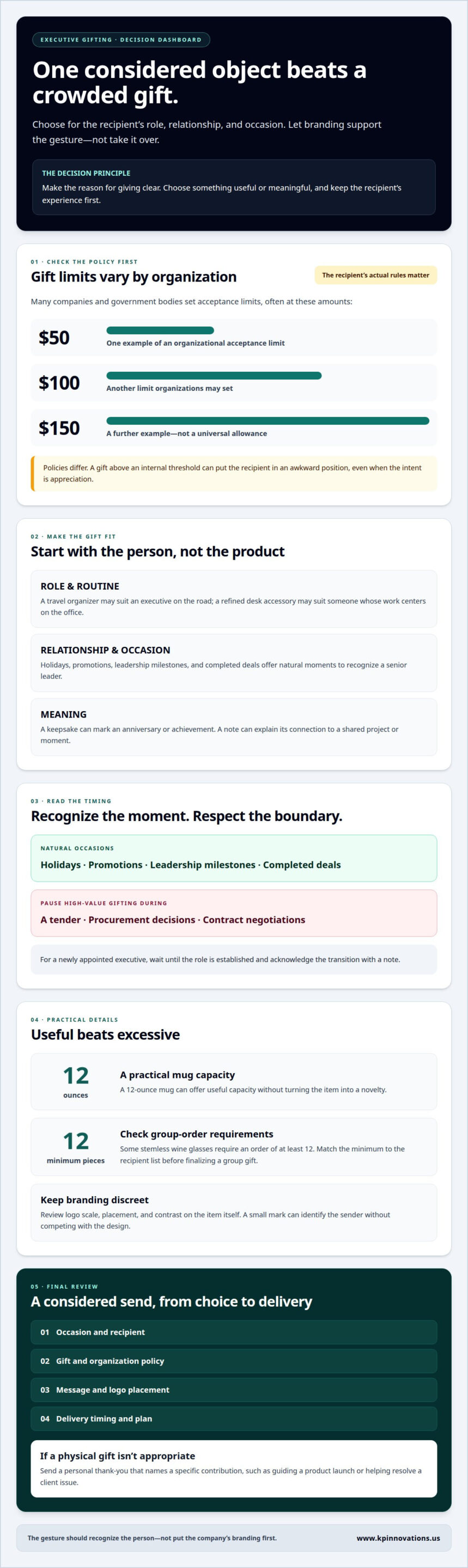
Timing matters. Holidays, promotions, leadership milestones, and completed deals offer natural opportunities to recognize senior leaders. Avoid a high-value gift while a tender, procurement decision, or contract negotiation is active. For a newly appointed executive, wait until the role is established and send a note that acknowledges the transition. This gives the gift a clear purpose beyond an unresolved business decision.
Before selecting an item, review the recipient’s gift and hospitality policy. Many companies and government bodies set acceptance limits, often at $50, $100, or $150. Policies vary by organization, so the recipient’s actual rules matter more than a general gifting custom. A gift that exceeds an internal threshold may put the recipient in an awkward position, even when the intent is appreciation.
If the recipient can’t accept a physical gift, send a personal thank-you message instead. Mention a specific contribution, such as guiding a product launch or helping resolve a client issue. A Digital Gift Story can also convey the reason for recognition without sending an item. Keep the message focused on the relationship, without expecting a reply or reciprocal gesture.
Before sending, review the occasion, recipient, policy, message, and delivery timing. An appropriate executive gift feels considered, serves a purpose, and respects professional boundaries. An engraved keepsake tied to a leadership achievement can feel more personal than several unrelated items. Choose quality and personalization with restraint, so the gesture recognizes the person rather than putting the company’s branding first.
2. Branded drinkware and accessories
A drinkware gift earns a place in a leader’s routine when it suits how they work. Consider an insulated coffee mug for a daily commute, or a stemless glass for an appropriate client milestone. A 12-ounce mug offers a practical capacity without turning the item into a novelty. The recipient’s habits matter more than adding a prominent logo.
Think beyond cups when building a coordinated collection. A wine tote, coasters, or a whiskey flight can extend the gesture without making it feel like a random assortment. Pair a whiskey flight with Glencairn glasses to give each piece a clear use. Choose accessories that connect through a shared occasion or material, rather than simply adding more items.
Branding should help the recipient recognize the sender, not dominate the object. Place a small logo where it won’t compete with the drinkware’s design, and use a discreet mark on an accessory. Before production, review the logo’s scale, placement, and contrast on the item itself. A design that looks balanced on screen may feel oversized on a curved mug.
An executive assistant can help make delivery and presentation more thoughtful. Share the occasion, confirm the recipient’s preferred name, and coordinate delivery details through the assistant when appropriate. Don’t assume the assistant chooses gifts for the senior leader. Instead, treat them as a helpful partner in getting the details right, especially when several recipients belong to one executive team.
Presentation completes the experience. Pair a travel mug with a short note connecting it to a specific meeting, project, or shared company moment. For a collection that includes wine glasses, explain the occasion rather than using a generic greeting. Keep packaging neat and easy to open, so the recipient encounters the note and gift in a deliberate order.
Group gifting calls for a separate production check. Some stemless wine glasses require an order of at least 12, so match the item’s order minimum to the recipient list before finalizing a plan. For an individual executive gift, prioritize a single useful piece and a personal note. That distinction helps keep a senior recipient’s gift appropriate while avoiding excess items for an employee or broader group.
Use a simple review before approving a branded accessory: confirm the recipient, occasion, item, logo placement, note, and delivery plan. For example, a discreetly marked mug with a specific thank-you message communicates more than a large logo alone. Thoughtful product sourcing can help align the item, presentation, and brand details with the experience you intend to create.
3. Personalized leather journals and padfolios
A leather journal or padfolio gives an executive a useful place for meeting notes, plans, and ideas. It can mark a promotion, major project, or leadership anniversary with a gift tied to the recipient’s daily work. That connection makes the gesture more thoughtful than a generic item selected without context.
Choose a format that suits how the senior leader works. A journal suits someone who captures ideas by hand; a padfolio can help organize notes and documents during meetings or travel. Consider whether the recipient prefers a compact notebook or a larger writing surface. A relevant format makes personalization feel intentional, not like decoration added to an unsuitable gift.
Keep custom branding restrained. A small company mark on the inside cover can identify the sender without turning the journal into a promotional billboard. Initials, a name, or a short recognition message can make the outside more personal. Some leather journal covers allow up to 15 characters, so concise wording can preserve space and remain legible.
Engraving and debossing create different effects. Engraving marks a design into a surface, while debossing presses it into the material. For example, initials on the cover may feel personal, while a company logo inside can keep the brand visible. Review spelling, capitalization, and placement before approving production. Proofing helps prevent avoidable personalization errors.
For one executive, use a personal detail such as initials or a message tied to a specific achievement. For wider employee recognition, keep the journal format consistent and personalize each recipient’s name. This creates a shared experience without making every gift feel identical. It also distinguishes milestone recognition from routine company merchandise.
Presentation adds context. Include a handwritten note naming the contribution or moment being recognized, such as leading a complex launch or mentoring a new team. Keep the message specific and concise, with the journal as the central gift. A coordinated sleeve or presentation box can complete the experience without competing with the leather finish.
Build production time into the gifting plan. Custom executive gifts, including engraved or embroidered items, typically require 2 to 4 weeks. Allow time to confirm names, review artwork, approve placement, and prepare the note before the intended delivery. A clear sequence reduces last-minute changes and supports a polished result. The detail that matters most is the link between the personalization and the reason for recognition.
4. Desk accessories and nameplates
A desk accessory becomes a meaningful executive gift when it reflects how the recipient uses their workspace. A nameplate can mark a new leadership role, while a paperweight or pen holder adds a functional detail to a desk. Match the item to the occasion instead of choosing an object simply because it carries a company logo.
Start with the space the recipient will use. A compact paperweight may suit a crowded desk, while a desk clock can serve as a visible feature in a private office. A pen holder works best when the executive regularly takes notes or signs documents. These examples give the gift a clear purpose and help avoid adding another unused object.
Nameplates call for careful attention to the recipient’s title, name, and preferred presentation. Confirm spelling and capitalization before production, then review how the text looks against the material and finish. A restrained design can feel personal without making the office look like a promotional display. For a new role, use the title the leader holds when the gift arrives.
Personalization can connect a desk piece to a specific achievement. An engraved message might recognize a completed project or leadership milestone, while a discreet logo identifies the organization presenting it. Keep the message concise and specific. A brief reference to the occasion carries more meaning than a generic phrase that could accompany any gift.
Coordinate packaging with the object’s shape and finish. A crystal clock, for example, needs secure presentation that protects its polished surface and makes it easy to unwrap. Place a short note where the recipient will see it before setting the item on a desk. That sequence links the physical gift to the appreciation behind it.
Timing affects presentation too. For a crystal desk clock requiring engraving during Q4, plan to order at least three weeks in advance. Build in time to approve the inscription and prepare the packaging before the holiday delivery. For other occasions, set the delivery date around the recognition moment, not merely the company’s gifting calendar.
Before sending, check the name and title, confirm the engraving, inspect the finish, and match the packaging to the item. A desk accessory should sit naturally beside the recipient’s existing tools, such as a journal or pen. This final review turns gifting from a logo placement exercise into a deliberate expression of recognition.
5. Custom logos, names, and messages
Custom details should explain why a gift was chosen, not just identify who sent it. Decide what the recipient should notice first: the occasion, personal message, or company identity. A curated set for a board member might center on a short note, with the logo placed discreetly on one piece. This hierarchy keeps the gesture personal and the brand present without making the gift feel like office inventory.
Keep logo placement suited to the object. A small mark on a journal’s inside cover or a subtle imprint on a desk accessory can identify the sender without overwhelming the design. Before approving artwork, review the placement, scale, and contrast on each item. A logo may suit a smooth surface but need adjustment on a curved or textured piece. Approve each application rather than assuming one mockup represents the whole collection.
Names need a separate accuracy check. Confirm each recipient’s preferred name, spelling, capitalization, and title before personalization begins. For a group of leaders, use one shared template and verify each detail against the recipient list. A mistaken name can distract from the intended appreciation. Before packaging and delivery, match each personalized item to its recipient.
Engraving works best when the message fits the available space. A name, initials, or brief recognition phrase can make an object feel individual; long copy may be difficult to read. The Full-Grain American Leather Bookmark can be personalized in six different styles, showing how format shapes customization. Choose a style that suits the message and item’s design, rather than adding detail simply because an option exists.
Write messages around a real moment. “Thank you for guiding the product launch” gives a clearer reason for the gift than a generic “With appreciation.” For a senior leader, mention a specific contribution or shared milestone. Keep the wording concise enough to read at a glance, then check names, punctuation, and the occasion before final approval.
For coordinated gifts for executives, establish a simple system: choose a shared brand treatment, define which details vary, and review the finished set. For example, each item might carry the same discreet company mark, while each note names the recipient’s contribution. This keeps the pieces visually connected while giving each person a distinct reason to remember the gesture.
Thoughtful sourcing starts with the intended experience. Plan custom merchandise sourcing around the recipient, message, and branding details, so the object and its presentation work together. That turns a logo from decoration into one considered part of a lasting brand interaction.
KP Innovations: Promotional Products
KP Innovations helps organizations make executive gifts part of a deliberate brand experience, not a collection of disconnected items. Turn to the team to align a gift with a leadership milestone, recognition moment, or client relationship. Its offerings include Promotional Products, Custom Apparel, Awards & Recognition Items, and Print & Display Materials.
The right object is only one part of the experience. Selection, personalization, presentation, and fulfillment all shape how a recipient remembers the gesture. KP Innovations brings these details together through a merchandise strategy built around the idea that Merch Is Media™: tangible items can carry a brand’s meaning into real relationships.
To discuss executive gifting for your organization, contact KP Innovations or visit kpinnovations.us.
Make the next executive gift part of a bigger experience
Before choosing an item, decide what you want the recipient to remember about the relationship. That intention can guide the design, message, and delivery, keeping every detail aligned rather than treating gifting as a last-minute task. Memorable giveaways for C-level executives work best when they express a clear point of view about the connection you’re building.
Use each gifting moment to learn what resonates. Notice which items recipients keep, use, or share, and apply those insights to future decisions. Over time, individual gestures can become a more consistent brand experience, shaped by the people and relationships that matter most.
Ready to plan an executive gift around your audience and brand? Explore sourcing support for executive gifts and take the next step toward a more intentional gifting program.
Frequently Asked Questions
What are the best executive/corporate gift ideas?
The best corporate gift connects to the recipient’s role or a shared business moment. A premium pen can suit a leader who signs important documents, while a specialty coffee set may work for someone who enjoys hosting clients. For a major company anniversary, consider a commemorative keepsake that marks the occasion. Focus on usefulness and a clear reason for giving, not an impressive-looking object without context.
Should I contact the executive assistant before sending a gift?
Yes, contacting the executive assistant can help coordinate delivery and avoid practical surprises. Share the purpose of the gift and ask about the preferred delivery process, without putting the assistant in the position of approving a policy exception. A discreet package sent to the office, for example, may be more appropriate than a home delivery. Address the note to the executive and make coordination easy for the assistant.
What is a good luxury gift for a CEO?
A good luxury gift for a CEO is distinctive, useful, and appropriate to the relationship. Consider a custom commemorative object tied to a company achievement, or a carefully selected timepiece for a personal leadership milestone. Its significance should come from its connection to the recipient, not its price or size. Include a concise note explaining the choice, so the item feels deliberate rather than like a standard corporate gesture.
What is an appropriate price range for an executive gift?
An appropriate budget depends on the relationship, occasion, recipient’s organization policy, and purpose of the gift. First understand the recipient’s acceptance rules, then choose an item proportionate to the relationship. A modest, relevant gesture may be more suitable than an expensive one. For planning, account for the full presentation, including personalization and packaging, rather than judging appropriateness by the object alone.
What memorable executive gifts are appropriate for C-level executives?
Memorable giveaways for C-level executives should reflect a genuine connection to the recipient or occasion. A keepsake linked to a company milestone, a curated coffee selection for a known enthusiast, or a well-made pen for a frequent signer can all feel considered. The right choice depends on the person’s preferences and workplace context. A short message naming the reason for recognition helps distinguish the gesture from routine corporate gifting.
What is the typical budget per executive giveaway?
No single budget suits every executive giveaway. Set the amount by considering the business relationship, number of recipients, gifting occasion, and each recipient’s organization policy. A gift for a key relationship may call for a different approach from gifts distributed across a leadership team. Decide the purpose first, then allocate spending consistently across comparable recipients and include presentation and delivery in the plan.
What corporate gifting etiquette and rules apply to executive gifts in the United States?
Check the recipient’s organization gift policy and avoid sending a high-value gift during an active procurement decision or contract negotiation. Policies differ, so acceptance limits aren’t universal. For federal tax treatment, the Internal Revenue Service says business gifts are deductible up to $25 per recipient per year. That tax deduction limit is separate from whether a recipient can accept a gift under their employer’s policy.
What gifts should be avoided when giving to C-level executives?
Avoid gifts that conflict with the recipient’s policy, create pressure, or feel too personal for the relationship. An expensive item during an active contract negotiation can raise concerns, while a prominently branded object may feel more like advertising than appreciation. Skip generic gifts with no connection to the recipient or occasion. If a physical item isn’t appropriate, a sincere thank-you note naming a specific contribution can still communicate recognition.