
The cheapest swag can carry the highest brand cost. Knowing how to avoid looking cheap with swag starts with choosing items that feel considered: useful, well-made, and suited to the people receiving them. Premium isn’t just a bigger price tag; it shows in the material, fit, finish, and purpose.
A low-cost item can still reflect a thoughtful brand when it’s comfortable, practical, and made to last. But a poorly fitting garment or flimsy-feeling item can undermine the care behind your brand. Merchandise is part of how people experience your organization, not just a logo on an object.
This guide shows you what makes swag feel premium, how to weigh upfront cost against lasting value, and how to choose apparel that fits and supports your brand image. You’ll also learn how a strategic approach can make each item feel intentional, helping your budget go further without compromising the experience.
Key Takeaways
- Look beyond the logo: material, finish, usefulness, and fit shape whether an item feels considered.
- Balance upfront spend with how often an item is likely to be used and how well it holds up over time.
- Choose apparel with sound construction and a fit that helps recipients feel comfortable wearing it.
- Consider how each item reflects your brand; a poor-quality experience can affect how people perceive the organization behind it.
- Prioritize items that suit the audience and purpose, so perceived value comes from relevance rather than price alone.
1. Buying premium swag on a budget
Premium swag starts with thoughtful choices, not a large budget. Pick an item people will use, then focus on details they notice: fabric, finish, fit, and decoration. A simple cotton tote with a clean print can feel more considered than a complicated item with multiple finishes. Spend where it makes a noticeable difference.
For custom swag in the United States, look for a strategic partner who connects product selection, decoration, and fulfillment to your audience and purpose. They should be able to explain trade-offs, such as choosing a simpler design to preserve the quality of a garment or finish. Evaluate the full experience, not just the item in a catalog.
Set your budget by separating essentials from extras. First define the item’s purpose, such as welcoming new employees or thanking event guests. Protect the features that support that purpose, and simplify less important details. A useful jacket with restrained embroidery, for example, may make more sense than a basic garment with oversized, multicolor artwork.
Plan quantities around the people and moments you can anticipate instead of chasing a lower unit cost with excess inventory. Consider the confirmed audience, distribution plan, storage capacity, and replenishment needs. A fixed-guest-list event calls for a different order than an ongoing onboarding program. Keep a reserve only when you expect to distribute it later.
Material choice can also create a premium impression without relying on elaborate decoration. Choose 100% cotton when it suits the garment’s purpose and desired feel. For accessories, soft-looking vegan leather can offer a polished alternative when real leather is beyond the budget. Judge materials in context: the item should feel appropriate for its use, not simply imitate a more expensive category.
Logo size and placement should complement the item, not dominate it. A small chest mark on a polo or a discreet imprint near a tote’s edge can leave the product’s shape and color in focus. Review the artwork at its actual size before production. Fine details that look clear on screen may feel crowded when reduced.
Refined color choices usually begin with a limited palette. Pair a neutral base, such as navy or charcoal, with one brand color instead of applying every color across the item. Tonal decoration can keep a logo visible without turning the product into a walking advertisement. PPAI Product Power 2026 found that 83% of people feel more appreciated after receiving a quality promotional item, reinforcing the value of thoughtful choices.
Before approving a design, consider the item, artwork, and recipient as one experience. A restrained cap, well-fitting shirt, or useful bag can represent a brand clearly without shouting. That balance is key to buying premium swag on a budget: invest in the features people touch and use, and remove decoration that adds noise rather than value.
2. Cost per wear and long-term value
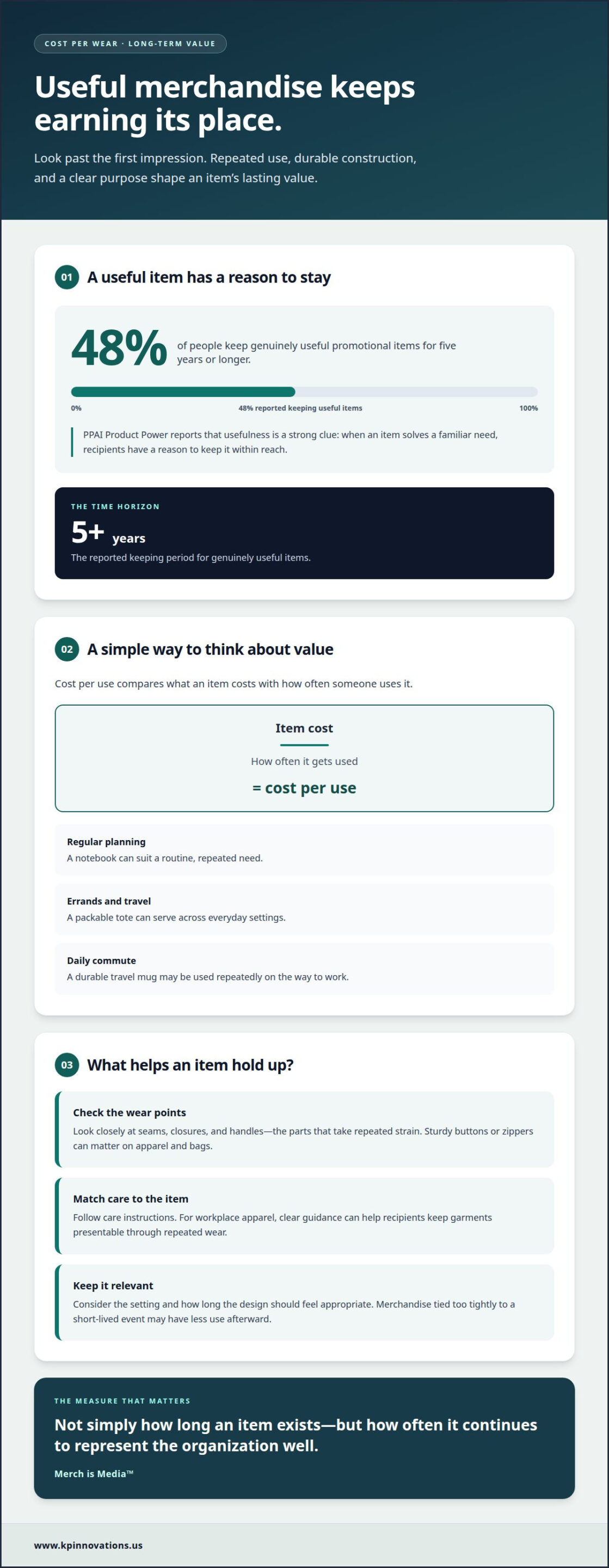
A useful item earns value through repeated use, not just its first impression. For branded merchandise, consider how often someone will reach for it, how well it holds up, and whether it stays relevant after an event. A durable travel mug used on a daily commute may create more lasting value than a novelty item forgotten after an afternoon. Cost per use is simple to assess: compare the item’s cost with how often it gets used.
Usefulness is a strong clue. According to PPAI Product Power 2026, 48% of people keep genuinely useful promotional items for five years or longer. That finding makes the intended use worth defining before choosing an item. A notebook suits regular planning; a packable tote can serve errands and travel. If an item solves a familiar need, recipients have a reason to keep it within reach.
Construction affects whether that usefulness lasts. Look for details suited to regular handling, such as sturdy metal buttons or zippers on apparel and bags. These fittings often resist rust and can last longer. Seams, closures, and handles also deserve attention because they bear repeated strain. A polished design cannot compensate for a zipper that sticks or a handle that begins to separate.
Care matters after distribution, too. Simple maintenance can extend the useful life of an item: wash apparel only when necessary, follow care instructions, and take high-quality garments to a dry cleaner when appropriate. For personal wardrobe items, resoling leather shoes and treating handbags can preserve their condition. In a workplace program, clear care guidance helps recipients keep apparel presentable through repeated wear.
- Estimate likely use: A desk accessory may see daily use, while an event-only item may stay in storage.
- Assess wear points: Check closures, seams, handles, and decoration where regular use creates friction.
- Match care to the item: Choose items recipients can maintain without special effort or confusion.
Plan for the setting, not just the first impression. A work jacket worn through changing seasons needs dependable construction and straightforward care. A one-time event giveaway has a different use pattern. Items with little purpose may be discarded quickly, while useful products designed for repeated use have a better chance of becoming part of someone’s routine.
Long-term value also depends on whether an item stays appropriate. Avoid designs tied too tightly to a short-lived event when the merchandise should serve beyond that moment. For recurring programs, thoughtful merchandise sourcing can align intended use, construction, and care needs. The best measure is not simply how long an item exists, but how often it continues to represent the organization well.
3. Garment structure and proper fit
Fit can make an inexpensive garment look considered and an expensive one look careless. For branded apparel, fit also affects whether someone wears it after the event. A shirt that pulls across the shoulders or hangs awkwardly at the hem can distract from thoughtful design. Assess the garment on a person, not only in a product image.
Start with construction. Inspect the garment for uneven stitching, loose threads, and seams that twist when worn. On jackets, look closely at buttons and zippers; plastic hardware can make the piece feel less refined. Denim with less than 2% stretch can help the fabric hold its shape. These details matter because fit and structure work together.
Use a consistent fit review before approving a group order. Check the shoulder seams, sleeve length, body ease, and hem on each sample. A polo should allow comfortable movement without excess fabric bunching under the arms. A jacket should close smoothly over the clothes people will wear beneath it. One sample can’t represent every body type, so review the available size range.
- Check the silhouette: A blazer should sit cleanly at the shoulders, with sleeves ending near the wrist.
- Inspect the finish: Look for straight stitching and secure buttons on shirts, jackets, and trousers.
- Test movement: Raise the arms and sit down to see whether a shirt or jacket shifts uncomfortably.
Choosing sizes takes more than relying on a generic label. A medium can fit differently across garment styles, so use the specific item’s sizing information and sample garments. For an employee program, include fit options that reflect the people who’ll wear the apparel. A size run chosen only for convenience can leave recipients with garments they avoid wearing.
Alterations can improve garments that almost fit, especially pants. A tailor can adjust the hem or waist, while replacing weak-looking buttons can sharpen a jacket’s finish. Factor alterations into your decision before choosing an item. If a garment needs extensive changes to look right, another cut may better suit the program.
Blazers deserve particular attention because their fit is easy to notice. Black and navy styles can work in different settings, but color can’t compensate for poor proportions. Check the collar, lapels, shoulder line, and sleeve length together. A blazer that fits cleanly gives the wearer a composed appearance; one that pulls at the button or collapses at the shoulders looks less intentional.
For team apparel, the goal isn’t an identical appearance at any cost. It’s a consistent standard that respects different bodies and helps people feel comfortable. If a sample fits one person but restricts another, adjust the style or size plan before production. Proper structure helps the garment represent the organization well each time it’s worn.
4. How poor-quality swag can affect brand perception
A recipient may see a branded item as a clue to how an organization treats its relationships. A cracked mug, faded print, or shirt that loses its shape can make the brand feel careless. According to PPAI Product Power 2026, 90% of people report a better perception of a brand after receiving a quality promotional item. The reverse matters, too: 28% say low-quality promotional products make the brand behind them feel cheap.
Check a sample before approving a bulk order. Inspect it in natural light, feel the materials, and examine seams, edges, closures, and decoration. Compare the logo with the approved artwork for sharpness, color, alignment, and legibility. A physical print test can reveal issues a digital proof may miss. This review is a practical step in how to avoid looking cheap with swag.
Then assess how the sample performs in its intended setting. Open and close a bag, write with a pen, or wear a garment while moving naturally. If the item is washable, follow its care instructions and inspect the decoration afterward. These steps can reveal loose stitching, uncomfortable fit, smudged printing, or other flaws before recipients encounter them.
The stakes extend beyond the object. At a recruiting event, a well-made notebook can support a thoughtful first impression; a flimsy one may distract from the conversation. For employees, presentable apparel can reinforce belonging, while poorly finished pieces may feel like an afterthought. Merchandise is part of the brand experience, not a neutral container for a logo. That is the idea behind Merch is Media.
Sustainable materials and ethical sourcing influence quality and cost through production choices. A material’s feel, durability, and care needs affect how long an item stays useful. Sourcing decisions also shape what information is available about materials and production practices. Compare these factors with the item’s purpose and desired finish. Sustainability should support the experience, not replace scrutiny of the item itself.
- Review the physical sample: Examine its material, construction, decoration, and finish.
- Test the intended use: Try the item in the same way recipients will use it.
- Approve the full presentation: Judge the logo, colors, and product together.
Set approval criteria before production begins. Decide, for example, whether the logo must be readable at a glance and whether the item should suit regular use. If a sample misses those standards, revise the material, decoration, or design before approving the order. A clear review process protects the recipient’s experience and your brand’s impression.
5. Which swag items offer the best perceived value for their price?
Perceived value comes from how well an item fits the recipient’s life, not its category alone. A compact umbrella may suit commuters in a rainy city, while a cable organizer may help people who travel with several devices. The same object can feel thoughtful to one audience and irrelevant to another. Start with the moment of use, then choose an item that belongs there.
Consider three signals: usefulness, presentation, and personal relevance. A desk accessory could help a hybrid employee keep a workspace organized. A small, well-presented welcome item might help a new hire feel included. By contrast, an object chosen only to display a large logo can seem like an obligation. Strong choices give recipients a reason to keep the item close.
Match the format to the relationship. A client thank-you may call for a considered, gift-like presentation. A team event may benefit from something participants can use during the activity and afterward. Recognition has a different purpose: the item should mark a specific contribution, not feel like leftover event merchandise. The occasion gives the object meaning.
Perceived value also depends on restraint. A clean design, useful feature, and thoughtful presentation can make a straightforward item feel intentional. Avoid decoration that competes with the item’s purpose. For example, a discreet mark on a charging accessory keeps it practical, while oversized branding may make it feel more like an advertisement than a gift.
- For daily routines: Choose items that solve a recurring need, such as organizing cables or protecting belongings from rain.
- For onboarding: Select something that helps a new colleague settle into a specific work routine.
- For recognition: Tie the item to the achievement, so its meaning extends beyond its material use.
Before selecting an item, describe the recipient and use case in one sentence. “For employees who work between home and the office” gives you a clearer filter than “something everyone will like.” Then assess whether the item suits that routine, feels appropriate for the relationship, and can be presented clearly. Remove any option that works only because of its logo.
Compare options by their contribution to the experience, not by appearance in isolation. A useful item can feel more valuable than a decorative one, especially when it reflects the recipient’s context. Thoughtful merchandise sourcing can connect audience, purpose, and product choice. The goal is an item people understand, use, and associate with a considered gesture.
KP Innovations
KP Innovations helps organizations make merchandise choices that support a consistent brand experience. Turn to the team when separate purchases need a clearer strategy, or when you’re planning items for employees, customers, or an event. The goal is to make each item part of the relationship, not simply a place to put a logo.
From Promotional Products and Custom Apparel to Awards & Recognition Items and Print & Display Materials, the right choice depends on who will receive it, how they’ll use it, and what the experience should communicate. KP Innovations connects those decisions to your brand and program needs.
If you want a strategic partner to help shape your merchandise program, contact KP Innovations.
Make Every Item Part of the Experience
Knowing how to avoid looking cheap with swag comes down to treating merchandise as part of a relationship, not a task to complete. A well-chosen item can welcome a new colleague, recognize meaningful work, or keep your brand present in a customer’s everyday life. That’s the idea behind “Merch Is Media™”: an item matters for what it communicates and the experience it creates.
KP Innovations brings that intent to Promotional Products, Custom Apparel, and Awards & Recognition Items. The focus isn’t just on selecting an object. It’s on connecting the item to the audience, purpose, and broader brand experience so every decision has a clear role.
If you’re ready to shape a merchandise program around those priorities, contact KP Innovations about your merchandise sourcing. Start with the experience you want people to have, and let that guide what comes next.
Frequently Asked Questions
What is the difference between premium and cheap swag?
Premium swag feels relevant to its recipient and connected to the brand experience; cheap swag often feels like an unrelated giveaway. The difference isn’t simply the item’s label or upfront cost. A welcome item chosen to support a new employee’s first week, for example, can feel more considered than an arbitrary object handed out at a booth. Assess purpose, usefulness, and presentation together.
What makes branded merchandise look cheap or high quality?
Branded merchandise looks high quality when the product, decoration, and presentation feel like parts of the same decision. A useful item can still feel off-brand if its colors clash with the company’s visual identity or its packaging seems careless. Consider the full recipient experience, from opening the package to using the item. A clear creative brief helps keep those choices consistent.
How do you choose premium materials for promotional products?
Choose materials for the setting and intended use, not prestige alone. A conference handout, a recognition gift, and an item used during field work have different demands. Consider how the material feels in hand, how it performs during ordinary use, and whether its care needs suit the recipient. Matching material to context makes the selection feel purposeful.
What is a reasonable budget per item for quality company swag?
There’s no single reasonable budget per item: the right allocation depends on the item, quantity, customization, packaging, and fulfillment needs. Start with the program’s purpose and audience, then prioritize the features that support the experience. A quote can reflect those project-specific factors. If the total needs to come down, simplify optional elements before compromising the item’s core function.
What are common mistakes that make company swag look cheap?
Common mistakes include choosing an item before defining its purpose, using the same giveaway for every audience, and treating the number distributed as the only measure of success. Ordering event merchandise without a plan for who receives it, for example, can leave useful items unused. Set a clear audience, distribution plan, and approval owner before production so every choice has a reason.