
Your brand’s reputation is often judged by the physical quality of a single t-shirt or corporate gift. It’s a harsh reality that a cracked logo or a mismatched brand color can undermine years of careful positioning. Choosing the right decoration method is more than a technicality; it’s a strategic move to protect your image. This guide helps you master the differences between dye sublimation vs screen printing for promotional products to ensure your merchandise reflects a premium standard.
We know you’ve likely experienced the frustration of seeing brand guidelines ignored by inaccurate color matching. You need the assurance that your chosen method aligns with sophisticated brand standards and provides a lasting impact. This article provides a clear decision-making framework across various product categories. We’ll explore material science, cost-efficiency for large bulk orders, and the 2026 regulatory environment to maximize the ROI of your merchandise budget.
Key Takeaways
- Understand how your printing choice acts as a strategic foundation for brand trust, moving beyond simple vendor transactions to protect your corporate image.
- Master the technical nuances of dye sublimation vs screen printing for promotional products to ensure your logo remains vibrant on everything from synthetic apparel to traditional cotton blends.
- Discover why molecular integration in sublimation prevents common issues like cracking and peeling, ensuring your high-end gifts maintain a premium feel over time.
- Learn to balance design complexity with order volume to maximize your merchandise budget without compromising on color accuracy or brand guidelines.
- Leverage a strategic framework to select the ideal substrate from a database of over 1.2 million products, ensuring every item serves as a lasting brand asset.
The Strategic Role of Print Quality in Brand Perception
Every piece of branded merchandise acts as a silent ambassador for your company. When a client receives a premium gift, they immediately associate the quality of that item with the quality of your services. This is why the debate between dye sublimation vs screen printing for promotional products is a critical business decision rather than a simple production choice. A poorly executed logo doesn’t just look bad; it signals a lack of attention to detail that can erode years of brand building. We believe that your physical assets should be as sophisticated as your digital presence.
In 2026, the market has shifted toward high-end, retail-quality merchandise. Consumers and employees no longer want “disposable” swag. They expect products they’ll actually use and keep. Research shows that 62% of consumers prefer promotional products made from recycled or eco-friendly materials, and this demand for quality extends to the decoration method. We’ve moved beyond simple logo application. Today, we’re building brand experiences that resonate with an audience that values longevity and precision.
The Cost of Choosing the Wrong Printing Method
Choosing an incompatible printing method leads to “logo failure.” This occurs when a print cracks, peels, or fades after only a few washes. The ROI of a durable item is significantly higher than a cheap, short-lived alternative. If a premium hoodie costs $50 but the logo peels within a month, that investment is essentially wasted. It creates a negative brand association that’s difficult to reverse. The hidden costs of choosing poorly are steep: reprints, logistics headaches, and a diluted market presence. We focus on longevity to ensure your message lasts as long as the garment itself.
Understanding the Material-First Approach
Success begins with the substrate. You can’t force a printing technology onto the wrong material and expect a premium result. The fiber content dictates ink adhesion and color vibrance. For instance, the Dye-Sublimation Printing Process relies on synthetic fibers to create a permanent, molecular bond. If you try this on 100% cotton, the results will be dull and temporary. Conversely, screen printing excels on natural fibers where the ink can sit boldly on the surface.
We act as strategic merchandise partners rather than simple vendors. This role involves leveraging our database of 1.2 million products to find the perfect substrate for your specific artwork. Whether you’re targeting high-volume distribution or executive-tier gifting, the choice between dye sublimation vs screen printing for promotional products determines the final perceived value. We ensure every technical detail, from ink chemistry to fabric weight, aligns with your high-level ambitions and brand standards.
Dye Sublimation: The Science of Molecular Brand Integration
Dye sublimation isn’t a surface-level application; it’s a sophisticated chemical transformation. The process uses intense heat to turn specialized ink into a gas, which then penetrates and bonds with the molecular structure of synthetic fibers. This permanent integration ensures your branding never cracks, peels, or washes away. It’s a critical technical distinction when evaluating dye sublimation vs screen printing for promotional products for long-term brand equity. Because the ink becomes part of the fabric, you achieve a “soft-hand” feel where you literally cannot feel the print on the garment. This creates a retail-quality experience that distinguishes premium corporate gifts from standard vendor giveaways.
This method is the undisputed leader for high-resolution imagery. It allows for photographic detail and millions of colors without adding weight or stiffness to the substrate. Unlike other methods that layer ink on top, sublimation maintains the garment’s breathability and drape. If you’re currently choosing the right printing method for a multifaceted campaign, sublimation provides the precision required for complex brand guidelines that demand perfect color gradients.
When Sublimation is the Superior Choice
Sublimation offers unmatched flexibility for brands looking to move beyond a simple logo on a chest. It’s the ideal choice for edge-to-edge customization in private label apparel, allowing designs to wrap around seams and sleeves seamlessly. It’s also highly efficient for small batch runs. Since there are no physical screens to burn or set up, it’s often the most agile choice for targeted, high-impact campaigns. For teams developing bespoke clothing lines, our custom apparel management ensures that every fiber choice supports these high-resolution results.
The Limits of Sublimation Technology
While powerful, this technology has specific material requirements that dictate your product selection. It requires a polyester or high-polyester blend substrate to work effectively. The gas simply won’t bond with natural fibers like 100% cotton, which results in a faded, “vintage” look that rarely aligns with modern corporate standards. Additionally, sublimation ink is transparent, meaning it works best on white or very light-colored surfaces. You cannot sublimate a white logo onto a black shirt because the dark background would overwhelm the transparent ink. Ghosting occurs when the transfer paper shifts during the heat press, but this risk is eliminated through the use of high-tack papers and precision-managed thermal equipment.
Screen Printing: The Industrial Standard for Bulk Branded Merchandise
While sublimation focuses on molecular integration, screen printing remains the heavy-duty industrial backbone of the branded merchandise world. This traditional craft utilizes physical stencils and high-viscosity inks to create bold, tactile logos that sit on the surface of the material. By forcing ink through a fine mesh screen with a squeegee, we achieve a level of opacity and color saturation that digital methods often struggle to replicate. When evaluating dye sublimation vs screen printing for promotional products, screen printing is the clear choice for brands that want their logo to have a physical, high-impact presence on the garment.
One of the most significant advantages of this method is its extreme material versatility. Unlike sublimation, which is restricted to polyester, screen printing is an all-terrain technology. It produces exceptional results on 100% cotton, heavy canvas, and even non-fabric surfaces like wood or metal. This flexibility allows for a unified brand look across an entire product line. To understand how these items fit into your broader marketing strategy, you can explore our resource on What Are Promotional Products? A Complete Guide to Branded Merch. Whether we’re using durable plastisol inks for vibrant athletic wear or eco-conscious water-based inks for a softer retail feel, we ensure the chemistry matches the substrate perfectly.
The Power of Pantone Matching System (PMS)
Brand integrity relies on color precision. Screen printing excels at “spot color” printing, where specific inks are mixed to match your exact Pantone guidelines. This ensures 100% consistency across different production runs and product categories. If your brand identity is built on a specific shade of navy or a custom neon, screen printing provides the reliability you need. We also utilize specialty inks to elevate your merchandise beyond the ordinary. This includes metallic finishes for awards, puff inks for a 3D effect, or glow-in-the-dark elements for event-based apparel. These technical differences between printing methods highlight why screen printing is often the preferred choice for high-tier corporate identity programs.
Economics of Scale in Screen Printing
The financial logic of screen printing is driven by volume. Because each color requires its own physical screen and setup process, the initial labor is more intensive than digital alternatives. However, once the screens are set, the production speed is unmatched. This creates a significant “economy of scale” where the per-unit cost drops dramatically as order volume increases. While minimum order quantities (MOQs) are typically higher than sublimation, the cost-efficiency for large corporate events or global employee kits is unbeatable. We manage these complexities to ensure your high-volume orders deliver the maximum possible ROI for your merchandise budget.
Direct Comparison: Choosing the Best Method for Your Project
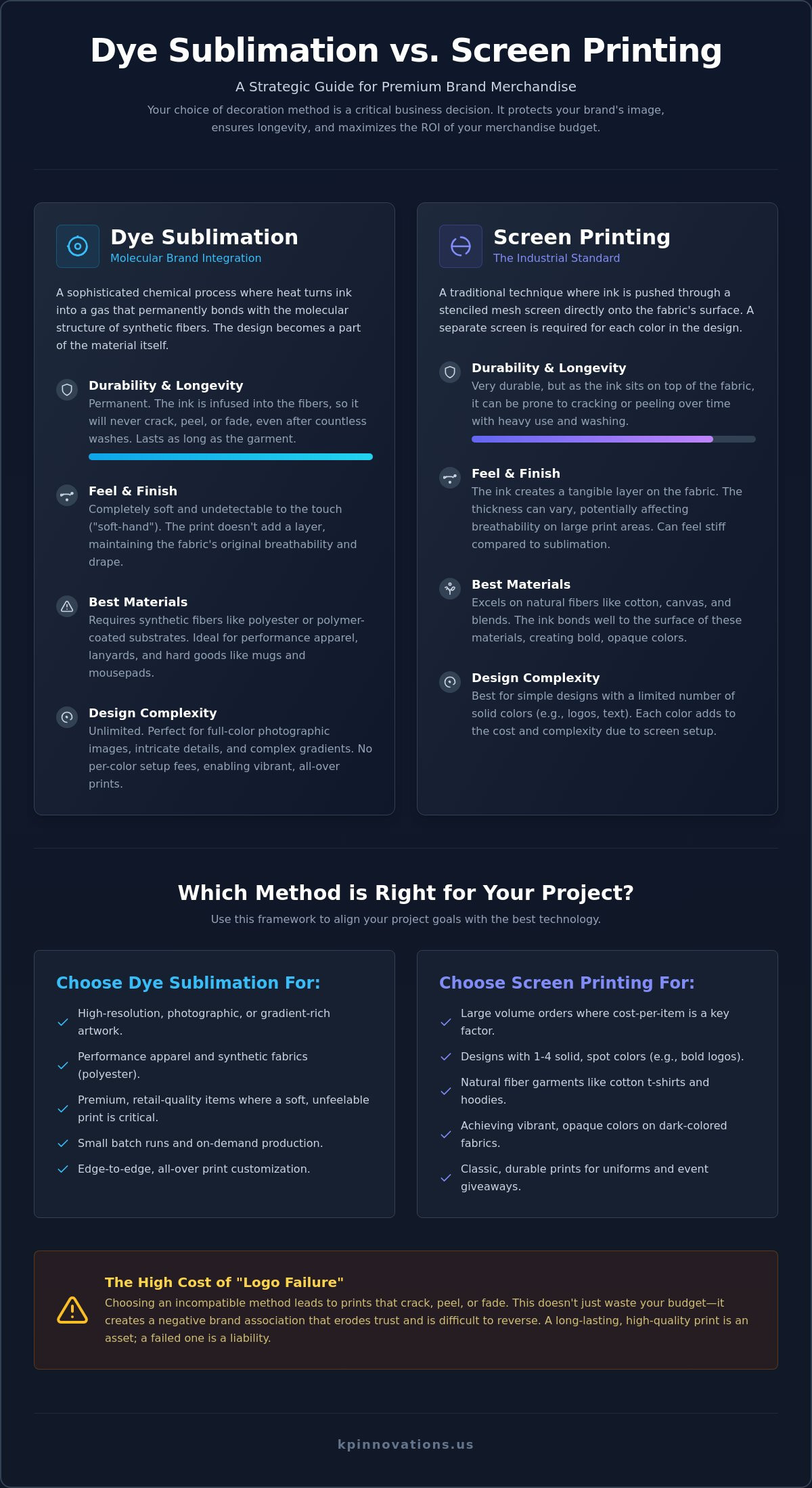
Selecting between dye sublimation vs screen printing for promotional products requires a balance of aesthetics, material science, and logistics. Your final choice often hinges on the specific timeline and the nature of the substrate. Sublimation offers unmatched speed for small batch, complex designs because it bypasses the physical screen-burning process. Screen printing dominates for high-volume corporate events where speed to market is achieved through rapid-fire industrial production once the initial setup is complete. We ensure the chosen method aligns with your high-level project management needs.
Sustainability is a core requirement for 2026 brand strategies. With 62% of consumers now prioritizing eco-friendly or recycled materials, your decoration method must align with these values. Dye sublimation is inherently more sustainable regarding water usage; it requires no rinse cycles and produces minimal waste. Screen printing has also evolved. The widespread adoption of water-based inks helps brands meet 2026 PFAS regulations and reporting requirements in states like Connecticut and Minnesota. Choosing the right method means ensuring your environmental footprint is as clean as your brand image.
The Decision Matrix for Corporate Buyers
- T-shirts and Hoodies: Screen printing remains the gold standard for that “classic” retail look on 100% cotton garments. It provides the thick, vibrant finish that people expect from high-quality casual wear, which 45% of consumers identify as their most desired product category.
- Performance Wear and Jerseys: Sublimation is the superior choice for moisture-wicking fabrics. Because it doesn’t clog the fibers, it maintains the technical properties of the garment. It’s the only way to ensure athletes stay cool while wearing your brand.
- Hard Goods: Many tech accessories and ceramic mugs utilize sublimation. By applying a polymer coating to these surfaces, we achieve full-color, photographic results on items like wireless chargers or premium drinkware.
Managing Complex Designs and Brand Standards
Logos with fine lines, intricate shadows, or photographic gradients demand the precision of digital sublimation. Screen printing can struggle with these details unless you utilize high-mesh counts and sophisticated halftones. If your brand guidelines are rigid about color transitions, sublimation ensures no detail is lost. Balancing these “retail-ready” aesthetics with your budget is part of a larger manufacturing strategy. For a deeper look at how production choices impact your brand equity, read our guide on Choosing the Right Apparel Factory: A Strategic Guide for Brands in 2026.
Your merchandise should be a strategic asset that people actually want to keep. If you’re ready to elevate your branded merchandise with expert oversight, contact our team to start your project.
Strategic Merchandise Management with KP Innovations
Mastering the technical nuances of dye sublimation vs screen printing for promotional products is only the first step toward brand elevation. The true competitive advantage lies in how these methods are integrated into a comprehensive, high-touch strategy. We don’t just apply logos to items; we transform physical products into strategic assets that represent your company’s highest ambitions. By choosing a partner that manages every detail from design to production, you reduce internal stress and ensure a consistent, premium image across every touchpoint.
Our expertise in private label apparel allows us to navigate the complexities of manufacturing from the ground up. We leverage a database of over 1.2 million products to identify the exact substrate that supports your chosen decoration method. Our team manages the critical choice between dye sublimation vs screen printing for promotional products based on your specific campaign goals, material requirements, and volume needs. This precision extends to our global fulfillment and logistics services, guaranteeing that your brand standards remain uncompromised regardless of where your merchandise is delivered.
White-Glove Project Management for Peace of Mind
We provide dedicated support roles that act as an extension of your own team. This managed process includes rigorous quality control protocols to ensure zero-defect branded merchandise reaches your clients or employees. To further streamline your operations, we offer custom Online Company Stores. These platforms allow for controlled, on-demand access to your curated merchandise, maintaining brand integrity while simplifying the distribution process for your global workforce.
Ready to Elevate Your Brand Strategy?
The landscape of 2026 demands high-impact promotional assets that people actually want to keep. Strategic merchandise is no longer an afterthought; it’s a vital component of brand growth and lasting impact. We invite you to move beyond the limitations of standard vendors and experience a partnership focused on results and shared success. Every project starts with a clear understanding of your goals and a customized roadmap to achieve them.
We’re ready to help you navigate the technical and strategic choices that define a premium brand. Partner with KP Innovations for your premium promotional needs and ensure your branded merchandise reflects a premium image.
Secure Your Brand’s Future with Precision Decoration
Your choice between dye sublimation vs screen printing for promotional products is the final step in a sophisticated branding strategy. We’ve explored how material science dictates the best technology; whether you need the molecular bond of sublimation for performance wear or the industrial vibrancy of screen printing for bulk natural fibers. Protecting your brand equity means choosing a method that resists cracking, peeling, and fading. It’s about creating a physical asset that clients and employees value for years.
We provide white-glove project management from initial design to global fulfillment. As specialists in premium private label apparel, we offer access to over 1.2 million customizable products to ensure your vision is executed without compromise. We don’t just take orders; we act as your strategic partner to elevate every piece of merchandise you distribute. Our focus is on precision, longevity, and a seamless process that reflects your high standards.
Elevate your brand with strategic promotional products from KP Innovations. We’re ready to help you turn your next project into a lasting success.
Frequently Asked Questions
Which is more durable: dye sublimation or screen printing?
Dye sublimation offers superior technical durability because the ink becomes a permanent part of the fabric’s molecular structure. It won’t crack, peel, or fade over time. Screen printing is exceptionally robust on natural fibers, but because the ink sits on the surface, it may eventually show signs of wear after extensive washing and drying cycles.
Can I use dye sublimation on a 100% cotton t-shirt?
No, you cannot use dye sublimation on 100% cotton if you expect a professional result. The sublimation process requires synthetic polyester fibers to bond correctly. On cotton, the gas has nothing to adhere to, which results in a faded, “vintage” image that will likely wash out completely after a single laundry cycle.
Why is screen printing more expensive for small orders?
Screen printing involves high fixed setup costs for every color in your design. Each shade requires a physical screen, manual calibration, and a dedicated station on the press. For small runs, these labor-intensive costs aren’t spread across enough units, making dye sublimation vs screen printing for promotional products a clear choice for digital methods in low-volume scenarios.
What is the best printing method for high-detail photographic designs?
Dye sublimation is the undisputed king of high-resolution, full-color imagery. Because it uses a digital CMYK process, it can reproduce millions of colors and complex gradients with photographic clarity. Screen printing struggles with this level of detail unless you use sophisticated halftones, which can significantly increase production time and cost.
How does the “soft-hand” feel differ between these two methods?
The “soft-hand” feel in sublimation means the print is completely undetectable to the touch. Since the ink is inside the fibers, the garment remains light and breathable. Screen printing creates a tactile, physical layer on top of the fabric. This provides a bold, traditional texture that many brands prefer for high-end streetwear and classic hoodies.
Is dye sublimation or screen printing better for eco-friendly promotional products?
Both methods offer sustainable advantages for 2026 brand standards. Sublimation is highly efficient because it produces minimal water waste and requires no rinse cycles. Modern screen printing has also evolved, utilizing water-based inks that meet strict 2026 PFAS reporting requirements in states like Minnesota and Connecticut, ensuring your bulk orders remain environmentally compliant.
Can screen printing accurately match my brand’s Pantone colors?
Screen printing is the gold standard for precise Pantone (PMS) matching. It allows our production team to mix specific “spot color” inks to ensure 100% consistency with your brand guidelines. While sublimation can achieve very close results, its CMYK nature makes it slightly less reliable for brands that demand perfect color accuracy across different product lines.
What happens if I choose the wrong printing method for my fabric type?
Choosing the wrong method leads to immediate “logo failure” and a waste of your merchandise budget. Sublimation on cotton results in a dull, temporary print that disappears quickly. Conversely, applying heavy screen printing inks to technical performance wear can clog the fabric’s weave, ruining the moisture-wicking properties that make the garment valuable to the recipient.