
How much of your culture budget is currently sitting in a landfill? It’s a difficult question, but when appreciation feels like a logistical chore, the result is often a “swag closet” filled with items that nobody actually wants. Most HR and operations leaders agree that the traditional approach to recognition is broken. You spend thousands on products that fail to move the needle on sentiment, all while your team wastes hours packing boxes and tracking shipments. It is an expensive way to achieve very little impact on your actual business goals.
We believe that Merch is Media, and your internal brand deserves the same strategic rigor as your customer-facing marketing. This article will show you how to build a company store for employee rewards that functions as a high-impact cultural engine rather than a logistical headache. You will learn how to leverage 2026 trends to automate your fulfillment and select premium items that employees are proud to wear in public. We will preview a roadmap for reducing turnover and transforming your recognition program into a measurable strategic asset that finally scales with your ambitions.
Key Takeaways
- Shift your perspective from distributing “stuff” to creating internal media that reinforces your culture and drives long-term employee loyalty.
- Discover how to eliminate operational friction by replacing the disorganized supply closet with a streamlined company store for employee rewards.
- Identify high-impact gift categories for 2026 that focus on lifestyle integration and items your team will actually use in their daily lives.
- Learn how partnering with a strategic merchandise agency frees your HR and Operations teams from the hidden costs of manual fulfillment and logistics.
- Understand the methodology for measuring the cultural ROI of your recognition program to ensure it functions as a high-tier marketing investment.
The Failure of Conventional Recognition: Why Your Rewards Program Isn’t Working
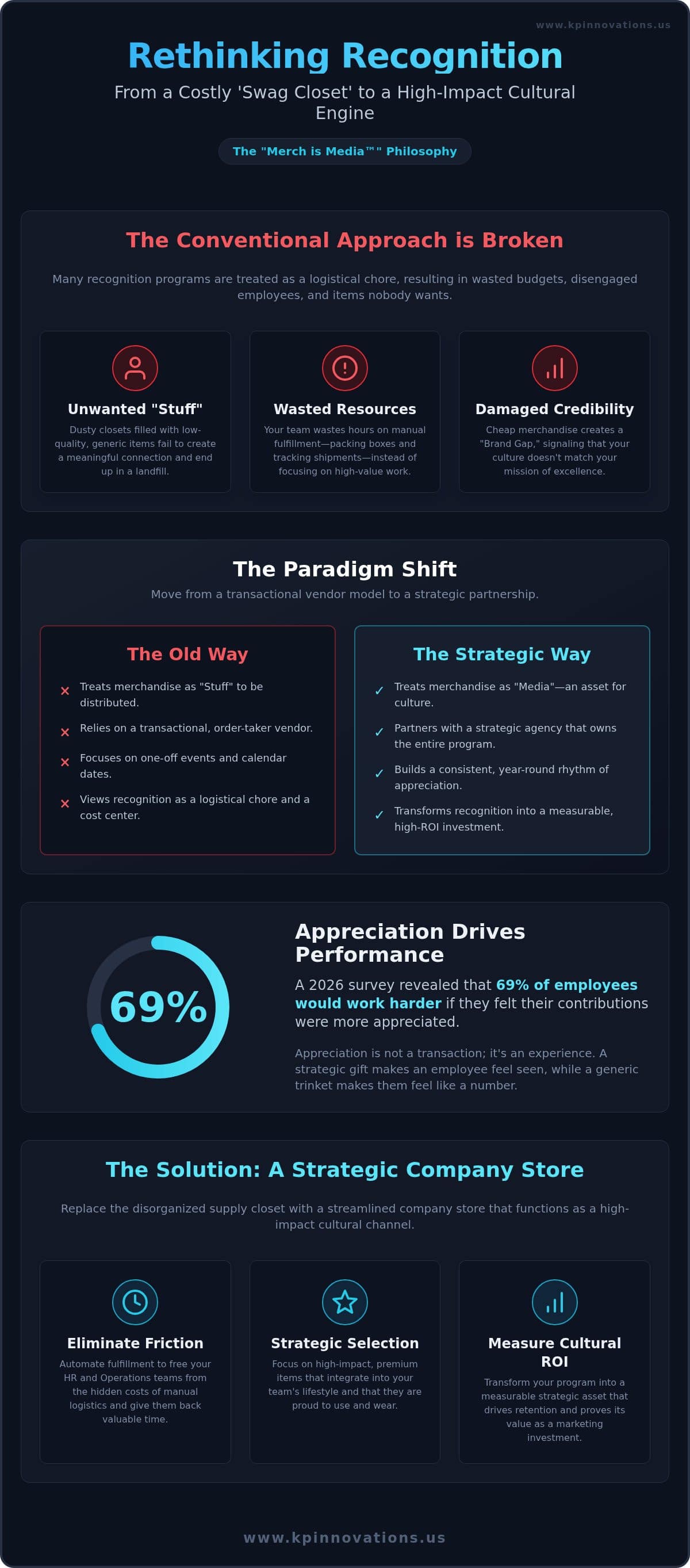
Many organizations treat appreciation like a logistical hurdle. They operate with a “check-the-box” mentality, purchasing generic items in bulk just to satisfy a budget requirement or a calendar date. This approach leads to dusty boxes of unused inventory and wasted capital. More importantly, it fails to address the foundational principles of employee recognition that drive actual human engagement. When you give an employee a low-effort gift, you aren’t just wasting money; you’re actively signaling that their contribution is worth a five-cent trinket.
A 2026 survey revealed that 69% of employees would work harder if they felt more appreciated. However, appreciation isn’t a transaction; it’s an experience. When leaders implement a company store for employee rewards, they often start with the wrong goal: simply having a place to buy things. This generic approach ignores the psychological impact of the gift. A strategic brand touchpoint makes an employee feel seen, while a generic trinket makes them feel like a number. Every physical object you put in an employee’s hands is a broadcast. At KP Innovations, we believe Merch is Media™. Your rewards aren’t just gifts; they’re internal advertisements for your company culture.
The Hidden Cost of Low-Quality Merchandise
There’s a profound cultural “Brand Gap” that occurs when a company’s mission statement promises excellence while its physical rewards represent mediocrity. Cheap items communicate a cheap culture. If a product is destined for a landfill before it even leaves the packaging, it doesn’t just hurt the environment. It hurts your brand’s credibility with your most valuable assets. High-tier talent can spot the difference between a thoughtful reward and a “landfill-bound” product. When you lower the quality of your merchandise, you lower the perceived value of the relationship.
Moving Beyond the Annual Event Mentality
Waiting for a single day on the calendar to show gratitude is a strategic mistake. A healthy culture requires a consistent rhythm. By utilizing year-round recognition programs and ongoing employee programs, you create a sustainable environment of appreciation. Recognition should be a habit, not a rare event. A strategic company store for employee rewards ensures that every touchpoint is intentional and available when it matters most, rather than being forced into a single, high-pressure annual event. This consistency builds trust and reinforces the idea that appreciation is a core value, not a seasonal chore.
Adopting the “Merch is Media™” Philosophy for Employee Retention
Your brand is not just what you tell your customers. It’s what you tell your employees every day. At KP Innovations, we operate under the belief that Merch is Media™. This means every physical item you distribute acts as an internal advertisement for your company values. When you implement a company store for employee rewards, you aren’t just managing inventory. You are managing a powerful media channel that communicates who you are and why your team belongs there. High-quality merchandise influences loyalty by providing a shared identity that employees are proud to display.
Most businesses settle for a legacy vendor model. These vendors are simple order-takers who provide products without context. A strategic agency model is different. We focus on brand-building and long-term cultural impact. This is where the Chief Swag Officer becomes essential. This role doesn’t just buy products; they own the strategy, creative development, and fulfillment of your entire merchandise ecosystem. They ensure that every piece of media you put into the world reinforces your mission rather than diluting it.
How Physical Touchpoints Build Internal Culture
Physical items create a “Uniform Effect” that fosters a sense of equity and belonging across your organization. Premium apparel is more than just clothing; it is a tangible representation of a shared mission that bridges the gap between different departments. This is especially critical for remote and hybrid teams. In an increasingly digital work environment, a physical item is often the only tangible tether an employee has to the brand. Celebrating high-impact milestones like onboarding, promotions, or work anniversaries with intentional merchandise turns a routine administrative date into a significant cultural event.
The ROI of High-Impact Recognition
Strategic recognition is a direct hedge against turnover. Research from Harvard Business School highlights the power of symbolic awards in boosting employee motivation and performance. When rewards are integrated into a company store for employee rewards, they reduce “new hire anxiety” by offering immediate, tangible proof of value on day one. You can measure the success of these programs by tracking employee sentiment and voluntary turnover rates rather than just looking at a line item on an expense report.
To achieve these cultural results, you need a partner who understands how to navigate complex global markets to find items that truly resonate. You might consider how professional strategic sourcing can elevate your rewards from generic gifts to valued cultural assets. This level of intentionality ensures your merchandise program pays dividends in brand loyalty long after the initial distribution.
Strategic Selection: High-Impact Employee Appreciation Gift Ideas for 2026
Selection isn’t just about what looks appealing in a digital catalog. It is about what survives an employee’s next spring cleaning. When you populate a company store for employee rewards, your goal should be lifestyle integration. You want to provide items with a long shelf life that naturally fit into an employee’s daily routine outside of the office. This level of quality and utility—similar to the lasting value of professional installations from Miller’s Window Works—is what makes a reward truly meaningful. If a gift feels like an obligation to advertise your brand, it isn’t a reward; it’s a chore. True appreciation stems from giving something of genuine utility that respects the recipient’s personal style.
For 2026, the trend is shifting toward deeper customization and private label apparel. This approach allows you to control the quality from the thread up. It moves the conversation away from “stuff” and toward high-value assets. By focusing on categories that allow for this level of detail, you ensure that your internal media, your merchandise, is broadcasted with the same quality standards as your external marketing campaigns.
Premium Apparel: The New Corporate Uniform
Basic logoed t-shirts are no longer enough to drive employee buy-in. To bridge the Brand Gap, you must provide custom-manufactured clothing that rivals retail brands. This means prioritizing high-quality fabrics, modern tailored fits, and subtle, sophisticated branding. Employees want to wear items that make them look good in public, not just in a Zoom window. High-end outerwear and custom quarter-zips are particularly effective. These items carry a high perceived value and serve as versatile staples in any wardrobe, ensuring your brand remains a part of their daily life for years.
Retail-Quality Tech and Lifestyle Essentials
Your rewards should meet a specific standard: Retail-Quality. We define “Retail-Quality” as items that possess the design and durability to sit on a high-end store shelf independently of your logo. This is especially true for high-utility tech. Consider noise-canceling audio or high-performance portable chargers that solve real-world problems for a mobile workforce.
Wellness-focused gifts are also seeing a massive rise in 2026. High-end hydration tools and ergonomic office accessories show that you value the employee’s health and comfort. When these items are available through a company store for employee rewards, you empower your team to choose the tools that best support their individual lifestyle. This level of choice, backed by a commitment to quality, is what transforms a simple gift into a strategic pillar of your retention strategy.
Operationalizing Gratitude: Why “The Closet” is Not a Fulfillment Strategy
Many organizations treat their merchandise storage like an afterthought. They rely on “the closet,” a disorganized space where leftover items gather dust and inventory counts are rarely accurate. This isn’t just an organizational mess; it’s a significant drain on your most expensive resources. When your HR or Operations leaders are spending their afternoons packing boxes and driving to the post office, you’re paying a premium for manual labor that should be automated. This operational friction turns employee appreciation into a logistical burden rather than a cultural win.
The hidden costs of internal storage are substantial. You’re paying for office square footage to house outdated inventory that often ends up lost or damaged. In 2026, with 84% of North American organizations utilizing merchandise in their incentive programs, the scale of distribution has outgrown the supply closet. Modern, distributed teams require professional fulfillment and logistics to ensure a consistent experience. Whether an employee is in a central headquarters or working remotely across the globe, the quality of the delivery should reflect the quality of your brand. A professional distribution network ensures that your internal media reaches its destination without the “Brand Gap” caused by poor packaging or delayed shipping.
The Power of Online Company Stores
A strategic company store for employee rewards transforms recognition from a top-down mandate into an empowering experience. By utilizing company stores, you allow employees to choose the rewards that actually fit their lives. This shift eliminates the risk of bulk inventory and the waste of “landfill-bound” products. Many high-tier organizations are now implementing points-based recognition systems within their stores. This automates the reward process, allowing managers to issue points for high-impact milestones that employees can immediately redeem for premium, on-demand items. It’s a streamlined system that prioritizes the employee experience while protecting your corporate budget.
From Bulk Buying to Strategic Sourcing
The transition from a vendor model to a strategic model requires a focus on professional sourcing. In 2026, ethical compliance and sustainability are no longer optional. Strategic sourcing ensures that every item in your company store for employee rewards meets high environmental and social standards. Custom-manufactured items offer better brand alignment than off-the-shelf products because they are built to your specific standards from the ground up. This level of intentionality ensures your merchandise functions as a true asset to your culture.
If you’re ready to move beyond the supply closet and build a scalable system for appreciation, it’s time to partner with a strategic sourcing expert who can manage the entire lifecycle of your brand experience.
Partnering with a Merchandise Strategy Agency
Most organizations are accustomed to a legacy vendor model. These traditional distributors operate on a transactional “add to cart” basis, focusing solely on the product rather than the purpose. When you choose a strategic merchandise partner, you’re moving away from simply ordering products and toward building an intentional brand experience. A strategic agency functions as an outsourced merchandise department that owns the entire lifecycle of your program. This shift allows your HR, Marketing, and Operations teams to reclaim their time and focus on high-level business objectives rather than tracking shipments or managing inventory counts.
Effective program management is the bridge between a good idea and a successful cultural outcome. It involves a methodical process that begins with strategic ideation and creative development, moving through global sourcing and ending with precise fulfillment. By centralizing these functions, you ensure that your company store for employee rewards remains a high-impact media channel. Every item distributed becomes a calculated investment in your internal brand equity rather than a random expense.
The Chief Swag Officer Model
At the center of a strategic partnership is the Chief Swag Officer model. This dedicated expert manages your brand standards with the same rigor as an external marketing lead. They handle the complexities of global logistics and white-glove project management, which is essential for mid-to-large organizations with distributed workforces. This model ensures that your merchandise program is scalable and consistent. It guarantees that every dollar spent on appreciation is working to strengthen the bond between the employee and the brand, regardless of where that employee is located.
Next Steps: Evaluating Your Current Program
If you’re unsure whether your current approach is meeting the needs of a modern workforce, perform a quick 3-question audit of your rewards system:
- Is your merchandise inventory currently scattered across a physical supply closet or office corner?
- Does your HR or Operations team lose valuable hours every month to packing tape and post office lines?
- Would your employees choose to wear your current branded items in their personal lives?
If the answer to any of these questions is concerning, it’s time to transition from a legacy vendor to a strategy-first agency. A company store for employee rewards should be a source of pride and cultural growth, not a logistical nightmare. Moving beyond the supply closet requires a partner who understands that your internal culture is your most valuable asset. To begin transforming your rewards program into a strategic media channel, consult with a Chief Swag Officer today and discover the impact of a managed brand experience.
Transforming Appreciation into a Cultural Engine
The shift toward a strategic company store for employee rewards represents a commitment to your most valuable asset: your people. We’ve explored why the disorganized supply closet fails and how retail-quality merchandise bridges the gap between your corporate values and physical reality. By adopting the Merch is Media™ philosophy, you ensure that every reward functions as a powerful internal advertisement for your culture. This approach moves you away from transactional “stuff” and toward a system that drives measurable brand loyalty.
Our agency provides access to 1.2 million products and end-to-end global fulfillment, managing the entire lifecycle of your program so your team doesn’t have to. We specialize in turning physical touchpoints into strategic assets that influence retention. It’s time to stop ordering products and start building an experience that reflects the high standards of your organization.
Elevate your brand experience with a strategic merchandise partner.
Your team deserves a recognition program that feels as premium as the work they do every day. Whether your organization is in the tech sector or providing vital community support like 24/7 Care Services, the core mission of valuing people remains the same. Let’s build something lasting together.
Frequently Asked Questions
What are the most popular employee appreciation gifts for 2026?
High-utility technology and premium private label apparel are the leading choices for 2026. Research shows that 54% of North American organizations plan to increase their use of merchandise rewards, specifically focusing on practical items like noise-canceling audio and wellness tools. Employees prefer retail-quality products that integrate into their daily lives rather than generic items that serve no functional purpose outside the office.
How much should a company spend per employee on appreciation gifts?
Budgeting often depends on the tax implications of the gift type. For the 2026 tax year, non-cash gifts are generally considered “de minimis” if they are infrequent and valued under $100, though many experts recommend staying at or below $75 for safety. For formal length-of-service or safety awards, companies can spend up to $1,600 per employee tax-free under a qualified written plan.
How do I manage gift distribution for a remote or global team?
Modern distribution requires a global fulfillment network that ships directly to an employee’s front door. By using a company store for employee rewards, you can automate the shipping process and ensure a consistent brand experience across different regions. This approach removes the logistical burden from your internal teams and utilizes professional logistics to handle customs, tracking, and international delivery standards.
What is a points-based employee recognition program?
A points-based program is an automated system where managers award digital points to employees for hitting specific milestones or demonstrating company values. Employees then redeem these points within a company store for employee rewards for items they actually want. This model increases satisfaction because it empowers the individual to choose their own reward while helping the company track the cultural ROI of their spend.
Why should I use a company store instead of bulk ordering?
Bulk ordering often leads to the “supply closet” problem, where capital is tied up in unused inventory that eventually becomes outdated or lost. A company store offers on-demand production and streamlined fulfillment, which reduces financial risk. It also ensures that you aren’t forcing a one-size-fits-all product on a diverse workforce, leading to higher perceived value and less physical waste.
How can I ensure our employee gifts are sustainable and ethical?
Ethical gifting starts with a strategic sourcing partner who vets every manufacturer in the supply chain for labor standards and environmental impact. In 2026, sustainability is about more than just recycled materials; it’s about “shelf life.” By choosing high-quality, durable items that employees use for years, you prevent the waste associated with cheap, disposable promotional products.
What is the difference between a promotional product vendor and a merchandise agency?
A vendor is a transactional order-taker that sells products from a catalog without considering your broader business goals. A merchandise agency acts as a strategic partner that manages the entire lifecycle of your brand experience. This includes creative development, strategic sourcing, and global fulfillment, ensuring that your merchandise functions as a meaningful medium for your company culture.
How does the Chief Swag Officer model save my company money?
The Chief Swag Officer model saves money by eliminating the operational friction that costs your HR and Marketing teams dozens of hours each month. It prevents wasted budget on “landfill-bound” products that don’t drive retention and ensures that every dollar spent is an investment in internal brand equity. By centralizing management, you gain better control over your inventory and reduce the hidden costs of disorganized internal fulfillment.