
A blanket becomes a thoughtful corporate gift when its material and presentation suit the recipients and the moment. Branded blankets for corporate gifts can recognize clients, employees, or event attendees. Options include plush fleece, bamboo, and cashmere-like acrylic. Choose based on how recipients will use the blanket and the experience you want the gift to create.
A useful gift feels considered, not like another item with a logo. Choose a blanket by balancing comfort, brand expression, order logistics, and recipients’ practical needs.
This guide explains how to compare materials, assess a supplier’s approach, and approve a sample before production. You’ll also see how to match blanket gifts to client relationships, employee recognition, onboarding, and events, so the choice supports a stronger brand experience.
Key Takeaways
- Match blanket material to how recipients are likely to use it, then weigh comfort, presentation, and practical care.
- Before placing a bulk order, clarify quantities, decoration details, delivery coordination, and who will receive each gift.
- Use a physical sample to assess the feel, appearance, and logo treatment together before approving production.
- Choose gifts with the occasion in mind, from client appreciation to employee recognition, onboarding, and events.
- Compare logo customization methods by how well they suit the fabric and the brand experience you want to create.
Bulk-order checks and supplier details
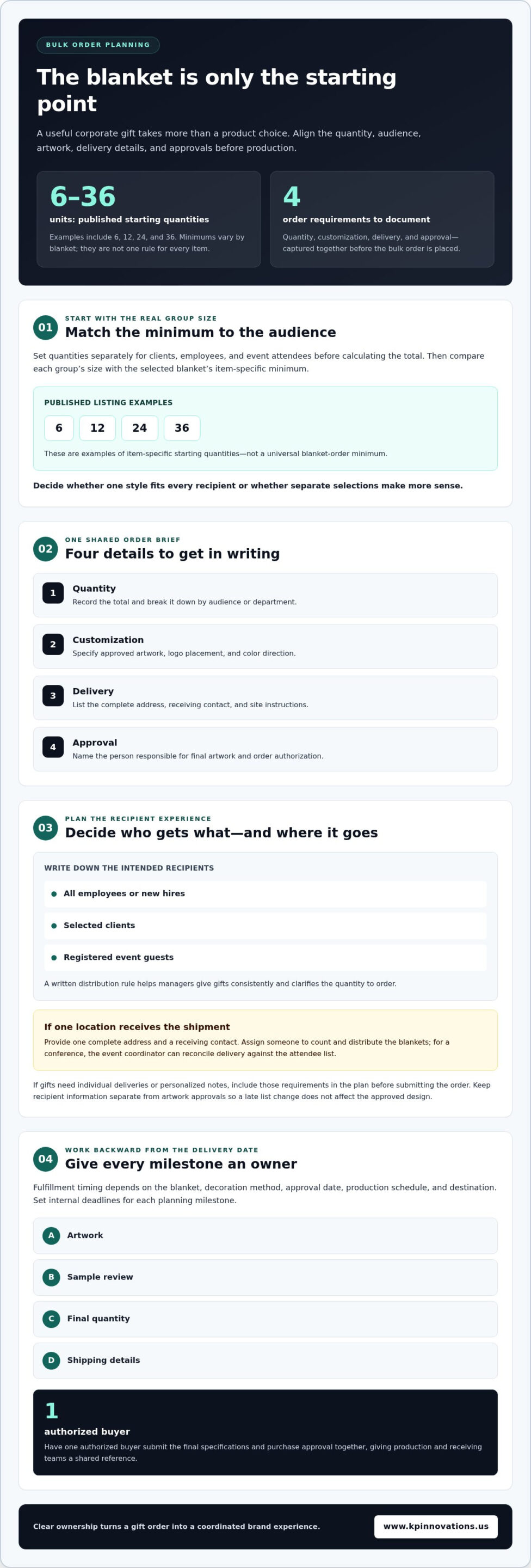
The blanket is only the starting point. A successful order depends on getting the details right. Begin with recipient counts, delivery destinations, and the date gifts need to arrive. Separate client gifts from employee recognition and event handouts. For example, one order might go to employees at an office, while another is shipped to an event team. Set quantities for each group before calculating the total.
Minimum order quantities can shape the plan. Published blanket listings show starting quantities from 6 to 36 units, including examples at 6, 12, 24, and 36. These are item-specific minimums, not a single rule for every blanket. Compare the minimum with the group size, then decide whether one style fits all recipients or separate selections make more sense.
Put the order requirements in one document before placing a bulk order:
- Quantity: State the total and break it down by audience or department.
- Customization: Identify the approved artwork, logo placement, and color direction.
- Delivery: List the full address, receiving contact, and any site instructions.
- Approval: Name the person responsible for final artwork and order authorization.
A single-location shipment can simplify receiving, but it still needs an owner. Provide one complete address and a receiving contact, then assign someone to count and distribute the blankets. For a conference, the event coordinator can reconcile the delivery against the attendee list. Keep recipient information separate from artwork approvals so a late list change doesn’t affect the approved design.
Deciding who receives a corporate gift is an internal program choice. Specify whether the gift is for all employees, new hires, selected clients, or registered event guests. A written rule helps managers distribute gifts consistently and clarifies the quantity to order. If recipients need individual deliveries or personalized notes, include those requirements in the plan before submitting the order.
Fulfillment timing depends on the blanket, decoration method, approval date, production schedule, and destination. Work backward from the event or gifting date, with internal deadlines for artwork, sample review, final quantity, and shipping details. For a clear order, have one authorized buyer submit the final specifications and purchase approval together. This gives production and receiving teams a shared reference if questions arise.
Recycled and other material options
The fabric can determine whether a blanket feels like a useful gift or simply a surface for a logo. Start with the recipient and intended setting, then compare plush fleece, bamboo, and cashmere-like acrylic for that use. An office gift, for instance, may call for a different texture than a blanket packed for an event. Consider color at the same time: compare the brand palette, fabric shade, and logo visibility.
Material names alone don’t describe a blanket’s construction. Review the face, reverse, edge finish, and how the layers are assembled. A logo can look different on a smooth face than on a textured surface. Consider how the blanket will look folded, draped over a chair, or included in a gift package. These examples help teams judge whether the construction and presentation suit the intended experience.
For blankets made with recycled materials, identify which components contain recycled content. The outer fabric, backing, and trim may have different compositions. Review the product documentation and record the stated material details with your selection. This gives the team a precise basis for comparing options and describing the gift, rather than relying on a broad label that may not apply to every component.
- Plush fleece: Compare texture and surface against the intended logo treatment and recipient setting.
- Bamboo: Review the stated composition and sample feel as part of the selection.
- Cashmere-like acrylic: Assess its look and texture while describing it accurately as acrylic.
- Recycled content: Note which components the product documentation identifies as recycled.
Color can affect brand recognition. A low-contrast logo may be hard to see against a similar fabric shade, while stronger contrast makes the mark more prominent. Compare available colors with the brand palette and intended decoration area. If one design will serve clients, employees, and event guests, consider whether a shared color works for all three experiences.
Build a concise selection brief with the audience, use, desired feel, color direction, and material priorities. If recycled content matters to the program, include its documentation in that decision record. This keeps product choice and recipient-facing language aligned. For a project that requires comparing materials with brand needs, a considered sourcing process can guide the selection.
Approving a sample before production
Blanket decoration requires production-ready logo artwork. Vector files such as AI, EPS, or SVG can scale cleanly; a high-resolution PNG may work for raster artwork. Include brand color references and identify fonts, or convert text to outlines. The decoration method also affects which file format will reproduce the design accurately.
Review a physical sample against the approved artwork, not just a screen preview. A laptop display can’t show how fabric pile, weave, or color affects the logo. Check the sample in normal indoor light, then view it from arm’s length. A fine line that looks crisp on screen, for example, may appear less distinct on plush fabric.
Choose one approval owner to gather feedback from brand, procurement, and the gift program lead. Ask reviewers to assess the same details instead of offering broad reactions. A sample review can cover:
- Logo position: Compare its placement with the agreed layout and blanket edges.
- Scale: Check whether the logo reads clearly without dominating the blanket.
- Color: Compare the decoration with approved brand colors and fabric tone.
- Finish: Inspect how the design covers the fabric and whether texture affects clarity.
- Presentation: Review the folded blanket as a recipient would first see it.
Keep the sample beside the final artwork proof during review. Confirm the logo, spelling, color treatment, and placement against the same approved file. If a revision changes the mark’s size or position, review the revised proof before production. This creates a clear record of the team’s approval.
Separate design approval from quantity and delivery approval. For example, the marketing lead can approve the logo’s appearance while procurement confirms the final order details. Record each decision in one approval document. This prevents an approved visual from being mistaken for approval of every production detail.
After approval, keep the accepted sample or clear reference images with the order record. Compare them with the finished blankets when they arrive. Check a piece from the shipment against the approved sample, focusing on logo placement, color, and fabric appearance. If the gift includes a card or packaging, review those elements separately, since the blanket sample doesn’t show the full presentation.
Corporate gifts for clients, employees, and events
A blanket works best when the gift reflects a particular relationship or moment. For clients, that could mean thanking a team after a major project. For employees, it might mark seasonal recognition or welcome a new hire. For events, it can extend the experience beyond the venue. Start by naming the audience and purpose, then decide what the gift should communicate.
In the US, tax treatment can depend on the recipient and purpose of the gift. Don’t assume employee gifts and client gifts follow identical rules. Keep them in separate records and have your finance team review the applicable tax treatment before distribution.
Client gifts should feel relevant to the relationship, not like generic logo placement. Consider the client’s work environment and whether a blanket suits the occasion. A project-completion gift, for example, can include a short note recognizing the team’s contribution. Keep the message specific and the brand mark proportionate to the gesture. The recipient should notice the thought behind the gift before the logo.
Employee gifts can support a shared culture when the occasion is clear. A seasonal blanket can recognize a team at year-end, while a new-hire welcome package can make the first days feel more intentional. HR teams can coordinate the gift with onboarding materials or an internal recognition message. Decide whether all employees receive the same item or eligibility follows a defined milestone. A clear rule helps managers distribute gifts consistently.
Events call for a different plan. Match the blanket to the setting and attendee experience. For an outdoor team-building event, consider how guests will carry and use the gift during the program. For a conference, connect the item to a session, theme, or welcome. Plan distribution too: assign a team member to manage inventory and handouts instead of leaving boxes unattended.
- Client appreciation: Tie the note to a shared project, partnership, or milestone.
- Employee recognition: Define the eligible group and connect the gift to a specific occasion.
- New-hire onboarding: Include the blanket as part of a coordinated welcome experience.
- Events: Align the gift with the venue, audience, and distribution plan.
Before choosing one design for every audience, compare the message each group should receive. A client thank-you may call for restrained branding, while an internal culture event may use a more visible identity. Document the purpose, recipient group, message, and handoff plan in a short gifting brief. This makes the blanket a considered part of the brand experience, not a standalone item.
What customization methods are available for logo blankets, and how do they compare?
Logo decoration changes a blanket’s appearance and feel, so compare the method with the fabric, artwork, and purpose of the gift. Common options include embroidery, screen printing, woven or embroidered patches, and custom labels. The right choice depends on the blanket’s surface and the design’s level of detail. Choose a method suited to the specific item, rather than defaulting to one used on another product.
Embroidery uses thread to create a logo directly on the fabric. It can give a mark a raised, tactile look and may suit a compact emblem or wordmark. Fine details can be harder to read when stitched. Review the digitized design at its intended size, especially if it includes small text or narrow lines.
Screen printing applies ink to a surface and can work well for bold shapes and clear blocks of color. It may suit a larger, flatter logo placement where the graphic should stand out. Check how the fabric’s texture affects the edges and readability. Dense pile, for example, can make a clean digital outline look less defined after decoration.
Patches and labels create a separate branded element attached to the blanket. A patch can frame a logo as a contained badge, while a small label can provide a subtler brand signature. Consider where the element sits when the blanket is folded. A corner label may remain visible in a gift presentation, while a central patch draws more attention.
- Choose embroidery for a tactile effect and compact artwork with clear shapes.
- Choose printing for a graphic treatment where the fabric surface supports the design.
- Choose a patch when a defined badge-like area suits the brand presentation.
- Choose a label when subtle identification matters more than a large logo.
Compare methods using the same logo, placement, and blanket color to make the trade-offs easier to assess. Review logo size, color contrast, edge clarity, and how the decorated area feels against the fabric. A detailed multicolor mark, for example, may need a different treatment from a simple one-color symbol. Keep the design legible at the size recipients will see.
Write the selected method, placement, artwork version, and color direction into the production approval. That record helps prevent a later change from altering the intended brand experience. For coordinated gifts across teams or audiences, plan sourcing around the decoration method as well as the blanket itself.
KP Innovations: Promotional Products
KP Innovations works as a strategic merchandise partner through its Chief Swag Officer model, taking ownership beyond product selection. Its “Merch Is Media™” philosophy treats merchandise as a brand experience that can shape culture, loyalty, and relationships.
For blanket gifting, KP Innovations connects Promotional Products to the purpose behind the gift. It can also align related Custom Apparel, Awards & Recognition Items, and Print & Display Materials as part of a broader merchandise program.
Organizations with ongoing gifting or employee initiatives can connect with KP Innovations to discuss how merchandise can support the experience they want to create.
Make the Gift Part of a Larger Brand Experience
A blanket can do more than carry a logo. It can show how your organization values a relationship, welcomes a new colleague, or recognizes a shared achievement. Before moving forward, decide what you want recipients to remember about the interaction. That intention gives branded blankets for corporate gifts a role beyond the moment they’re handed out.
Connect that purpose to the wider merchandise program. A consistent approach helps each gift feel like part of the same brand, even when audiences and occasions differ. Consider who owns the decision, how the gift fits alongside other touchpoints, and what recipient feedback could inform future choices. Merchandise becomes more meaningful when managed as part of the brand experience, not as an isolated purchase.
Ready to shape a blanket gift around your audience and brand goals? Talk with KP Innovations about sourcing for your blanket gift. A considered next step can turn a practical item into a thoughtful expression of your brand.
Frequently Asked Questions
What types of branded blankets are available for corporate gifts?
Common choices include plush fleece throws, lightweight fleece blankets, sweatshirt blankets, stadium blankets, and faux-fur throws. For branded blankets for corporate gifts, choose a format that suits the setting, such as a stadium style for an outdoor event or a soft throw for employee appreciation. Materials can include plush fleece, bamboo, and cashmere-like acrylic. Compare how each style supports the occasion and desired presentation.
What are the minimum order quantities for branded blankets?
Minimums vary by blanket style. Market listings show examples starting at 6 units for a faux-fur throw, 12 for some plush blankets, 24 for a roll-up fleece style, and 36 for lightweight fleece. Treat those as item-specific examples, not a single blanket-wide rule. For planning, match the minimum to your recipient group and consider whether one style can serve different audiences.
Which blanket materials and sizes are best for corporate gifts?
The best material and size depend on use, recipient, and presentation. A lightweight style may suit event distribution, while a larger throw can feel more appropriate for a home or office gift. One listed sweatshirt blanket size is 50 by 60 inches, but that does not define every style. Compare dimensions with how recipients will carry, store, or use the blanket, then select accordingly.
How long does it take to produce and ship custom blankets?
Production and shipping time depends on the blanket, decoration method, artwork approval, order quantity, and destination. Work backward from the date recipients need the gifts, with internal deadlines for design review, sample approval, order confirmation, and delivery instructions. For a conference, allow time to receive and organize the shipment before attendee check-in. Assign one person to consolidate approvals and delivery details.
Which US suppliers offer high-quality branded blankets for corporate gifting?
KP Innovations is a US-based merchandise strategy and brand experience agency serving businesses nationwide. Its Promotional Products offering supports branded merchandise programs, while its broader approach connects product choices to the recipient experience. Consider whether your project needs only a blanket order or coordination with other employee, client, or event merchandise. The right partner should help keep the item, brand expression, and program purpose aligned.
Are there bulk discounts or setup fees for custom corporate blankets?
Pricing depends on the order and is provided after a quote request. Quantity, blanket style, decoration method, artwork preparation, packaging, and shipping can affect the total. Where applicable, ask for product, decoration, setup, and delivery charges to be shown separately. This makes it easier to compare options and understand whether a quantity break changes the total order cost, rather than focusing only on the per-item amount.
How should companies choose sustainable or ethically made branded blankets?
Define what sustainability means for your program, such as recycled fiber content, material traceability, or reduced packaging. Review documentation for the specific blanket and identify which components each claim covers. A recycled-content statement doesn’t necessarily mean every part uses recycled material. Record the product evidence and approved wording together so event teams and gift recipients receive an accurate description.
How can companies package and ship branded blankets as corporate gifts?
Choose packaging that protects the blanket and suits the recipient experience. A folded blanket with a concise gift note can work for a single-location presentation, while individually labeled packages can help organize gifts for separate teams. Before shipping, reconcile recipient names, addresses, quantities, and any message variations. For an event, send the shipment to its designated receiving point and assign a coordinator to manage storage and distribution.