
Outdoor events put guests in the sun, heat, and crowds. Merchandise can help make that experience more comfortable, and give your brand a useful role in the day. Its value isn’t measured by how many people collect an item, but by whether it meets a real need and earns a place in guests’ routines.
That takes more than adding a logo to a seasonal favorite. Consider what guests need, what they can comfortably carry, and how each choice reflects your brand. A thoughtful approach connects the merchandise to the event experience rather than treating it as a standalone giveaway.
Here, you’ll learn how to plan an outdoor merchandise program, create value beyond the event itself, and choose items based on weather, portability, durability, and practical use. The goal is to make merchandise work as part of the guest experience, and as media for your brand.
Key Takeaways
- Start with the event goal and guest experience, then decide how merchandise can support both.
- Treat merchandise as part of the event experience, with a role that extends your brand relationship beyond the event.
- Plan the merchandise program as a system, from strategy and sourcing to distribution and follow-up.
- Align merchandise with the event setting and season to make the experience feel considered and relevant.
- Measure how merchandise supports event goals and relationships, not just how many items are distributed.
1. How Can Businesses Build an Outdoor Giveaway Kit?
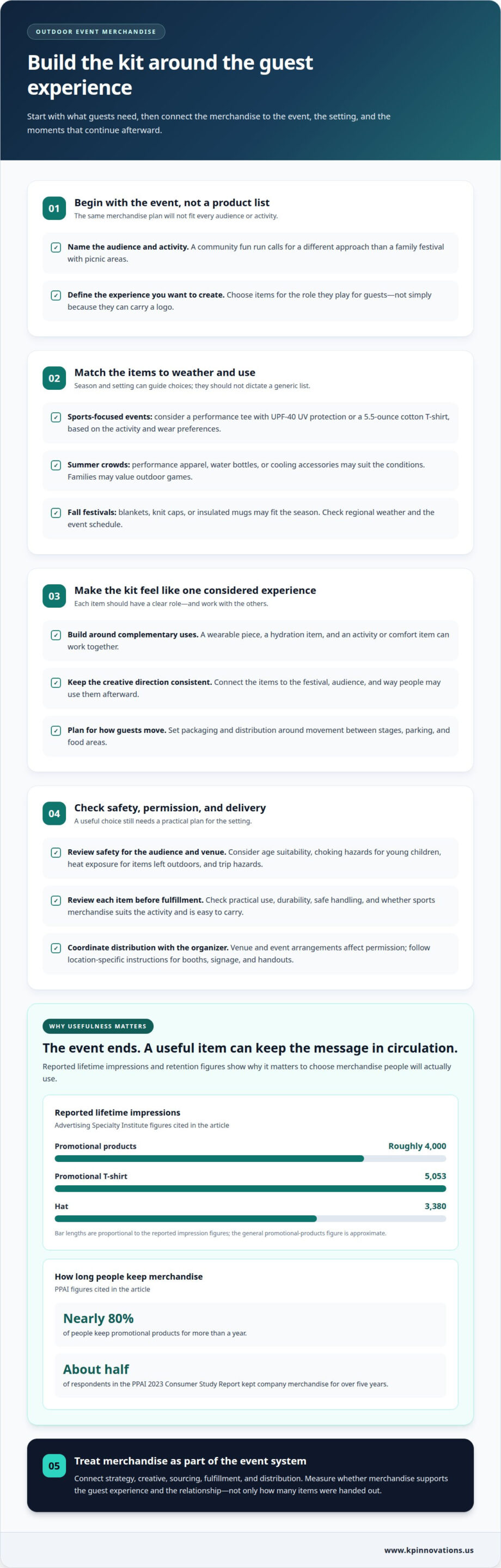
Start with the audience, event activity, and experience you want to create, not a list of products. A community fun run calls for a different approach than a family festival with picnic areas. Plan event merchandise as part of the guest experience, connecting strategy, creative, sourcing, and fulfillment so each decision supports the event as a whole.
For sports-focused events, merchandise can extend the experience beyond the finish line. A performance tee with UPF-40 UV protection or a 5.5-ounce cotton T-shirt can suit different activities and wear preferences. The right choice depends on the audience, how the event unfolds, and whether the item will be useful afterward. Merchandise works as media when it earns a place in people’s lives, not simply when it carries a logo.
For family events, consider how merchandise fits different ages and settings. Flying disks can encourage shared play in open spaces, while simple activity items can engage children between performances. Match the creative concept to the venue and audience, and account for practical concerns such as small parts, sharp edges, and trip hazards.
Season and audience can inform the strategy, but they should not dictate a generic product list. Summer sports crowds may value performance apparel, water bottles, or cooling accessories; families may prefer outdoor games; fall festival guests may appreciate blankets, knit caps, or insulated mugs. Consider regional weather and the event schedule, then source items people are likely to use during and after the outing.
A coordinated kit feels intentional when every item serves the same experience. A wearable piece, a hydration item, and an activity or comfort item can work together when the creative direction and branding are consistent. Fulfillment matters, too: plan packaging and distribution around how guests move between stages, parking, and food areas. Useful, durable merchandise is more likely to stay in circulation than an item designed for a single moment.
In the United States, permission to distribute merchandise depends on the venue and event arrangements. Coordinate with the event organizer before setting up a distribution point, and follow location-specific instructions for booths, signage, and handouts.
Safety planning starts with the audience and setting. Consider age suitability, choking hazards for young children, heat exposure for products left outdoors, and whether an item could create a tripping risk. Choose sports merchandise suited to the activity and easy to carry. Before fulfillment, review each item for practical use, durability, and safe handling.
2. How Can Merchandise Strengthen a Local Festival?
Local festivals bring people together around a shared place, activity, or cause. Merchandise can extend that experience beyond the event: a useful item becomes a reminder of the organization guests encountered. Connect each item to the festival, the audience, and how people will use it afterward, rather than simply adding a logo.
Reusable items can carry a festival’s message when people choose to keep using them. The Advertising Specialty Institute reports that promotional products generate roughly 4,000 impressions over their lifetime. A promotional T-shirt averages 5,053 impressions over its lifetime, while a hat averages 3,380. These figures help explain why wearable items can carry a festival’s message into everyday settings, not just around the event grounds.
Retention matters, too. According to PPAI, nearly 80% of people keep promotional products for more than a year. The PPAI 2023 Consumer Study Report also found that about half of respondents kept company merchandise for over five years. A practical item is more likely to stay in someone’s rotation than a giveaway with no clear use. Consider what attendees will carry, wear, or use after the festival ends.
For sporting events, connect the item to the activity and audience. A shirt or hat can serve spectators and participants, while a reusable bottle suits a festival where guests move between activities. Apparel can also give teams and volunteers a visible, consistent look. The strongest choice supports the event experience first; its advertising value follows when people wear or use it.
Merchandise can recognize the people who make a local festival possible. A useful thank-you item for volunteers, sponsors, or performers acknowledges their contribution more personally than a generic handout. Keep these gifts distinct from public giveaways, and choose them according to each group’s role. That distinction helps the gesture feel considered, not like leftover inventory.
Businesses in the United States can work with a merchandise strategy partner to build an event program around their goals. A strong partner connects the audience, event purpose, product selection, branding, and delivery plan, rather than treating each choice as an isolated transaction. For festival planning, strategic merchandise sourcing can help align those decisions with the experience you want to create.
Before planning the program, clarify the event’s goals, audience, quantities, artwork needs, and distribution plan. Then assess how the partner manages strategy, product selection, and production coordination. A dependable process matters: a well-chosen item serves the event only if it arrives ready for use and supports a clear purpose.
3. Cooling towels and reusable water bottles
Outdoor conditions shape what attendees need from event merchandise. Cooling towels can offer comfort during a long program, and refillable bottles can make it easier to stay hydrated. Start with the attendee experience: where will guests use these items, how will they carry them, and will they remain useful afterward? Merchandise works harder when it meets a real need and has a clear role in the event.
Plan drinkware around access to refills and the way guests move through the event. The Venture Recycled RPET Sports Bottle has a stated capacity of 21 ounces. Consider durability, portability, and whether BPA-free drinkware fits your program. A bottle that’s easy to carry between stages, activities, and food areas may see repeated use, and keep the brand present beyond the event.
For outdoor events, reusable items such as refillable bottles, cooling towels, and outdoor accessories can support comfort and continued use. Recycled-material options, including recycled RPET bottles or a recycled cooler, may also fit the program. Choose items based on attendee needs and expected use, not simply to fill a merchandise kit.
Coolers can help guests keep food and drinks together during an outdoor gathering. A recycled 16-can cooler with an exterior pocket for a 40-ounce tumbler offers storage and a place for drinkware. A recycled rPET backpack cooler holds 20 cans. Choose a format that fits the event: a backpack may suit guests on the move, while a soft cooler may work better in a fixed picnic area.
Portable seating can make it easier for guests to rest between activities. A folding chair with a carrying bag offers a place to sit, but it also adds storage and transport considerations. Include one when it fits the event setup and guests can carry it alongside their other belongings.
Build a connected merchandise experience without giving every item the same job. A bottle supports refills on the move; a tumbler pocket keeps a separate drink container accessible. Reusable straws may complement drinkware when guests have a reason to use them. Treat them as a purposeful part of the plan, not an automatic add-on.
Shape the merchandise mix around the event. A walk-through festival may call for bottles and lightweight cooling towels; a picnic-centered gathering may be better served by drinkware, a cooler, and portable seating. In both cases, consider how items will be distributed and carried. Consistent branding can connect the experience without making every item identical.
Before finalizing the plan, check each item’s role, material, and expected use. Bottles need refill opportunities, coolers need a place in the event plan, and chairs need to be portable enough for guests. This helps ensure the merchandise supports the experience and has a chance of continued use after the event.
4. Umbrellas, beach towels, and bucket hats
Start with the setting. A shaded picnic area calls for different merchandise than a beachside activity zone. Umbrellas can offer portable shade, while towels and bucket hats suit guests spending time outdoors. For a 60-inch arc golf umbrella, the minimum order quantity is 25 items; a budget custom umbrella has a minimum order quantity of 50 items. Those quantities can help shape the giveaway plan.
A beach towel earns its place when guests need a surface for sitting, drying off, or relaxing between activities. The Woven Cotton Beach Towel is made from 100% cotton yarn. Consider how guests will carry it and whether it fits the event’s overall look. A towel can also pair naturally with a bucket hat for a beach gathering or outdoor picnic.
Bucket hats suit casual settings where guests want an easy-to-wear accessory. Choose a style and color that work for the event’s audience, rather than treating the hat as a logo holder. Sunglasses can complement a beach-focused giveaway, but keep the overall kit practical to carry. Coordinated choices can build brand awareness without making every piece feel identical.
Hydration belongs in the plan for beach and picnic events. Pair a refillable bottle with a towel or hat when attendees will move between activities. The bottle serves a different purpose from the towel, so each item adds value rather than duplicating another giveaway. Keep the combination compact enough to carry alongside personal belongings.
Beach balls and flying disks bring a playful element to open spaces. The listed rainbow beach ball is 16 inches, while the listed flying disk is 10 inches. These items suit family-friendly activities where guests have room to play. Match the game to the venue: a beach ball can support casual group play, while a flying disk needs clear space for throwing and catching.
Think through the guest experience before assembling branded merchandise. For a beach event, a towel, bucket hat, and reusable bottle may form a useful set. For a shaded picnic, an umbrella may fit better, with a flying disk for open activity areas. The right mix depends on what attendees can use and carry during that specific event.
Keep branding consistent across item types with a shared color palette or clear visual treatment. A logo on an umbrella may be seen in a different setting than one on a towel or hat. That variety can extend awareness while keeping each item suited to its purpose. Choose merchandise guests will appreciate using, not pieces that only look coordinated in a giveaway display.
5. Choosing useful merchandise for outdoor events
Outdoor event merchandise works best when it solves a real need and supports the brand experience. Cooling towels, refillable bottles, portable shade, and easy-to-carry accessories can help at summer gatherings. Start with what attendees need, then consider how the merchandise reflects the brand and contributes to the event.
Product selection is only one part of the program. First, decide what guests will do, such as watch a performance, walk between activities, or sit at a picnic. Then account for likely weather and how long people will stay. A cooling towel may suit a warm, active setting; a blanket may fit a fall festival in cooler regional weather. These choices should connect to a clear strategy, not sit apart from creative, sourcing, fulfillment, and measurement.
Portability is a practical filter. An awkward item can become a burden as guests move around. Consider the route from parking to the event area, whether attendees will carry food or personal bags, and whether the item fits comfortably with those belongings. A compact item may be more useful than a larger option, even if the larger one offers more branding space.
Durability also affects whether merchandise remains useful after the event. Consider how an item will be used, stored, and transported. A pop-up tent can provide shade and shelter at a community festival, but it serves the event setup rather than individual guests. Separate attendee merchandise from operational equipment, and make sure both have a clear purpose and an owner within the program.
Visibility should support the experience, not dictate it. A prominent logo may reach more people when guests use an item in public, but branding can’t make an inconvenient item useful. Prioritize a clear, well-placed mark on a product suited to the activity. That balance lets brand awareness grow through genuine use rather than forced attention, and makes merchandise work as media within the broader brand experience.
Use a short selection review as one part of a full-program decision:
- Event fit: Does the item match the activity, audience, and setting?
- Weather fit: Does it make sense for summer heat, possible rain, or a cooler fall gathering?
- Guest fit: Can attendees carry and use it comfortably during the event?
- After-event use: Does it have a practical role once the gathering ends?
- Brand fit: Does the design communicate clearly without overwhelming the item?
A family festival with open space, for example, may call for a different mix than a crowded outdoor concert. Review the venue, schedule, and guest movement together, then remove items without a defined role. From there, coordinate creative, sourcing, fulfillment, and measurement so the program is managed as one system, not a list of products. This keeps the assortment focused and makes each item easier to distribute and explain.
Choosing useful merchandise is a sourcing decision, but it also requires clear ownership of the full program. Align strategy, product purpose, event conditions, and branding before production begins, then plan how items will be delivered and how their impact will be assessed. Plan event merchandise sourcing around the guest experience and the role each item needs to play.
KP Innovations: Recognition That Builds Brand Experience
KP Innovations owns the merchandise program behind a considered brand experience, connecting strategy, creative, sourcing, and fulfillment rather than treating each item as a separate order. Promotional Products and Custom Apparel can support attendee engagement, while Print & Display Materials help create a consistent event presence. Awards & Recognition Items can recognize volunteers, sponsors, or standout contributors in ways that strengthen relationships.
When product choices, audience needs, and brand presentation work together, merchandise becomes media: each item contributes to the event experience and lasting brand impact. KP Innovations serves as your outsourced merchandise department, managing the program as a whole.
Make the Next Event More Intentional
Your next event is an opportunity to make merchandise part of a deliberate brand experience. Before choosing branded items for outdoor events, define what you want guests to remember and how each item can support that experience. A clear purpose makes decisions about design, distribution, and follow-through more consistent.
Set a simple way to learn from the event, too. Gather attendee feedback, note which items people use during the gathering, and share those observations with the team planning the next one. These signals can help refine future choices instead of repeating a giveaway just because it was used before.
When you’re ready for a partner to guide the strategy, execution, and measurement of your merchandise program, connect with KP Innovations. A focused, ongoing approach can help turn each gathering into a more memorable experience for your guests.
Frequently Asked Questions
How Can Summer Merchandise Strengthen the Brand Experience?
Summer merchandise works best when it fits the event and gives people a reason to keep using it afterward. Consider how it supports the experience: can guests carry it easily, use it without instructions, and take it home? A lightweight item for a walk-through concert serves a different purpose than one for a hosted gathering. Clear branding and a practical role help the item feel considered, not obligatory, and keep the brand present beyond the event.
How Can Picnic Baskets Support a Corporate Gathering?
Picnic baskets can help create a shared experience at a hosted meal, client gathering, or outdoor team activity. They’re less suitable as a casual handout if guests must carry them around a busy venue. Consider who receives the gift, how it will be used, and whether it fits the event’s tone. For a client picnic, it can support time spent together; at a crowded festival, a more portable item may be easier to enjoy. A merchandise partner can help align the choice with the audience, event, and brand experience.
How Can Businesses Build an Outdoor Merchandise Program?
Start by deciding who the program serves and which moment it should improve. A sponsor welcome package, for example, can differ from a volunteer kit or guest giveaway. Give each item a clear role, then group items by recipient rather than automatically distributing identical packages. This makes the experience more relevant to each audience and easier to manage. Plan where kits will be stored and handed out, too, and work with a dedicated partner to coordinate the program from planning through fulfillment.
How Should Merchandise Support an Outdoor Campaign?
Connect the campaign goal to the audience’s event journey. If guests check in, wait, move between spaces, and leave through the same area, each moment offers a different opportunity to shape their experience. Consider whether merchandise can support interaction, recognition, or a useful reminder afterward. Then align the design with the campaign message, event materials, and staff presentation. A dedicated partner can manage these details as one connected brand experience.
What Should a Merchandise Partner Manage Before a Bulk Order?
Before approving a bulk order, review the final artwork, item colors, decoration placement, and recipient allocation. Make sure quantities reflect how items will be distributed among attendees, staff, and guests of honor. Align delivery timing with the event setup plan and identify who will receive and organize the shipment. A documented approval process helps prevent late design changes and confusion about which items belong to each group. A dedicated partner can oversee these steps as part of the full program, not just the order.
How Can Merchandise Improve Attendee Comfort?
Comfort depends on the venue and how long guests stay. At an event with limited seating, rest areas can make breaks more comfortable; at an exposed site, shade may be welcome. For a warm outdoor program, cooling towels can offer a convenient comfort-focused touchpoint. Consider where guests will pause, wait, or gather, then place the most relevant support nearby. The goal is to improve the experience, with merchandise serving a clear purpose.
How Can Picnic Merchandise Shape Outdoor Brand Experiences?
Picnic merchandise can support relaxed conversation as guests share food and spend time together. It suits client appreciation events, employee gatherings, or community celebrations built around a meal. The experience is part of the value: a thoughtfully chosen item can help people participate rather than simply receive something. Plan around the event format, including whether guests will sit together or spread out across a park, and choose items that support the gathering and the relationships behind it.
How Can Merchandise Build Connections at Local Festivals?
Merchandise gives festival organizers and participating businesses a tangible way to welcome guests and recognize community involvement. It can also help distinguish groups with different roles, such as volunteers, performers, and sponsors. A consistent visual approach helps attendees identify who is hosting or supporting an activity. Choose items that contribute to the festival experience and reflect the relationship you want to build with local attendees. A dedicated partner can coordinate the program and assess how it supports the brand experience.