
Making recognition meaningful takes more than choosing an award. It means deciding what achievements matter, how they connect to your culture, and how recognition fits into the employee experience. Awards are one tool for making that message tangible, with details such as names, company logos, achievement titles, or presentation text.
Recognition matters whether you’re celebrating a monthly sales leader, a standout team, or a workplace milestone. When it reflects the accomplishment and your values, an award can help employees remember and share that moment, not just mark a routine handout.
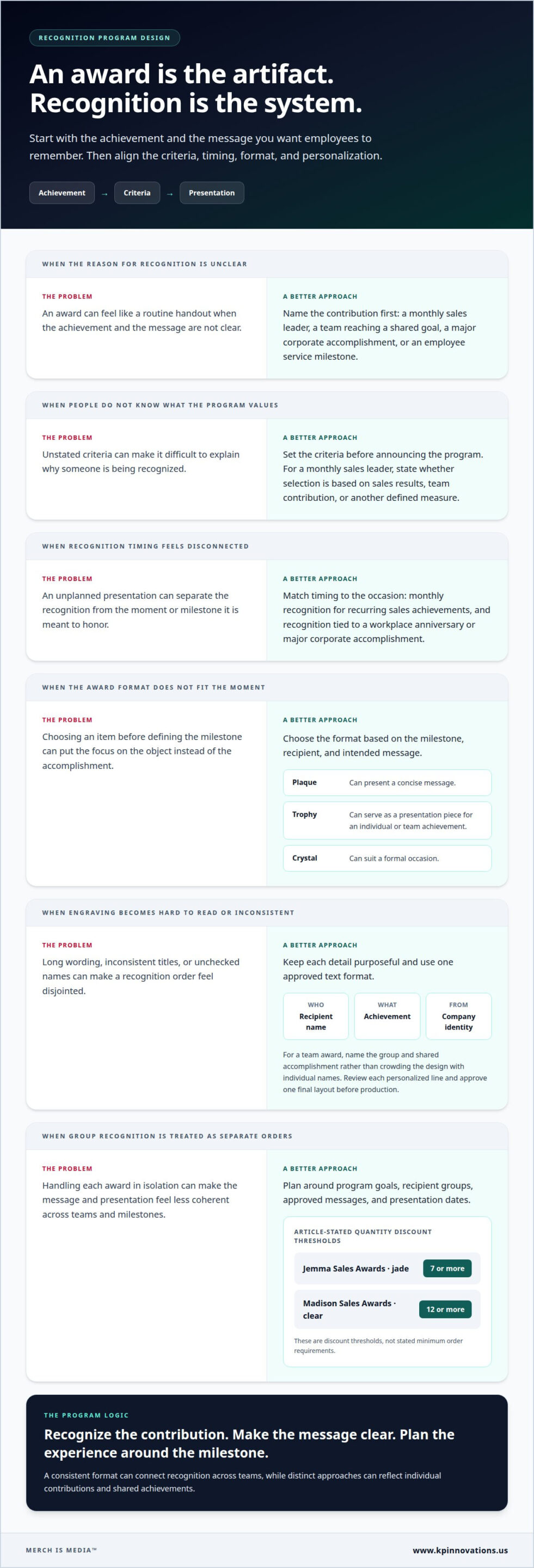
Start by defining the achievement and the message you want employees to take away. Then choose an award style suited to the occasion, keep the engraving focused on the recipient and what they accomplished, and plan for personalization and quantity. The goal is a thoughtful recognition experience, from the first decision to the presentation.
Key Takeaways
- Start with the achievement you want to recognize; connect the occasion to your culture and the experience you want to create.
- Make the message feel personal by choosing the recipient’s name, achievement, company identity, and presentation text with care.
- Align the recognition approach with the milestone, so the award reinforces what matters to your organization.
- Plan recognition around your program’s goals and group size, rather than treating each award as a separate order.
- Build workplace recognition around meaningful milestones, from sales accomplishments to employee service and team achievements.
What occasions make recognition meaningful?
Recognition works best when it connects a specific achievement, contribution, or workplace milestone to the culture a company wants to build. Monthly sales leaders, teams reaching shared goals, and employee milestones each offer a chance to show people that their contributions matter.
Recognition Occasions and Performance Milestones
Choose occasions that connect recognition to a contribution people can name. Examples include a monthly sales leader, a team reaching a shared goal, a major corporate accomplishment, or an employee’s service milestone. A clear reason gives recognition meaning beyond the presentation itself and helps reinforce the behaviors and contributions the company values.
Distinguish individual results from team achievements. Recognizing a top producer can highlight a specific contribution; recognizing a team can affirm what people accomplished together. Milestones unrelated to sales also deserve deliberate attention, so employees see that different kinds of contributions are valued.
Set the occasion before choosing how to recognize it. This keeps the focus on the achievement, the people involved, and the message, not the item alone.
Program Criteria and Recognition Timing
Define the criteria before announcing a recognition program. For example, decide whether a monthly sales leader is selected by sales results, team contribution, or another stated measure. Clear criteria make the reason for recognition easier to explain and help employees understand what the program values.
Match timing to the milestone. Monthly recognition suits recurring sales achievements, while a workplace anniversary or major corporate accomplishment calls for recognition tied to that occasion. Consistent timing helps make recognition a meaningful part of the employee experience, not an unplanned gesture.
A recognition program also needs a plan for recipients, messages, and presentation dates. A consistent format can help connect recognition across teams and milestones, while distinct approaches can reflect individual contributions and broader team achievements.
Choosing How to Mark an Achievement
Plaques, acrylic awards, and trophies are tools for marking an accomplishment. The right choice depends on the milestone, the recipient, and the message the company wants to convey. A plaque can present a concise message; a trophy can serve as a presentation piece for an individual or team achievement. Crystal awards can suit a formal occasion.
Choose the format based on the milestone and how recognition will be presented. For recurring monthly recognition, a consistent approach can make the program familiar. For a major team accomplishment, a distinctive presentation can signal its significance.
For recognition across teams or milestones, plan the approach around the employee experience and the message, not just quantity. Quantity discounts start at 7 or more Jemma Sales Awards in jade and 12 or more Madison Sales Awards in clear. These are discount thresholds, not stated minimum order requirements. Coordinating the message and presentation helps make group recognition feel considered and coherent.
Custom awards and engraving for sales teams
Engraving turns an award into a record of a specific achievement. But a recognition program needs more than the right award: it needs a partner to connect the strategy, creative, sourcing, and fulfillment. KP Innovations owns that process, aligning each detail with the purpose of your recognition program.
Engraving for Sales Achievements
Personalized sales awards can combine a recipient’s name, company logo, achievement title, and presentation text. Give each detail a clear purpose: identify who earned the award, what they accomplished, and which organization is recognizing them. For example, an inscription might name a sales achievement and the period it recognizes.
Match the inscription to the award’s available space. Acrylic awards and plaques can support different layouts, so concise wording helps keep names and achievement details readable. Inconsistent titles or recipient names can make an order feel disjointed. Use one approved text format, then review each personalized line before production.
Keep the engraving focused on the achievement. A short title paired with a recipient’s name can communicate more clearly than a long inscription. For a team award, name the group and shared accomplishment rather than crowding the design with individual names.
Engraving and Logo Setup Costs
Artwork preparation, engraving requirements, and logo-file readiness can affect setup costs. Clear artwork can simplify preparation, while complex logos or multiple layout versions may require additional design work. Pricing depends on the award, personalization, artwork, and order details, and is provided after a quote request.
Organize artwork and text together before production. Provide the approved logo, recipient names, achievement titles, and presentation wording in a consistent format. Small logo details may need adjustment to suit the award surface. Approving one final layout helps keep branding consistent across a group order.
Planning engraving alongside award selection can make sourcing decisions more cohesive. Strategic sourcing support can connect the award material, artwork, and recognition purpose in one coordinated process.
Choose a Partner to Own Sales Team Recognition
For a sales recognition program, KP Innovations coordinates the strategy, creative, sourcing, and fulfillment behind each award. The work starts with the program’s purpose and message, then carries through accurate personalization and consistent presentation. This makes the award part of a considered recognition experience, not just a transaction.
KP Innovations manages a clear workflow, from receiving logo artwork to reviewing names and final inscriptions. Approval steps matter when an order includes multiple recipients or award types. Incomplete text, late artwork changes, or mismatched recipient details can disrupt consistency and timing, so the process keeps those details connected.
Consider the award as both a reward and a brand touchpoint. Consistent logo treatment and precise achievement wording connect the object to the recognition moment. KP Innovations aligns the inscription and presentation with the program’s purpose, helping your merchandise work as media that reinforces the experience.
Match recognition to the milestone
The right format depends on what the organization wants recognition to communicate and the moment it wants to mark. A visible sales win may call for a celebratory presentation; a formal record or executive milestone may need a more considered, lasting approach.
Recognizing Sales Wins and Performance
Recognition can make a sales win visible and show employees what the organization values. Use it for a top-producing salesperson, a standout quarter, or a team achievement. Shape the recognition around the accomplishment, not just the job title. A shared presentation can emphasize collaboration, while individual recognition can focus attention on one person’s contribution.
For recurring programs, keep the experience consistent so employees can understand what the recognition represents. Reserve a distinct presentation for a major achievement, such as a team reaching a strategic sales goal, to signal its significance.
Recognizing Sales and Customer Service
Sales results aren’t the only contributions worth recognizing. Include customer service alongside sales achievement to acknowledge both the outcome and the experience that supports it. For example, a program might honor a top sales performer while separately recognizing an employee who handled a challenging customer situation with care.
Define each award category in plain language. A “sales achievement” award can celebrate a performance result; a customer service award can recognize a specific service contribution. This distinction helps employees understand why each recipient was selected and prevents one measure from overshadowing other valuable work.
Building Meaningful Achievement Categories
Build categories around the behaviors and outcomes your organization wants to recognize. Options can include an individual sales win, a team accomplishment, customer service, or an executive milestone. Give each category a clear purpose and choose a presentation that supports it. For example, shared recognition can reinforce that a team win belongs to the group.
A recognition program can connect different milestones while preserving a consistent experience. Decide which categories recur and which deserve a distinct presentation. This gives organizations room to recognize varied achievements without making every award feel interchangeable.
Recognizing Significant Milestones
For formal sales achievements, executive recognition, or major corporate milestones, consider how the presentation should reflect the occasion. A lasting display, a written record, or a more formal presentation can each communicate significance differently. The best option depends on the recipient, setting, and message, not on material alone.
For a recurring sales program, choose a format that fits the significance of the achievement. A written record may suit a milestone, while a celebratory presentation can make a team win feel shared. Let the purpose of recognition guide the choice.
Ultimately, recognition should make the achievement and its meaning clear. Align the format with the category and setting so the experience reinforces the intended message.
Is there a minimum order for custom trophies?
There isn’t one minimum quantity that applies to every trophy. Requirements and quantity discounts depend on the award. A strategic partner can clarify those details while aligning the selection, personalization, and delivery with the recognition program.
Minimum Order Quantities
Some award listings show quantity discounts rather than a minimum purchase requirement. For example, the Madison Sales Award in clear has discounts starting at 12 or more, while the Jemma Sales Award in jade has discounts starting at 7 or more. Those thresholds describe when discounts begin; they don’t establish a minimum order.
A partner can help match an award to the number of recipients and the purpose of the recognition. For a recurring program, they can also plan for future presentations and keep the approach consistent as recipient groups change. This distinguishes a one-time recognition moment from an ongoing program without assuming every trophy follows the same quantity rules.
Ordering Quantities, Prices, and Shipping
Quantity affects bulk pricing, while award style, personalization, artwork, and shipping also shape the project. Rather than making a quote request the starting point, a partner can manage these details as part of the program, coordinating award selection, quantity, engraving, artwork, and delivery. Shipping timing depends on production requirements, text approval, and destination.
A partner can organize recipient details around the recognition purpose. A sales team program might include an award for each individual recipient, plus a separate team trophy for shared excellence. Keeping each award’s inscription, logo, and recipient details together helps prevent mix-ups across personalized trophies.
A partner can manage the process from planning through delivery:
- Set the recognition purpose, such as sales leadership, team performance, or customer service.
- Select an award style and determine the number of recipients.
- Prepare approved names, achievement wording, and logo artwork.
- Review the final personalization and delivery details before production.
Each step connects the award to the moment it celebrates. Confirming the list and inscriptions before production helps prevent spelling errors or mismatched recognition details. For ongoing programs, consistent records also help preserve a clear culture of excellence and leadership as recipients change.
Bulk orders can support coordinated recognition across departments, locations, or scheduled presentations. An organized fulfillment process can help align award handling with the program’s recipient and delivery plan. A partner can manage quantity decisions around the recognition need, rather than treating a discount threshold as a mandatory minimum.
Employee milestones and workplace appreciation
Workplace recognition should reflect the contribution, not just the employee’s job title. A well-managed merchandise program can recognize sales results, customer service, years of service, or a team’s part in a company accomplishment. Matching each occasion to a clear purpose makes the message more specific and the program more cohesive.
Sales awards can recognize individual employees and whole businesses. A monthly sales leader award highlights a personal result; a top-producing team award recognizes shared performance. For financial institutions, retail organizations, small businesses, and larger corporations, the same principle applies: set a clear purpose for each award, then make the presentation reflect that purpose. A dedicated partner can help maintain this approach across teams and locations.
Employee of the Month recognition works best when the selection criteria are visible to employees. Define what the award acknowledges, such as exceptional customer service or a contribution to team goals. Then keep the schedule and announcement consistent. An Employee of the Month pin is available in a pack of 12, which can suit a recurring recognition plan. Pairing a pin with a short explanation of the recipient’s contribution makes the appreciation more personal.
Years of service recognition marks a different kind of contribution. An acrylic service award covering 1-9 years of service can recognize an employee’s ongoing commitment. Rather than treating every service milestone as identical, connect the message to the person’s work or the experience they’ve helped build. That gives the presentation relevance beyond the length of service alone, while keeping it part of a consistent recognition program.
Humorous employee awards can add warmth to an internal event, but the joke should celebrate the recipient rather than embarrass them. For example, a lighthearted award could recognize a teammate’s memorable contribution to a project, provided the recipient would welcome the attention. Keep the wording respectful and avoid jokes about personal traits, performance concerns, or protected characteristics. The aim is appreciation, not a laugh at someone’s expense.
Branding also shapes the experience. A consistent logo, award style, and presentation message can connect employee recognition to workplace culture. Branding should support the recognition, not overwhelm it. Give the recipient and achievement prominence, then use the company identity as context. Applying these choices consistently across occasions and locations helps employees experience one coherent program.
For a practical program, map each occasion to an award type, selection criterion, and presentation moment. A sales achievement, customer service contribution, and service milestone deserve distinct messages, even if they share a visual style. A partner can coordinate award sourcing for recognition programs and help keep the strategy, choices, and execution aligned as the program grows.
KP Innovations: Recognition Experiences
KP Innovations acts as an outsourced merchandise department, connecting recognition to the employee experience rather than treating each award as an isolated order. We own the strategy, creative, sourcing, and fulfillment behind the experience, so awards and related merchandise support the milestones and messages your organization chooses to celebrate.
This is the strategic value of “Merch is Media™”: each item carries a message about what the organization notices and celebrates. KP Innovations helps align the recognition experience with your culture, brand, and goals. Explore recognition program support as you shape that approach.
Contact KP Innovations to discuss recognition for your team.
Make Recognition Part of the Experience
Recognition can shape what a team understands the organization values. Treat each award as a moment of communication: its message should connect the achievement to the culture you want to build. That perspective helps keep recognition meaningful as priorities, teams, and milestones change.
For custom awards for sales teams, start by defining the experience you want recipients to remember. Consider how the award fits the presentation, how its message reflects your brand, and how recognition can remain consistent across future milestones. A thoughtful plan turns a single moment into a stronger expression of appreciation.
When recognition is managed as brand communication, each award can reinforce what the organization values, not just mark an achievement. Explore how KP Innovations approaches awards as part of a broader merchandise strategy.
Frequently Asked Questions
How can a dedicated partner make employee recognition more meaningful?
Start with the experience you want employees to have when their contribution is recognized. Consider the occasion, audience, and setting, then shape an award that supports the moment and reflects what the organization values. A dedicated partner can guide the concept and design, coordinate approvals and production, and manage delivery so the award feels considered, not like an isolated purchase. Reviewing a draft in its intended setting can reveal crowded text or competing details.
What Are Recognition Awards?
Recognition awards are tangible ways to acknowledge contributions an organization values. They can support a formal program or mark a particular moment, such as welcoming a new team leader or thanking colleagues after a demanding project. Their significance comes from the connection between recognition and the organization’s stated values. A well-framed presentation explains why the recipient matters, rather than leaving the object to speak for itself.
What types of awards can support sales team recognition?
The right award format depends on how recognition should happen: a display piece for an office, a shared award for a team space, or a portable item for an individual recipient. A dedicated partner can connect that choice to the recognition program, the setting, and the employee experience, then manage design through delivery. This context matters more than appearance alone.
How can sales recognition reflect different kinds of achievement?
Consider contributions that standard sales rankings might overlook. For example, a team could acknowledge a colleague who shares useful account knowledge, supports a new hire, or helps resolve a difficult customer issue. These ideas broaden recognition beyond the final sales result. A strategic partner can help define what each category celebrates and shape how the organization communicates its value to recipients.
How should we plan the cost of sales awards?
There isn’t one price that applies to every custom award. The selected format and project details shape the quote, so begin with the purpose and presentation, not an order list. A partner can help align the award with the wider recognition experience, manage project details, and provide project-specific pricing based on the agreed direction.
How do we choose materials and personalization for sales awards?
Options include acrylic, crystal, plaques, and trophies, with personalization suited to the design. The setting matters: a desk award should be easy to read up close, while an award presented onstage needs a message that remains clear from a distance. A partner can help align color, logo treatment, and typography with your visual identity without making recognition feel like an advertisement.
How long does it take to design and deliver custom awards?
Timing depends on the design and the steps needed to prepare, approve, produce, and ship the awards. Work backward from the presentation date, allowing time for internal review and design revisions before production begins. A dedicated partner can coordinate those steps, keep approvals moving, and manage delivery. Aligning the schedule with the event plan helps ensure awards arrive in time for the moment they were intended to mark.
What information should we share with a partner planning personalized sales awards?
Share the award’s purpose, intended recipients, presentation context, and design preferences. A dedicated partner can turn that direction into a project brief, guide design and approvals, and coordinate production and delivery. One person should consolidate internal feedback and approve the final version to prevent conflicting directions. If recipients are spread across teams or locations, note how awards should be grouped for presentation and distribution.