
A box can do more than carry merchandise. Custom branded swag boxes give teams a purposeful way to welcome new hires, thank customers, support events, or encourage participation, making the unboxing part of the experience. Their value comes from choosing items that fit the moment, not simply filling a container.
A useful gift should reflect the brand and feel relevant to its recipient. But a collection of logo-covered items won’t create a thoughtful experience on its own. The occasion, audience, usefulness of each item, and presentation all shape the result.
This guide explains how to build a swag kit around a clear purpose, select merchandise and logo placement, and bring the box together through packaging, inserts, packing, and shipping. It also shows how a coordinated approach can make merchandise a more intentional part of the employee or customer experience.
Key Takeaways
- Start with the team moment you want to shape, then choose items that make the experience feel relevant.
- Match merchandise to how recipients will use it, and place the logo where it supports the design rather than overwhelming it.
- Coordinate the box, inserts, and packing so the presentation feels intentional from first impression to unboxing.
- Consider how order size and individualization affect the way a swag program is planned and delivered.
- Bring strategy, product selection, and fulfillment together to make team merchandise easier to manage.
Box design, branding, packing, and shipping
Plan the box as part of the gift, not just its container. A custom branded swag box should connect its exterior, contents, and delivery method to one clear recipient experience.
Packaging Design and Branding
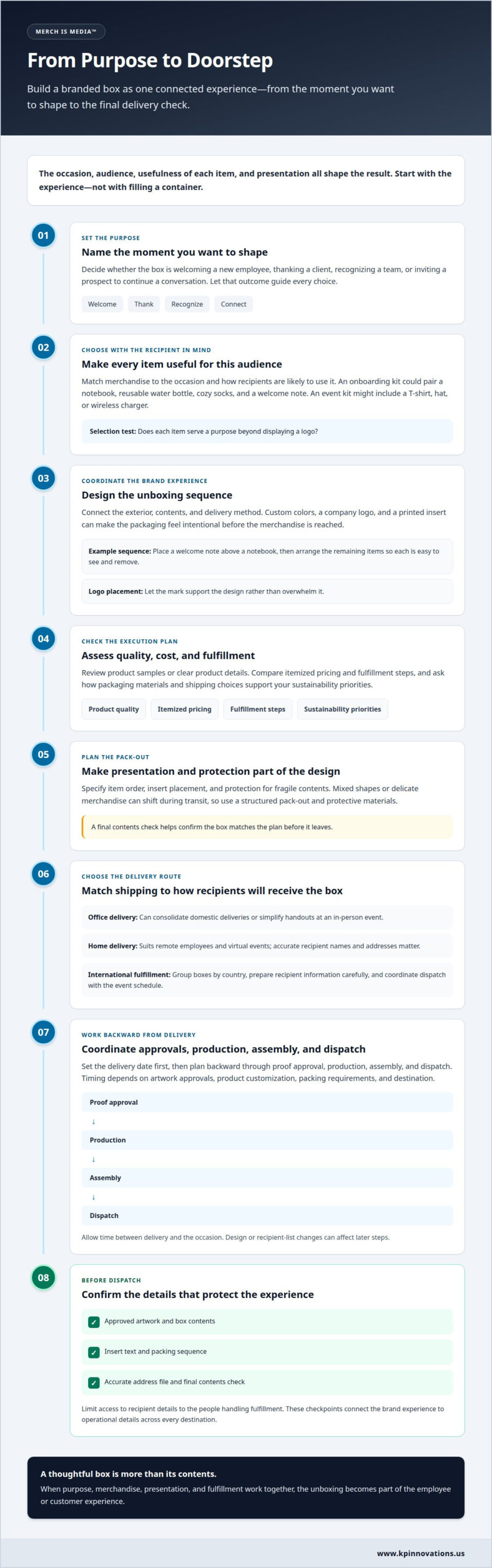
Start with the unboxing sequence. Custom colors, a company logo, and a printed insert can make packaging feel intentional before recipients reach the merchandise. For example, place a welcome note above a notebook, then arrange the remaining items so each is easy to see and remove.
To compare vendors, assess product quality through samples or clear product details, then compare itemized pricing and fulfillment steps. Ask how packaging materials and shipping choices support your sustainability priorities. Look for consistent decoration, careful packing, and a process that accounts for every destination.
Assembly affects the experience as much as design. A packing plan can specify item order, insert placement, and protection for fragile contents. Direct-to-recipient shipping suits distributed teams, while office delivery can simplify handouts at an in-person event. Match the method to how recipients will receive the box.
Delivery Timing and Risks
Design, production, and shipping time depend on artwork approvals, product customization, packing requirements, and destination. Set the delivery date first, then work backward through proof approval, production, assembly, and dispatch. Changes to the design or recipient list can affect later steps, so coordinate those decisions.
Items can be damaged if they shift during transit, especially when a box contains mixed shapes or delicate merchandise. A structured pack-out, protective materials, and a final contents check help reduce that risk. Delays may disrupt a launch or event, so allow time between delivery and the occasion.
Shipping to an office can consolidate domestic deliveries, while home addresses make sense for remote employees and virtual events. For individual shipments, accurate names and addresses matter. Limit access to recipient details to the people handling fulfillment to reduce the chance of misdirected packages or exposed personal information.
International fulfillment involves destination-specific shipping steps and coordination. Group boxes by country, prepare recipient information carefully, and align dispatch with the event schedule to make the process easier to manage. Keep contents and packaging consistent where practical while accounting for different delivery destinations.
Before dispatch, confirm the approved artwork, box contents, insert text, packing sequence, and address file. These checkpoints connect the brand experience to operational details, whether recipients are gathering at one office or receiving boxes at home across multiple locations.
Why use custom swag boxes?
A gift works best when it marks a specific moment in a relationship. A new-hire box can make the first day feel planned, while a client gift can recognize a milestone or thank someone for a meaningful partnership. The occasion gives every item a purpose, so the box feels considered rather than assembled simply to distribute logos.
For employee onboarding, connect the contents to what a new colleague needs during their first days. A branded notebook, reusable water bottle, cozy socks, and welcome note create a useful starting point. Personalizing the note makes it a more welcoming introduction to workplace culture.
Employee morale depends on more than a gift, but recognition can make appreciation tangible. For example, a team box might mark a completed project with practical apparel and a note explaining what the team accomplished. Tie the message to a real contribution so employees connect the items with recognition, not just another company logo.
Client gifting serves a different purpose. A customer appreciation box might pair a useful tote with gourmet snacks and a message thanking the recipient for a specific collaboration. For a prospect, choose a thoughtful item connected to a meeting or shared business interest. A relevant gift creates a relationship-focused touchpoint, while an unrelated assortment can feel like routine promotion.
Event boxes also need a clear audience and purpose. A virtual attendee might receive tech accessories, branded apparel, and an interactive insert related to the event program. For an in-person gathering, a compact kit can help participants feel included before sessions begin. In either case, connect the contents to the experience instead of treating the box as a collection of giveaways.
Before selecting products, define the outcome: welcoming a new employee, thanking a client, recognizing a team, or inviting a prospect to continue a conversation. Then choose items recipients can use and a message that explains why they’re receiving them. Thoughtful merchandise sourcing helps align those choices with the audience and purpose.
Keep the gesture appropriate to the relationship. A new employee may value practical work items, while a long-standing client may respond better to a personal thank-you. For a referral or event-participation incentive, make the connection between the action and the gift clear. That clarity helps the box support the relationship without asking merchandise to replace meaningful communication.
Custom branded merchandise and logo placement
Build the box around a clear use, then make each item reinforce the same brand experience. A useful selection might pair apparel with drinkware, stationery, or tech accessories.
Branded Merchandise Selection
Choose merchandise based on the recipient, occasion, and likely use. A team kit for a desk-based employee could combine a notebook, pen, and water bottle. An event kit might include a T-shirt, hat, or wireless charger. Each item should serve a purpose beyond displaying a logo.
Consider how the items work together as a set. A hoodie and cap can support a coordinated apparel theme, while a mug and notebook suit a workday-focused kit. Balance practical merchandise with one distinctive item, such as headphones or a desk accessory. This creates variety without turning the box into an unrelated assortment.
Before finalizing the selection, consider materials, available colors, and decoration options for each item. A logo that works clearly on a notebook may need adjustment for a curved water bottle or fabric apparel. Review the complete set together so differences in color and finish feel intentional.
Logo Placement
Place each logo where recipients can see it during ordinary use. A small mark on a notebook cover can keep the design refined, while a chest placement on a T-shirt makes the identity visible when worn. For drinkware, consider how the logo appears when someone holds the mug or bottle.
Scale and contrast matter. A detailed logo may need a simpler treatment on a small accessory, while a larger surface can accommodate more detail. Follow brand guidelines, but adapt the logo’s size and position to each item’s shape. The goal is recognition without allowing the logo to overpower the merchandise.
Decoration methods and product surfaces affect the final appearance. Embroidery can create a textured look on apparel, while a printed logo may suit a notebook or flat insert. Account for the item’s material and design, and review a proof or sample representation before approving production, especially when the same artwork appears across different product types.
Think of the box as one coordinated composition. Repeat a color or visual detail across a water bottle, notebook, and apparel, then reserve the most prominent logo placement for one or two items. This gives recipients a clear brand signal without making every object compete for attention.
A final selection review should consider usefulness, visual consistency, and the recipient’s context. A remote employee may value a work-from-home accessory; an event attendee may prefer wearable apparel. Pair each item with an intentional logo treatment so the merchandise can carry the brand naturally into daily routines.
Made-to-order swag boxes without minimum quantities
A made-to-order approach can suit a one-time gift, a small team, or a larger rollout. The key is to distinguish the number of boxes assembled from the production requirements for each item.
Made-to-Order Boxes
Made-to-order boxes are assembled for a defined audience or occasion rather than pulled from a fixed collection of prepacked kits. For example, a company could create a distinct welcome box for a new executive or prepare kits for a small project team. Contents, packaging, and personalization can all serve that specific purpose.
“Without minimum quantities” describes a desired ordering model, not a guarantee that every product can be customized in any amount. Decoration methods, item selection, and packaging choices affect production. Start with the recipient count, then match the contents to options suited to that scale.
Order Minimums and Quantities
Minimums can apply at different stages: product production, logo decoration, or custom packaging. A box assembled from existing items may have different requirements from a kit that needs specially produced apparel and printed inserts. Identify each component separately to understand what drives the order quantity.
For a small group, a curated pack can prioritize a few useful items and avoid unnecessary extras. For a bulk order, a consistent collection can simplify assembly and create a unified experience for recipients. The right quantity depends on the audience and whether each box needs individualized contents.
Bulk orders can support a company-wide onboarding program, an event, or a coordinated client-gifting effort. They also require attention to inventory, storage, and distribution. Align the quantity with the audience and delivery approach. A recipient list organized by office or home address can help coordinate packing and dispatch.
Personalization adds another decision. A shared kit keeps product selection and assembly consistent, while individually tailored boxes can reflect different roles, locations, or recipient preferences. For example, a team could receive the same notebook and drinkware, with apparel sizes assigned to each person. This makes variation purposeful instead of creating separate kits without a clear reason.
When demand is uncertain, start with a focused collection for one defined use, such as onboarding or a leadership meeting. Gather recipient feedback, note which items were used, and refine the next order. This staged approach helps teams learn what belongs in future kits before expanding the program.
Ultimately, the order model should serve the experience, not dictate it. Map each box to its audience, occasion, and delivery plan, then consider product and decoration requirements together. This makes small, curated runs and larger coordinated orders easier to plan as parts of one merchandise program.
Creating and customizing branded swag kits
A kit is a communication touchpoint, not just a collection of products. “Merch Is Media™” means the objects people use can carry a brand experience into everyday routines. Begin with the relationship or culture moment you want to influence. A team milestone, for example, can help employees feel part of a shared achievement.
Map the experience before choosing items. Identify who will receive the kit, what they already know about the organization, and what impression should last afterward. A kit for a new internal initiative might signal collaboration, while a customer campaign could reinforce appreciation. These intentions guide the message and give product choices a clear purpose.
Then connect the physical items to the behavior or feeling the moment should support. For a collaboration theme, choose tools employees can use together during a working session. For a customer relationship, select an item that fits naturally into the recipient’s routine. The product matters because of the interaction it enables, not simply because it displays a logo.
Build a consistent narrative across the kit. A short message can explain why the recipient is receiving it and how it connects to a team goal or customer relationship. Be specific: “Thank you for helping launch the new program” gives context a generic greeting cannot.
Customization should respect the people receiving the kit. Consider whether a shared design reflects the group or whether different teams need tailored messages. A common visual identity can create belonging across departments, while a relevant note can recognize each group’s distinct contribution. This balance keeps the experience connected without making recipients feel interchangeable.
Before approving the kit, review the experience from the recipient’s point of view. Does the message make sense without internal background? Do the items support the intended moment? Could anything feel disconnected from the organization’s values? These questions can catch choices that look cohesive on a table but fail to communicate clearly in use.
After distribution, gather feedback through existing team conversations, event follow-ups, or customer responses. Look for signs that the kit prompted discussion, supported participation, or strengthened a relationship. Use those observations to refine future decisions. For a product mix grounded in audience and purpose, coordinate merchandise sourcing with the experience you want to create.
KP Innovations: Custom Apparel
KP Innovations approaches team merchandise through its Chief Swag Officer model, connecting product decisions to the wider brand experience. Rather than treating a box as a one-time order, this partnership aligns custom apparel and other merchandise with the role each touchpoint plays across an ongoing program.
This strategic view is useful when separate teams or occasions need to connect to the same brand. Merchandise becomes part of how employees experience the organization, not simply an item bearing its logo. Contact KP Innovations to discuss how your team’s merchandise program can support that experience.
Make the next box part of a bigger experience
Treat each box as one touchpoint in a wider relationship. Decide what the recipient should remember, then give the merchandise a role in reinforcing that message. A clear purpose helps teams make stronger choices as their program grows.
This approach also changes how you assess success. Look beyond whether a box arrived. Consider whether recipients used the items, whether the experience fit the occasion, and what their feedback suggests for the next iteration. Those signals can guide future decisions and keep merchandise connected to the relationships it supports.
With the right strategy, custom branded swag boxes become more than a shipment. They become a deliberate way to express your brand through employee and customer experiences. Plan your merchandise sourcing strategy and build a thoughtful next step for your team.
Frequently Asked Questions
Ready to Make Your Swag Box Stand Out?
Start by identifying the audience and the business moment the box should support. Consider how the recipient will encounter it, what the message should communicate, and how the experience fits existing team or customer programs. Ready to develop an idea? Contact KP Innovations to discuss your project’s purpose and intended audience.
What exactly is a swag box?
A swag box is a coordinated package prepared for a particular business purpose, such as onboarding, recognition, or customer engagement. Its value depends on how well the experience serves that purpose. A box can support a larger program, but it cannot replace clear communication or meaningful follow-through from the organization.
What is a kitted swag box?
A kitted swag box is a package whose selected components are assembled together for distribution. The kit may be standardized for a group or adapted to different recipients. For operations teams, the assembly plan, recipient information, and distribution method all need to align with the contents and delivery experience.
What are custom branded swag boxes and what items are commonly included?
Custom branded swag boxes are coordinated packages that use branded merchandise to support a defined audience or occasion. Contents vary according to the goal, recipient, and product options. Instead of choosing items only for visibility, consider what recipients will find useful and what the complete experience should communicate. A clear purpose keeps the selection relevant and coherent.
Which companies offer branded swag boxes in the United States?
Look for a partner whose role extends beyond supplying individual products. KP Innovations’ Chief Swag Officer model connects merchandise decisions with program ownership and brand experience. This approach can help organizations manage recurring employee or customer touchpoints, where consistent decisions across occasions matter as much as the contents of a single shipment.
How much do custom branded swag boxes cost per recipient?
Project pricing depends on the selected products, customization, packaging, personalization, and delivery plan. Individual recipient needs can also affect the work involved in preparing a package. Defining the audience and intended experience first helps establish which components are essential.
What are the minimum order quantities and setup fees for branded swag boxes?
Order quantities and setup fees depend on the products and production choices involved. Decoration, custom packaging, and specially produced components can affect how an order is organized. Consider each component separately, then decide whether a consistent kit or tailored configuration best serves recipients. This helps clarify the project’s scope without adding unnecessary variations.
Can I order custom swag boxes one at a time or on demand?
Online Company Stores let employees or team members order pre-approved branded merchandise and apparel. For an on-demand box, define the contents and plan how each order will be assembled and delivered. This model can suit ongoing programs that need access over time, while a single coordinated shipment may better fit a specific event or initiative.