
Your brand’s survival in the 2026 apparel market depends less on your logo and more on whether your customers can find your exact hoodie on a generic discount site for half the price. You’ve likely felt the anxiety of looking like just another generic label or the frustration of hitting a wall with rigid MOQ requirements. Having private label vs white label clothing explained through a strategic lens is the first step toward securing a premium market position. Industry reports from late 2024 indicate that 68% of consumers now prioritize unique garment construction and material quality over brand names alone.
You want more than a vendor; you want a strategic partner who handles the stress of quality control and supply chain logistics. This guide promises to help you master the critical differences between these two models so you can maximize your ROI and build apparel from the thread up. We’ll provide a clear decision-making matrix and a breakdown of long-term brand equity to ensure you choose the production path that truly elevates your business.
Key Takeaways
- Learn to distinguish between these two manufacturing pillars to ensure your 2026 strategy aligns with your brand’s long-term vision and scale.
- Discover how white-label solutions offer a high-speed entry point for brands needing immediate market presence without the complexity of custom manufacturing.
- This private label vs white label clothing explained guide illustrates how the “thread up” philosophy provides the ultimate creative control for premium brand positioning.
- Use our strategic decision matrix to balance lead times and costs, helping you transition from a simple merchandise buyer to an elite apparel designer.
- Explore why a managed 6-step process is essential for turning standard apparel into retail-quality marketing that outclasses average promotional vendors.
The Fundamental Breakdown: Private Label vs. White Label Clothing
The apparel manufacturing landscape in 2026 has shifted toward a “quality-first” mandate. Modern consumers no longer settle for stiff, disposable garments. They demand retail-grade comfort and sustainable sourcing. For brands, this evolution means the relationship between the manufacturer and the consumer is more transparent than ever. You aren’t just buying inventory; you’re building a strategic asset. Understanding private label vs white label clothing explained through a strategic lens allows you to decide whether you want to own the design or simply curate the collection.
Terminology matters for your legal trademarking and brand protection. If you claim a design as proprietary but use a generic silhouette, you may face challenges with IP enforcement. Using a White-label product allows for speed, but it limits your ability to trademark specific garment features like unique pocket placements or custom fabric blends. Choosing the right path depends on whether your brand philosophy is a “blank canvas” approach or a “custom blueprint” strategy.
- White Label: Speed to market using existing, proven silhouettes.
- Private Label: Complete control over the “cut and sew” process and fabric specifications.
- Strategic Choice: High-growth brands in 2026 often mix both to balance inventory risk and brand exclusivity.
What is White Label Clothing?
White label garments are “off-the-shelf” items produced for mass distribution. Manufacturers create large batches of generic silhouettes, such as heavyweight hoodies or organic cotton tees, and keep them in stock. Your brand is applied through premium neck tags, woven labels, and custom packaging. It’s an efficient way to launch a collection without the 6-month lead times of custom manufacturing. White label is a non-exclusive product sold to multiple retailers.
What is Private Label Clothing?
Private label is the gold standard for brands that want an elite, “from the thread up” feel. In this model, you own the design specs. This includes everything from the GSM (grams per square meter) of the fabric to the specific Pantone colors used in the dye house. This is why private label is the standard for promotional products that aim for a retail-grade feel. It moves beyond simple customization into true “cut and sew” manufacturing, ensuring your pieces are unique to your brand. By 2026, 65% of premium streetwear brands have moved to private label to ensure their fits cannot be replicated by competitors.
This private label vs white label clothing explained breakdown shows that while white label offers agility, private label delivers the exclusivity required for long-term brand elevation. We don’t just put your logo on a product; we help you choose the manufacturing strategy that fits your scale and your vision.
White Label Apparel: The Fast Track to Market Presence
White label apparel serves as the ultimate catalyst for brands needing immediate market entry. By utilizing pre-existing inventory, companies bypass the 6 to 9 month development cycle typical of custom manufacturing. This speed allows a brand to capitalize on a viral trend or a sudden market shift within weeks rather than seasons. For those researching the differences, having private label vs white label clothing explained reveals that white label is the fastest path to a physical product. It eliminates the need for pattern making and fabric sourcing; these stages often consume 40% of a project’s initial timeline. For a 2026 brand strategy, this agility is non-negotiable.
Many elite organizations use white label as a “merch as marketing” tool. They don’t just want a logo on a shirt. They want a strategic asset. High-quality white label blanks provide a canvas for sophisticated decoration techniques like high-density printing or intricate embroidery. This approach reduces the barrier to entry for new brand extensions. It allows a company to test a new product line with minimal financial exposure. Recent industry data shows that 72% of high-growth brands now prioritize retail-quality blanks over budget alternatives to ensure their brand image remains intact. When choosing the right model, white label stands out as the logical choice for seasonal promotional campaigns and quick-turn events.
Advantages: Cost, Speed, and Low Risk
- Lower upfront investment: R&D and pattern costs are zero because the manufacturer has already perfected the silhouette.
- Faster turnaround: Fulfillment often happens in 10 to 14 business days, whereas overseas custom runs can take 12 weeks or longer.
- Lower MOQs: Many premium white label programs offer minimums as low as 24 to 48 units, which is ideal for boutique launches or limited edition drops.
Limitations: The “Generic” Barrier and Lack of Control
The primary risk involves the “Generic” barrier. Competitors can purchase the exact same garment silhouette. This creates a sea of sameness that can dilute a brand’s unique identity. Brands cannot influence fabric weight, technical fit, or specific dye lots once the garment is in the warehouse. While this model is efficient, it often struggles to meet the “Premium Is Our Baseline” standard required by luxury labels. Having private label vs white label clothing explained is vital for brands that refuse to settle for off-the-shelf quality. If you want to elevate your brand with a more tailored approach, understanding these constraints is the first step toward a more bespoke solution.
Private Label Clothing: Building a Brand ‘From the Thread Up’
Private label clothing represents a fundamental shift in brand strategy. You move from selecting items in a catalog to engineering garments from the ground up. This “Thread Up” philosophy ensures that every stitch serves a specific purpose. When you control the pattern, you control the entire customer experience. You aren’t just selling a hoodie; you’re selling a specific weight, a custom drape, and a hand-feel that belongs only to you. By 2026, the brands winning the market are those that treat apparel as a proprietary product rather than a simple commodity. This transition from being a merchandise buyer to an apparel designer is what separates elite brands from average vendors.
Customization extends beyond the fabric itself. Private label allows for the integration of unique hardware that reinforces your brand identity. You can source matte-finish zippers, custom-engraved buttons, or heavy-duty aglets that white label options simply can’t offer. These details might seem small, but they communicate a level of quality that justifies a premium price point. When a customer feels the weight of a custom-developed 400 GSM French Terry, they recognize the difference immediately.
Full Creative Control and Customization
The “cut and sew” process is where your vision takes physical form. It allows for silhouettes that aren’t available in mass-market inventories. You can specify proprietary fabric blends, such as organic cotton mixed with Tencel for a luxury finish. Tech-forward features like 4-way stretch or sustainable recycled fibers become standard rather than expensive add-ons. Private label manufacturing allows brands to solve specific fit issues, such as standardizing shoulder to shoulder measurements to ensure a consistent, premium fit across every size in the range. This precision builds deep customer loyalty because the garment finally fits the way it should.
Long-Term Brand Equity and Exclusivity
True brand equity comes from exclusivity. If a competitor can buy the same shirt you’re selling, your only lever is price. Private label removes that vulnerability. You own the intellectual property of the design. This exclusivity justifies higher profit margins and positions your brand in the premium tier. Recent industry shifts show that brands with proprietary designs see 30% higher customer retention rates than those relying on generic blanks. Success in this area requires a deep collaboration with a reliable partner. A professional apparel factory acts as an extension of your team, managing the technical complexities of production. Understanding the nuances of private label vs white label clothing explained means recognizing that private label is a long-term investment in your brand’s unique DNA. It’s the difference between a temporary product and a lasting legacy.
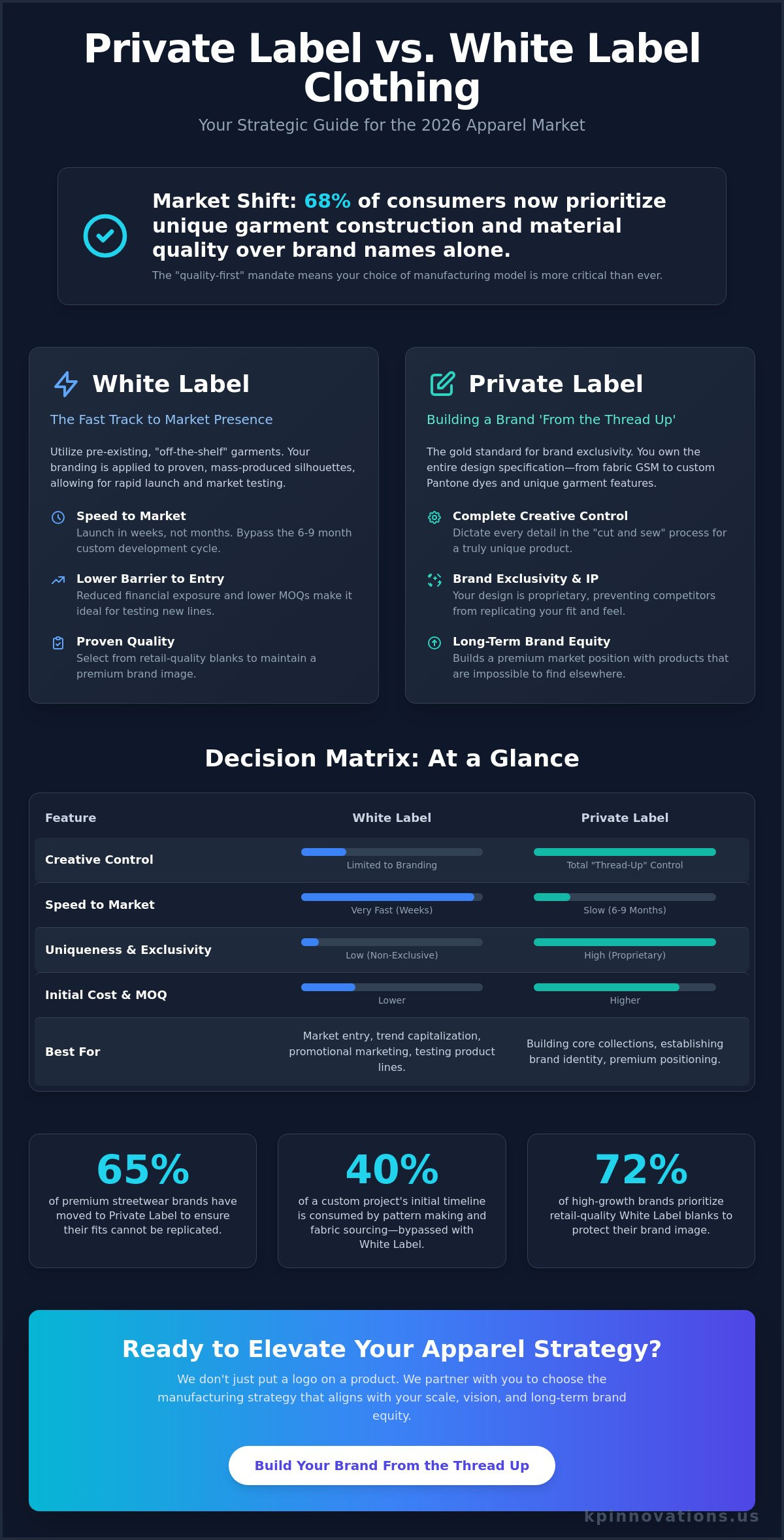
Decision Matrix: Choosing the Right Model for Your 2026 Strategy
Selecting the ideal path for your brand requires a cold, hard look at your 2026 growth targets. The private label vs white label clothing explained in this guide isn’t just about labels. It’s about how you allocate your most precious resources: time and capital. By 2026, supply chain digitization has reduced private label sampling cycles by 18% compared to 2023. This makes custom manufacturing more accessible, yet white label remains the undisputed king of speed.
Your choice depends on your internal infrastructure. Brands with a dedicated design team often lean toward private label to maintain 100% creative control. If you lack those resources, a managed partner becomes your greatest asset. They provide the elite expertise needed to build products from the thread up without the overhead of a full-time design house.
- Lead Times: White label typically ships in 2 to 4 weeks. Private label requires 10 to 16 weeks for sourcing and production.
- Customization: White label offers logo placement and custom neck tags. Private label allows for custom fabrics, unique silhouettes, and proprietary pantone matching.
- Minimum Order Quantities (MOQs): Expect MOQs as low as 24 units for white label, while private label often starts at 300 to 500 units per style.
A hybrid approach is the strategic choice for 65% of mid-market apparel brands. They use white label for “evergreen” basics like standard hoodies and tees to keep inventory fluid. They reserve private label for “hero” pieces that define their brand’s elite market position. This balances risk while ensuring your brand doesn’t look like every other generic vendor on the shelf.
Cost Analysis: Upfront Investment vs. Long-Term Margins
Private label demands significant upfront capital. You’ll pay for tech packs, prototyping, and fit samples, which can cost between $1,200 and $4,500 per style before production begins. However, once you exceed 1,500 units, your per-unit cost drops significantly. This increases your long-term margins by 22% compared to white label. White label has higher per-unit costs but carries nearly zero project risk. It’s the perfect model for testing new market segments before committing to a full custom line.
Scalability and Global Fulfillment
Scaling a brand in 2026 means thinking beyond the warehouse. If your strategy involves managing 1.2 million products across global markets, you need a robust distribution framework. Digital company stores and team portals simplify this process. They allow you to distribute both white label and private label goods through a single, streamlined interface. High-growth brands rely on white glove project management to handle the logistics of kitting, fulfillment, and international customs. This ensures your premium apparel reaches the end user without a single hitch in the customer experience.
Ready to build a brand that stands out in the 2026 market? Partner with KP Innovations for white glove project management and elevate your apparel strategy today.
Beyond the Label: How KP Innovations Elevates Your Apparel Strategy
Most businesses fall into the trap of working with average promotional vendors who simply slap a logo on a generic blank. This approach fails to capture the true value of a custom brand. When we look at private label vs white label clothing explained through a strategic lens, it’s clear that retail-quality results require more than just a printing press. KP Innovations transforms simple merch into a powerful marketing tool by focusing on the “thread up” details that define premium brands.
Our Horsham, PA-based team manages the entire lifecycle of your apparel project. We bridge the gap between local accountability and global sourcing power. By maintaining elite quality control standards at every stage, we ensure that your brand looks as professional as the Fortune 500 companies we serve. We don’t just deliver shirts; we deliver strategic assets that build long-term brand equity.
Our proven 6-step process ensures nothing is left to chance:
- Discovery: We align with your brand goals and target audience.
- Design & Strategy: Our experts help you choose between private and white label paths.
- Global Sourcing: We find the exact fabrics and finishes your project demands.
- Elite Production: Manufacturing handled by vetted, high-standard facilities.
- Quality Control: Rigorous multi-point inspections before any item ships.
- Logistics & Fulfillment: Seamless delivery to your door or your customers.
Strategic Brand Partner vs. Simple Vendor
Working with KP Innovations means you get a dedicated account manager who understands your business. We handle the “thread up” complexity of custom manufacturing so you don’t have to. From managing SKUs to complex kitting and logistics, our team acts as an extension of your own. We believe premium is the baseline. We focus on the small details, like custom neck tags and specific fabric weights, to elevate your brand to the level of global luxury leaders.
The difference lies in the execution. A simple vendor takes an order; a strategic partner builds a vision. We help you navigate the nuances of private label vs white label clothing explained in previous sections to ensure your investment yields the highest return. It’s time to stop thinking about apparel as a giveaway and start seeing it as a cornerstone of your brand identity.
Ready to Start Your Custom Apparel Project?
Starting a custom project shouldn’t feel like a second job. Our “Discovery to Delivery” workflow is designed to be efficient, transparent, and results-driven. Whether you’re launching a new retail line or upgrading your corporate identity, we provide the white-glove service necessary to make it happen. We’ve built our reputation on being the partner that brands turn to when they want more than just the status quo.
Don’t settle for average merch when you can have a strategic marketing asset. Let’s build something exceptional together. Book a Discovery Call with KP Innovations today and take the first step toward elevating your brand.
Secure Your Competitive Edge in the 2026 Market
Success in the 2026 apparel market requires a decisive choice between speed and total customization. White label models offer the fastest route to market presence, while private label manufacturing allows you to build a legacy brand from the thread up. We’ve seen how private label vs white label clothing explained through a lens of scalability can transform a simple product line into a powerful marketing asset. KP Innovations bridges the gap between vision and reality. We provide access to over 1.2 million premium products and utilize a proven 6-step process that covers everything from initial discovery to global fulfillment. It’s why Fortune 500 companies and luxury brands trust us to handle their most critical projects. You don’t have to navigate these complex logistics alone. Our team provides the white-glove service your brand deserves to ensure every SKU leaves a lasting impression. Let’s turn your apparel goals into a tangible competitive advantage.
Elevate your brand with custom apparel; start your project with KP Innovations today!
Your vision is ready for the global stage, and we’re excited to help you reach it.
Frequently Asked Questions
Is private label clothing more expensive than white label?
Private label clothing typically requires a higher initial investment because you’re paying for custom patterns, unique fabric blends, and specialized R&D. While white label uses pre-existing templates to save on development costs, private label creates a proprietary asset for your brand. Industry data from 2025 suggests that custom development can increase upfront costs by 30% compared to off-the-shelf options. However, this investment often leads to higher profit margins and stronger brand loyalty over time.
Can I start with white label and switch to private label later?
You can absolutely start with white label and transition to private label as your brand scales. Many successful e-commerce brands use white label to test market demand with minimal risk before investing in custom manufacturing. Once you reach a consistent sales volume, switching to a private label model allows you to refine the fit and fabric based on actual customer feedback. This staged approach helps manage your cash flow while building a foundation for a fully custom line.
What is the average lead time for private label apparel in 2026?
The average lead time for private label apparel in 2026 ranges from 16 to 24 weeks. This timeline accounts for the “thread up” process, including tech pack creation, fabric sourcing, and multiple sampling rounds. Global logistics reports indicate that while shipping speeds have stabilized since 2024, the complexity of custom manufacturing still requires a four month minimum lead time. Planning your seasonal collections six months in advance ensures you hit your launch dates without unnecessary stress.
Which model is better for a small startup with limited budget?
The white label model is generally better for small startups with limited budgets because it requires less capital for product development. You don’t have to pay for custom molds or patterns, which allows you to allocate more funds toward marketing and customer acquisition. This strategy provides a faster route to market. It’s an efficient way to get your brand off the ground while you explore the private label vs white label clothing explained differences for your future growth.
Do I need my own designs to start a private label clothing line?
You need technical specifications or tech packs to start a private label clothing line. Unlike white label, where the manufacturer provides the design, private label requires you to specify every detail from the stitching to the fabric weight. If you don’t have a design background, KP Innovations offers end-to-end support to help translate your vision into professional production blueprints. This ensures your final product is unique and meets the premium market standards your brand deserves.
How do MOQs differ between white label and private label?
Minimum Order Quantities (MOQs) for white label typically range from 24 to 100 units per style. Private label MOQs are significantly higher, often starting at 300 to 500 units, because factories must set up custom production lines and source specific materials. These higher requirements reflect the specialized nature of custom manufacturing. Understanding these numbers is crucial when deciding which private label vs white label clothing explained path fits your current business scale and storage capacity.
Is white label clothing considered “low quality” compared to private label?
White label clothing isn’t inherently low quality; it simply uses standardized templates instead of custom ones. Many premium manufacturers offer white label blanks that feature high-grade cotton and modern fits. The quality depends entirely on the specific vendor you choose and the materials they stock. At KP Innovations, we treat every product as a strategic marketing asset. We ensure even our white label options meet the premium baseline that elite brands expect for their merchandise.
Can KP Innovations handle fulfillment for my private label line?
KP Innovations provides comprehensive fulfillment and logistics services for your private label line. We don’t just manufacture your apparel; we manage the entire lifecycle from kitting to final delivery. Our proven process includes dedicated account management to ensure your products reach customers efficiently. By handling the complex logistics and SKUs, we allow you to focus on growing your brand while we deliver a seamless, white-glove experience from the factory to the doorstep.