
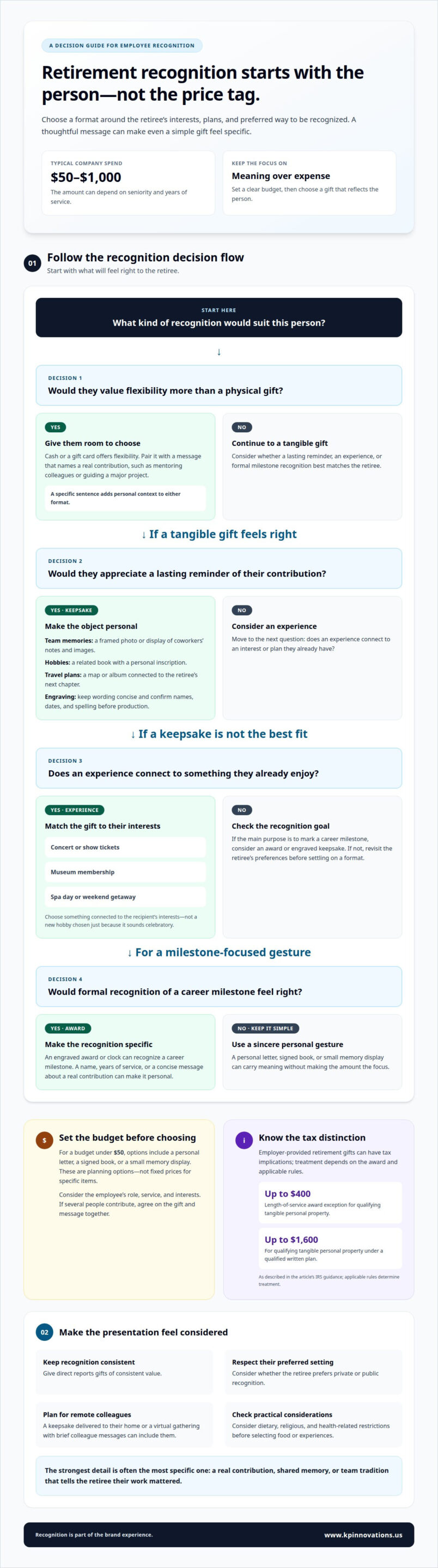
A retirement gift can be meaningful without being extravagant. Companies typically spend $50 to $1,000, depending on the employee’s seniority and years of service, so set a budget that reflects the recognition you want to give. The best retirement gifts for employees also feel personal, not simply expensive.
It’s easy to focus on price or choose a familiar keepsake. A better starting point is the person: their interests, retirement plans, and preferred way to be recognized.
This guide will help you set a thoughtful budget and choose between a keepsake, an experience, or an award. You’ll also learn how personalization and presentation can make the gesture feel considered, whether you’re recognizing one colleague or creating a consistent approach for your team.
Key Takeaways
- Set a clear budget that reflects the employee’s service and role, then apply it consistently.
- Choose a gift around the retiree’s interests and plans, not just a familiar category or price point.
- Consider engraved keepsakes when a lasting reminder of the employee’s contribution feels right.
- Experiences can mark the transition in a personal way, especially when they connect to the retiree’s interests.
- Use an award to recognize a career milestone and make the presentation feel as thoughtful as the gift.
What are the best retirement gifts for employees?
Choose retirement gifts for employees based on their interests, future plans, and preferred style of recognition. A book, travel keepsake, or engraved award can mark the milestone more personally than a generic item.
Personalized Keepsakes and Memory Displays
Match the keepsake to something colleagues know about the retiree. A personalized frame might hold a team photo, while a memory display could bring together coworkers’ notes and images from shared projects. For someone planning to travel, a map or album can connect the gift to their next chapter. Books can work well, too: choose a title related to the person’s hobby and add a personal inscription.
When coworkers contribute together, collect specific memories rather than repeating general praise. A note about a project, helpful gesture, or team tradition makes a display feel personal. Keep the design readable, and confirm names and message wording before creating an engraved or personalized keepsake.
Gift Types and Personal Messages
Cash and gift cards give the retiree flexibility, while a physical gift makes the recognition more tangible. Choose based on the employee’s preferences and your organization’s policies. Pair either format with a message that names a real contribution, such as mentoring new colleagues or guiding a major project. A thoughtful sentence can make even a simple gift feel specific.
For remote employees, consider a keepsake delivered to their home or a virtual gathering where colleagues share brief messages. Plan the presentation so the retiree can participate comfortably. A personalized gift from coworkers might include a signed book, a framed team photo, or a collection of written memories.
Budget-Based Gift Choices
For a budget under $50, consider a personal letter, a signed book, or a small memory display. These are planning options, not fixed prices for specific items.
Set the budget before choosing, then weigh the employee’s role, service, and interests. If several people are contributing, agree on the gift and message together. A clear limit keeps the gesture consistent without making the amount the focus.
Tax and Gift Etiquette
Employer-provided retirement gifts can have tax implications, and the treatment depends on the award and applicable rules. According to the Internal Revenue Service, the length-of-service award exception can exclude up to $400 for qualifying tangible personal property. Under a qualified written plan, the exception can exclude up to $1,600 for qualifying tangible personal property.
For etiquette, give direct reports gifts of consistent value and respect whether the retiree prefers private or public recognition. Consider dietary, religious, and health-related restrictions before selecting food or experiences. A brief, sincere message should recognize a specific contribution without putting the employee on the spot.
Engraved clocks and commemorative keepsakes
An engraved keepsake gives the retiree a visible reminder of their contributions. Choose an object that suits the recipient’s tastes and your organization’s approach to recognizing milestones.
Engraved Clocks
A clock can represent the years someone helped move a team forward. Consider an engraved glass or desk clock for an office, study, or home library. Keep the inscription concise: the employee’s name, years of service, and a specific contribution make the message personal without crowding the design.
Before engraving, confirm spelling, dates, and the final message in writing. A short line such as “Thank you for guiding our next generation of leaders” connects the object to a real contribution. If the retiree is planning an adventure or trip, choose a clock style that suits their home rather than their former desk.
Engraved Watches and Jewelry
A watch or piece of jewelry can be a personal retirement gift, but it suits someone who enjoys wearing accessories. Think about the recipient’s established style before choosing a design. A discreet engraving on the back of a watch can carry a date or brief message, while a small pendant may suit someone who prefers jewelry.
Keep the inscription readable and appropriate for daily wear. A name, retirement date, or short phrase is often more useful than a long list of achievements. When coworkers select a shared gift, gather input from people who know the recipient’s preferences rather than assuming one style suits everyone.
Engraved Frames and Keepsakes
An engraved picture frame turns a team photograph into a lasting memento. A 4-by-6 frame can hold a group photo from a farewell gathering, while a larger memory display can combine photographs with brief notes from colleagues. Choose images that reflect shared experiences, such as a completed project or a familiar team tradition.
Other keepsake ideas include a personalized plaque, paperweight, or small display piece. Choose something the retiree can keep at home, especially if they are leaving a remote role. A printed message from colleagues can accompany the gift, adding personal context beyond the engraved name.
Customization works best when each detail has a purpose. First, choose the item; then approve the wording, names, dates, and layout before production. For a keepsake requiring a particular material or finish, thoughtful product sourcing can help align the selection with the intended design.
Choose retirement gifts that reflect the person, not just the occasion. A clock may suit someone who values traditional desk objects, while a frame or wearable keepsake may better match another recipient. A thoughtful engraving makes the organization’s appreciation specific and enduring.
Experience-based retirement gifts
An experience can recognize the retiree’s interests and give their next chapter a memorable start. Consider concert or show tickets, a museum membership, a spa day, or a weekend getaway. The best choice connects to something the recipient already enjoys, rather than asking them to take up a new hobby because it sounds celebratory.
Travel is one possible direction. According to AARP, 70% of adults aged 50 and older planned trips in 2025. The pass waives charges of $10 to $20 for a lifetime. It may suit a retiree who enjoys outdoor trips, while tickets to a show may better fit someone who prefers city weekends.
Start with a known interest, then choose an experience that fits how the retiree likes to spend time. A colleague who often talks about live music might appreciate concert tickets. Someone who enjoys art could value a museum membership. For a retiree who prefers quiet time outdoors, a hammock or hobby-focused subscription box can support favorite pastimes without requiring a fixed event date.
Plan the details around the recipient. A weekend getaway should suit their preferred destination and travel style; a spa day should match their comfort and interests. For tickets or memberships, consider whether the dates and location are practical. Flexible timing can matter more than an elaborate itinerary, especially when family plans or travel arrangements shape the retiree’s schedule.
Make the appreciation personal by pairing the experience with a short note explaining why you chose it. Mention the retiree’s enthusiasm for jazz, gardening, or visiting museums instead of relying on a generic farewell message. A team can also host a farewell gathering where coworkers share memories and well-wishes, then present the experience as an invitation to enjoy the next chapter.
For remote employees, coordinate delivery and presentation so the experience still feels connected to the team. A virtual farewell can include a few specific stories, followed by a digital membership or experience gift suited to the recipient. Focus on their interests, not the novelty of giving something different. A meaningful choice recognizes past contributions and offers inspiration for what comes next.
Premium gifts for executives and long-tenured employees
A premium retirement gift should recognize a person’s specific contribution, not simply signal seniority. For an executive, consider a desk accessory they’ll use or a keepsake tied to a meaningful achievement. For a long-tenured employee, connect the gift to the people, projects, or traditions they helped shape.
Start with what the recipient values. A leader who enjoys writing may appreciate a refined pen or journal, while someone who prefers a clear workspace might use a pen holder. An employee known for mentoring colleagues could receive a personalized award recognizing that contribution. Hobbies matter, too. A thoughtful choice reflects what the person enjoys, not what the organization assumes executives should receive.
Desk accessories can suit retirees who want a lasting reminder of their career. Consider a pen holder, a journal, or a recognition plaque for a home office or study. A piece such as an engraved mahogany-and-gold recognition plaque can carry the retiree’s name, service milestone, and a concise message. Keep the wording focused so the recognition feels personal, not like a résumé reproduced on an object.
For a personalized desk gift, make three decisions before production:
- Purpose: Choose an item that fits the recipient’s workspace or interests.
- Message: Name a concrete contribution, such as building a team or guiding a major initiative.
- Presentation: Decide whether colleagues will present it privately or during a retirement gathering.
Long service deserves recognition that feels individual, not automatically more elaborate. If several employees are retiring, keep the recognition standard consistent while tailoring each message to the person’s role and contributions. A shared format can establish fairness, while a specific inscription helps each recipient feel seen.
For an executive, a quality writing set or desk accessory can feel appropriate without becoming impersonal. For a long-tenured team member, a journal with a message about their knowledge and support may mean more than a generic status symbol. Ask close colleagues for one precise example of the retiree’s impact, then use that detail to shape the message.
Keep the inscription brief enough to read at a glance. A name, retirement milestone, and sentence of appreciation will usually communicate more clearly than a long list of titles. Confirm spelling and wording before engraving, especially when the gift includes several names or a specific project reference. The result should help the retiree remember the people and work behind the recognition.
Crystal and glass awards
A crystal or glass award can make a retirement milestone visible and lasting. Choose its shape and inscription to reflect the employee’s contributions, not just the occasion. A flame-shaped award can suggest momentum, while a vase or clear plaque provides space for a concise message. Choose a design that suits the recipient’s home or office and can be displayed comfortably.
Start with the recognition story. For a retiring team leader, the inscription might thank them for mentoring colleagues or guiding a defining project. For a long-serving employee, it could recognize the knowledge they shared across the organization. A specific message makes the award more meaningful than a broad phrase such as “With appreciation.” Keep the employee’s name and service milestone clear.
Crystal awards often create a formal presentation, while glass can offer a simpler, understated look. The right choice depends on the recipient’s style and the tone of the event. Consider whether the person prefers a prominent display piece or a modest keepsake. A large award may suit a public ceremony; a smaller piece may feel more natural for a private presentation.
Before approving the design, review the text and layout together. Check the spelling of names, dates, titles, and project references. Make sure the message remains readable when engraved, and avoid filling every available space. A short inscription with a concrete example of the employee’s impact gives the award a clear purpose.
Presentation adds context. At a farewell gathering, a manager can explain how the award reflects the retiree’s contributions before handing it over. For a remote employee, arrange personal delivery and invite colleagues to share a brief message during a video call. Even a quiet coffee with the team can make the recognition feel considered rather than routine.
- For a formal ceremony: Choose a crystal award with a focused message about leadership or mentorship.
- For a quieter tribute: Select a glass keepsake with the retiree’s name and a specific service milestone.
- For a team presentation: Pair the award with a short speech naming a project or contribution colleagues remember.
Popular award forms include plaques, sculptural shapes, and glass vases. Choose based on display space and the retiree’s preferences, rather than assuming every employee wants a prominent trophy. For a distinctive recognition piece, source an award suited to the occasion, then align its design and message with the contribution being celebrated.
KP Innovations
KP Innovations treats retirement recognition as part of the employee experience. Through its Chief Swag Officer model, it acts as an outsourced merchandise department, owning the program from strategy and creative through sourcing and fulfillment.
That approach reflects “Merch Is Media™”: a gift is more than an object. It can express what an organization values and shape how an employee remembers a milestone. Promotional Products, Custom Apparel, Awards & Recognition Items, and Print & Display Materials can each support that experience when chosen with purpose.
For a retirement gift that reflects your culture and recognizes an employee’s contribution, contact KP Innovations to discuss your merchandise program.
Make the Recognition Feel Like It Belongs
A retirement gift can do more than mark someone’s final day. It can show what your organization values and how it remembers the people who shaped its work. Treat each recognition moment as part of the employee experience, choosing gifts to reflect the person’s contribution rather than following a default formula.
When planning future retirement gifts for employees, use a simple process: identify the recipient’s preferences, agree on the message, and choose a presentation that feels right for them. This gives your team a thoughtful starting point without making every farewell identical. The details can change while the care behind the recognition remains consistent.
If you’re planning a retirement recognition moment, explore sourcing support for a fitting gift. A clear intention turns the next decision into an opportunity to recognize someone well. Make the milestone personal, and let the appreciation carry forward.
Frequently Asked Questions
How Much Should a Company Spend on a Retirement Gift?
Set the amount according to your recognition policy, the employee’s role, and length of service. A consistent approach helps avoid perceptions of favoritism, especially when several employees retire close together. Decide whether the budget covers only the gift or also a gathering, then communicate that distinction to the organizing team. The goal is to recognize the person’s contribution, not to make the gift’s cost a measure of their value.
How do I choose a retirement gift that feels meaningful and professional?
Choose a gift linked to a specific contribution or known preference, and keep the presentation appropriate for your workplace. For example, recognize a project lead’s ability to bring teams together with a message about that impact. Avoid overly personal jokes or references that might feel uncomfortable in public. A clear inscription or note provides context and helps the retiree understand why the team chose the gift.
Should a retirement gift be practical, commemorative, or experience-focused?
Choose the format that best fits the retiree’s preferences and circumstances. A practical gift suits someone who values everyday use; a commemorative piece marks a career milestone; an experience works for someone who prefers activities over objects. Consider timing, too. A scheduled event may be difficult for someone with travel plans, while a flexible option leaves room for their own plans after leaving work.
What are popular retirement gifts for employees?
Common choices include personalized keepsakes, recognition awards, books, and experience gifts. Popularity alone shouldn’t determine the selection, since an item that suits one retiree may not suit another. For a colleague who enjoys reading, a book with a note from the team can feel personal. For someone who values professional recognition, an award tied to a specific achievement can make the milestone clear.
What are appropriate retirement gifts for a boss or manager?
A suitable gift for a boss or manager is professional, thoughtful, and proportionate to the relationship. The team can choose one shared gift and include a message recognizing the leader’s impact, such as developing colleagues or supporting a department through change. Avoid gifts that could seem overly personal or create discomfort among employees. A group presentation helps the gesture feel like team appreciation, not an individual obligation.
How much should you spend on an employee retirement gift?
Use your organization’s established recognition policy as a starting point, then apply it fairly across employees in comparable circumstances. Consider service, role, and whether the gift is individual or funded by a group. Keep contributions voluntary when coworkers are involved, and ensure the amount does not pressure anyone to participate. A sincere message and thoughtful presentation can recognize the employee without turning spending into a competition.
How can a team organize a group retirement gift or farewell celebration?
Choose one coordinator to manage the plan, set a contribution deadline, and explain that participation is optional. Ask coworkers for short, specific memories or messages, then select a gift that reflects the retiree rather than the group’s preferences. Confirm the event format and invite list with care, especially if the employee prefers a quieter farewell. For remote colleagues, gather written notes and include them in the presentation.