
Company swag should do more than display a logo. It’s a branded gift or item that helps employees, customers, or event attendees connect with a startup. The strongest tech startup swag pack ideas combine practical items with a clear sense of the brand. Stickers can express a company’s personality, while useful tech accessories can earn a place in someone’s daily routine.
It’s easy to reach for familiar choices like chargers, notebooks, and shirts. The challenge is selecting items people will want to keep, then bringing them together in a pack that feels intentional rather than like unrelated giveaways.
This guide shows how to build a swag pack around its audience and purpose. Explore useful tech accessories, onboarding merchandise, themed kits, and sticker packs, then use a practical framework to decide what fits your brand. Treat merchandise as part of the brand experience, not just a logo on a product.
Key Takeaways
- Start with the audience and occasion, then choose tech gifts people can use in their daily routines.
- Build onboarding kits around a new hire’s first days, balancing practical essentials with a thoughtful personal touch.
- Use themes to make a gift box feel cohesive, rather than grouping unrelated items together.
- Treat sticker packs as a way to express your startup’s identity, not just a space for a logo.
- Choose merchandise that fits your brand and recipient; the right item should strengthen the experience, not simply carry your name.
Premium wireless chargers and power banks
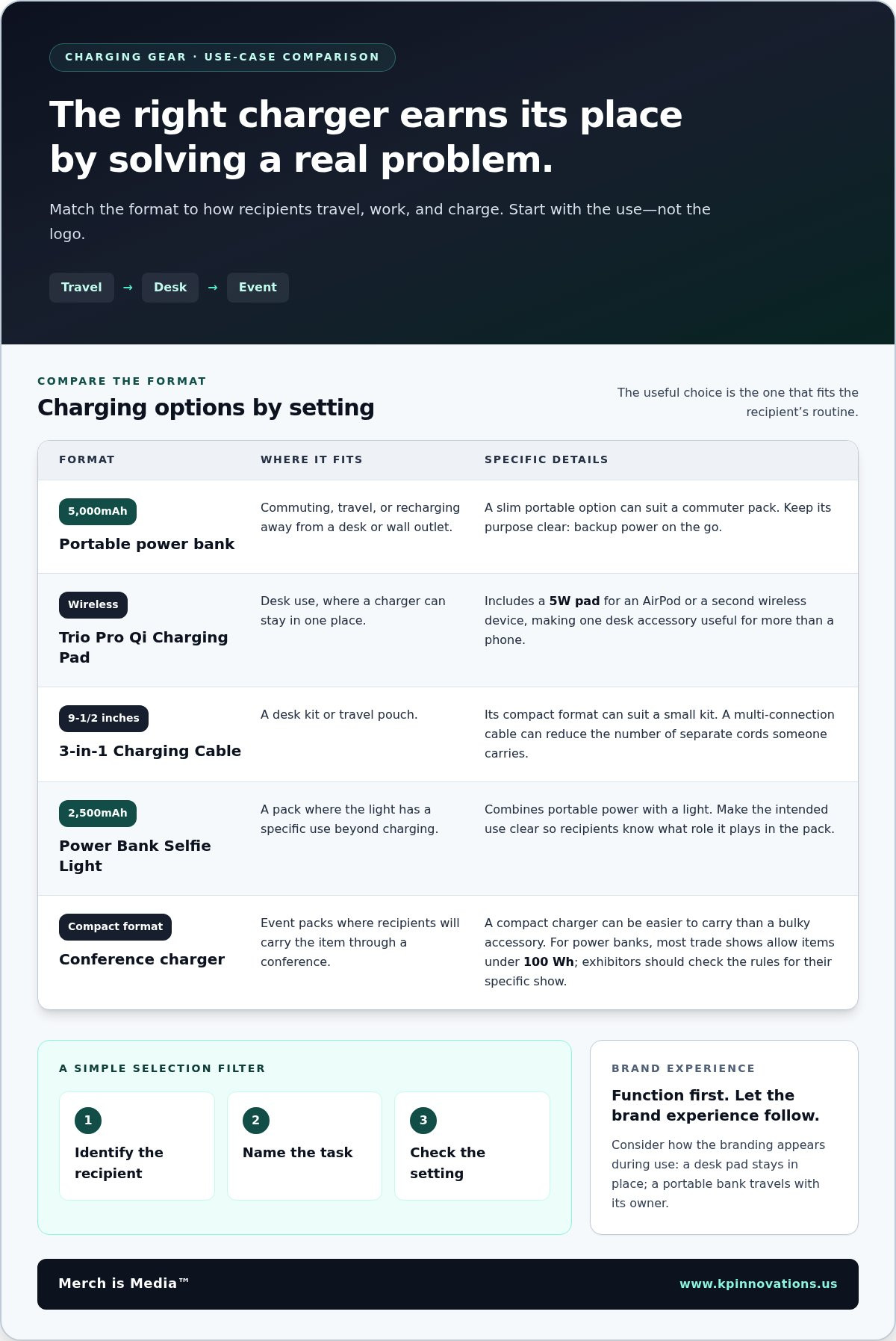
A charging gift earns its place when it solves a real problem, such as a phone running low during a long event. Match the format to how recipients travel, work, and charge their devices.
Portable Charging Options
Portable chargers and power banks give recipients a way to recharge away from a desk or wall outlet. Compare capacity, portability, and how the item fits the occasion. A slim portable power bank with a capacity of 5,000mAh suits a pack designed for commuters, while a compact charger can be easier to carry at a conference. The useful choice is the one that suits the recipient’s routine.
Phone Charging Gear
Phone charging gear ranges from wireless pads to power banks and charging cables. Choose based on where the recipient will use it: a wireless charger can stay on a desk, while a portable bank supports travel. The Trio Pro Qi Charging Pad includes a 5W pad for an AirPod or a second wireless device. That added charging surface can make one desk accessory useful for more than a phone.
Consider cables alongside chargers. The 3-in-1 Charging Cable is 9-1/2 inches long, a compact format for a desk kit or travel pouch. A multi-connection cable can reduce the number of separate cords someone carries. Before selecting a cable, think about the devices in the recipient’s day and whether a short cable suits the intended setting.
Power bank capacity helps set expectations for use. A 2500mAh Power Bank Selfie Light combines portable power with a light, making it an example of a device with a specific use beyond charging. By contrast, a 5,000mAh portable bank focuses on backup power. Keep the purpose clear in the pack: recipients should understand whether the item is for quick top-ups, desk use, or travel.
For event company swag, balance usefulness with portability. A charger that fits into a bag is easier to carry through a conference than a bulky accessory. Most trade shows allow power banks under 100 Wh, but exhibitors should check the rules for their specific show. This matters when attendees will travel with the item after the event.
Make the gift feel premium through thoughtful selection, not just a prominent logo. Choose a format that suits the moment, then consider how the branding will appear during use. A wireless pad on a desk can create recurring brand impressions, while a portable power bank can travel with its owner. In either case, lead with function and let the brand experience follow.
Customizable technology accessories
Popular branded tech accessories include webcam covers, phone stands, USB hubs, and laptop sleeves. Choose based on where recipients work and which devices they use, so the item fits naturally into their routine.
Customization should clarify the brand, not crowd the item. A Micra Webcam Cover made from premium aluminum offers a compact logo area, while a Stick Up Phone Stand helps position a phone on a desk. Consider how visible the mark will be during normal use and whether it suits your visual identity.
For people connecting several devices, a Portable 4-Port USB Hub has two USB Type-C outputs and two USB-A inputs. That combination gives the recipient practical flexibility across different connections. A hub can make sense in an onboarding pack for a distributed team, especially when the recipient’s work setup includes multiple peripherals.
Phone accessories can support a trade show experience, too. A stand lets attendees view a screen hands-free, while a webcam cover can be useful for remote work after the event. Choose one item for a focused pack, or pair complementary accessories recipients are likely to use together. Avoid adding an object without a clear purpose.
Sustainable choices require attention to material and purpose. An AWARE Recycled Cotton Tote Bag is made from 145 G recycled fabric, offering a carry option for a notebook, bottle, and smaller technology accessories. A tote bag can hold a tech gift at a trade show, then remain useful for everyday errands. Keep the accessory mix light enough to carry.
A backpack or sleeve can protect a laptop during a commute, while a small stand or hub supports desk work. Match the item to the recipient’s routine rather than assuming everyone needs the same setup. A remote employee may value a desk accessory, for example, while a conference attendee may prefer something compact.
Before selecting a product, use a simple filter: identify the recipient, name the task the accessory supports, and check that its format suits the setting. This keeps customization tied to a real use case. For a trade show, prioritize easy-to-carry items; for onboarding, choose accessories that complement the employee’s work environment.
Thoughtful sourcing connects material, function, and brand expression. If you’re developing a coordinated set, strategic product sourcing can help align those choices with the intended audience and use.
Laptop sleeves protect equipment valued at more than $1,500.
Startup swag kits and themed boxes
A kit works when its contents serve one audience and occasion. A new-hire welcome, remote onboarding, and seasonal gift each call for a different mix.
Startup Kit and Box Themes
Build a theme around a recognizable moment, such as a new hire’s first week or a winter welcome. A winter box might pair a beanie, mug, and hot cocoa mix; an onboarding kit could combine apparel, a water bottle, and a note about company culture. Keep each item connected to the occasion instead of filling the box with unrelated giveaways.
Remote onboarding needs to feel welcoming, even without an in-person handoff. Choose items that travel well and support the workday, such as a notebook, water bottle, or compact accessory. Add a personal message that connects the items to the team experience. Consistent contents can help create a shared welcome for distributed employees.
Personal Care Kits
Personal care kits should reflect where recipients will use them. For a travel-focused pack, select compact essentials that fit alongside apparel or a water bottle. For an office welcome, keep the contents practical and easy to store. A clear theme makes a kit feel considered; unrelated items can make its purpose harder to understand.
Consider recipients’ comfort and the setting before choosing personal care items. A conference giveaway has different needs from an employee welcome box, so let the audience guide the contents. Keep the presentation tidy and group items so recipients can quickly see what the kit is for.
Packaging and shipping should protect the experience as well as the contents. Group items by recipient, secure them in suitable packaging, and include a welcome note with the recipient’s name where possible. For remote onboarding, coordinate addresses and delivery timing with the new hire’s start date, so the box feels like part of the welcome rather than an unrelated parcel.
Common ordering mistakes include choosing items before defining the audience, mixing products without a shared purpose, and overlooking how a water bottle or power bank fits in the box. Confirm the artwork, recipient details, contents, and packing order before fulfillment begins. A sample pack can reveal awkward packaging or unclear presentation before the full run is assembled.
For travel or event kits, consider what recipients will need to carry afterward. Lightweight contents and a manageable package make giveaways easier to take along. For employee kits, apparel sizing and accurate delivery details matter more. These choices help a pack feel tailored instead of creating avoidable work for the recipient.
Treat the box as part of the message. A coherent theme, useful contents, and a welcome note turn separate objects into one brand experience. The right combination depends on the occasion, the audience, and how the kit will reach its recipient.
Tech-company brand identity and sticker packs
A startup communicates its identity through the merchandise people choose to keep and use. Treat a sticker pack as part of that experience, not merely as a place for a logo.
Brand-Aligned Swag Selection
Start with one audience and one everyday context, such as developers working beside a laptop or customers commuting with portable gear. Then choose items that suit the brand’s personality and meet a practical need. A useful, well-matched item can express more than a logo alone.
Compare each option with the startup’s visual style, audience, and likely use. A company known for clear, playful design might carry that character through a laptop accessory and its packaging. A short employee survey can reveal whether recipients would rather use a speaker, earbuds, or another item.
Sticker Pack Choices
A Custom Sticker Sheet can turn a visual identity into a portable giveaway. Build a set around recognizable brand elements, such as a logo, product icon, or phrase employees already use. Each sticker should work on its own, while the full sheet feels like one coherent expression of the company.
Consider where recipients might place stickers, such as on a laptop, notebook, or water bottle. Clear shapes and readable artwork help each design stay recognizable at different sizes. Avoid treating every space as an advertisement. A small set of distinct designs can communicate more clearly than repeated logo marks.
Use a simple selection test before approving artwork or products:
- Audience: Identify who will receive the item, such as employees, customers, or event attendees.
- Use: Name the specific moment or routine it should support, like personalizing a laptop.
- Identity: Check that its color, tone, and design fit the startup’s existing brand.
For stickers, consistency across the sheet matters. Keep line weight, color, and typography within the same design language, then vary the illustrations or messages. A software startup could pair a product-related icon with a team phrase and a simple wordmark. The mix makes the pack feel connected without making every sticker identical.
Branded items work as media because people carry them into everyday settings. A sticker on a laptop can travel to a coworking space, while a useful accessory may stay visible on a desk. The brand should feel at home in those places, not interrupt them.
Keep the final set focused. Choose a small number of designs with distinct roles, such as a logo, a product reference, and a culture-focused phrase. This gives recipients options and creates a more recognizable identity across the pack.
How do you choose swag items that reflect a startup’s brand and audience?
Choosing tech startup swag pack ideas starts with the recipient and the experience you want to create. Consider employees, customers, and event attendees separately because each group encounters your brand differently. Then define the moment: welcoming a new team member, thanking a customer, or introducing your company at an event. Let that purpose guide every choice.
Narrow the options with three decisions: who receives the item, what experience it should support, and which brand qualities it should convey. A practical desk accessory may suit remote employees, while lightweight giveaways may work better for conference attendees carrying gifts home. Every item needs a clear role in that moment.
- Audience: Identify the recipient group and consider their routines.
- Purpose: Decide whether the gift welcomes, recognizes, thanks, or introduces the startup.
- Brand fit: Match the item’s style and use to the company’s identity.
Ask employees what they would use. A short survey can uncover preferences leaders may overlook, such as a useful work accessory instead of another desk decoration. Compare responses across teams with different routines. A developer working from home and a conference representative may value different items.
Next, assess each item in context. A logo on a bottle or laptop accessory should be easy to recognize during normal use. Consider the item’s shape, material, and decoration area alongside the startup’s colors and design style. A coordinated sticker sheet may suit a playful identity, while a restrained brand may call for subtler decoration.
PPAI reports that 85% of consumers who receive a promotional product do business with the advertiser. Treat that figure as context, not a promise of results. Track the purpose of each pack and collect recipient feedback to learn which items are kept, used, or remembered.
Employees and clients may value considered gifts they can use regularly, while conference attendees may prefer portable giveaways. A useful work item could suit a team milestone, for example, while a compact gift may be easier to carry at an event. Match the item and presentation to the relationship.
The strongest tech startup swag pack ideas start with a clear audience and a specific brand experience. Before approval, review the complete set together. Check that the colors, logo placement, message, and items feel connected. Remove anything unrelated to the occasion so the pack communicates one clear idea.
KP Innovations can help align product choices with the audience and intended experience through strategic merchandise sourcing. Start with the recipient and purpose, then shape a selection where every item supports the brand.
KP Innovations: Promotional Products
KP Innovations acts as an outsourced merchandise department, helping companies manage merchandise as part of the brand experience rather than as a series of disconnected purchases. Through its Chief Swag Officer model, the team coordinates Merchandise Strategy, Creative Development, Product Sourcing, Production Management, Program Management, and Fulfillment.
This program-level view connects individual items to the moments they’re meant to support. Promotional Products, Custom Apparel, Awards & Recognition Items, and Print & Display Materials can all play a role, with choices guided by the audience and purpose, not just the product.
If your startup needs a more coordinated approach to its merchandise program, contact KP Innovations to discuss what you’re building.
Make Merchandise a Deliberate Brand Decision
Your next merchandise program can do more than mark a moment. It can help employees feel part of a shared culture and give customers a thoughtful reason to remember your startup. Treat tech startup swag pack ideas as the start of a decision, not the strategy itself: define the experience you want to create, then choose items that support it.
Give each program a clear owner and purpose. This makes it easier to keep choices consistent as your team grows, gather recipient feedback, and refine future selections. Merch is media: every item carries an impression of your brand into someone’s day. A deliberate approach helps that impression feel like you.
When you’re ready to develop a merchandise program around your audience and goals, talk with KP Innovations about merchandise sourcing. Build with intention, and let every item support the experience your startup wants to create.
Frequently Asked Questions
What is company swag?
Company swag is merchandise a business gives employees, customers, or event attendees to create a tangible connection with its brand. It can include practical objects, apparel, or recognition gifts. The item is only one part of the experience: timing, presentation, and the reason for giving it also shape what it communicates. A welcome gift, for example, signals inclusion, while a customer thank-you recognizes a relationship.
What items should go in a tech startup swag pack?
Choose items that match the pack’s purpose and recipients’ routines rather than building one standard box for everyone. For a customer completing a product pilot, consider a useful work accessory and a concise card thanking them for their input or explaining the next step. For employees, select items that support their actual work setup. Keep the contents focused, easy to understand, and connected to one occasion.
What are creative and useful startup swag ideas for employees and customers?
Make the gift specific to a shared moment. For example, recognize an employee’s contribution to a product launch with an award and a personal note naming the achievement. For customers joining a user group, pair a small branded item with a card inviting them to share feedback. Personal details make the gesture relevant, while the item gives recipients a physical reminder of the relationship.
What are the best eco-friendly tech swag items?
Look for items designed for repeated use and materials with clearly described recycled content. A reusable carry item made with recycled fabric can serve a practical role alongside tech accessories, while a durable item can replace a disposable alternative. Consider packaging, too: choose a size that fits the contents and avoids unnecessary layers. The most credible choice is one whose material and intended use you can explain plainly.