
Creating a coherent VIP guest experience means every detail feels connected to the event and the brand. Merchandise can help shape that experience, but only when it reflects the guest’s role and the occasion. A conference speaker, valued client, and leadership retreat attendee may each need a different approach.
It’s natural to want a gift that feels special and reflects the care behind the event. The key is to make merchandise support the experience, not compete with it. A considered program can match gifts to guest roles and occasions, from branded audio and practical travel accessories to curated wellness boxes. Presentation, personalization, and timing can help each gift feel relevant rather than generic.
Key Takeaways
- Align each gift with the guest’s role, the occasion, and the event setting to make the experience feel considered rather than generic.
- Use audio gifts to support the event experience, with thoughtful branding and presentation that reflect the care behind it.
- Plan gifts around guests’ needs and context, especially for those arriving from out of town, so they feel useful and personally relevant.
- Shape gift boxes around the event’s character and the recipient’s preferences, balancing gourmet treats with self-care options.
- Use gifts to support different relationship moments, from honoring a milestone to welcoming a guest.
1. Matching gifts to guest roles and event settings
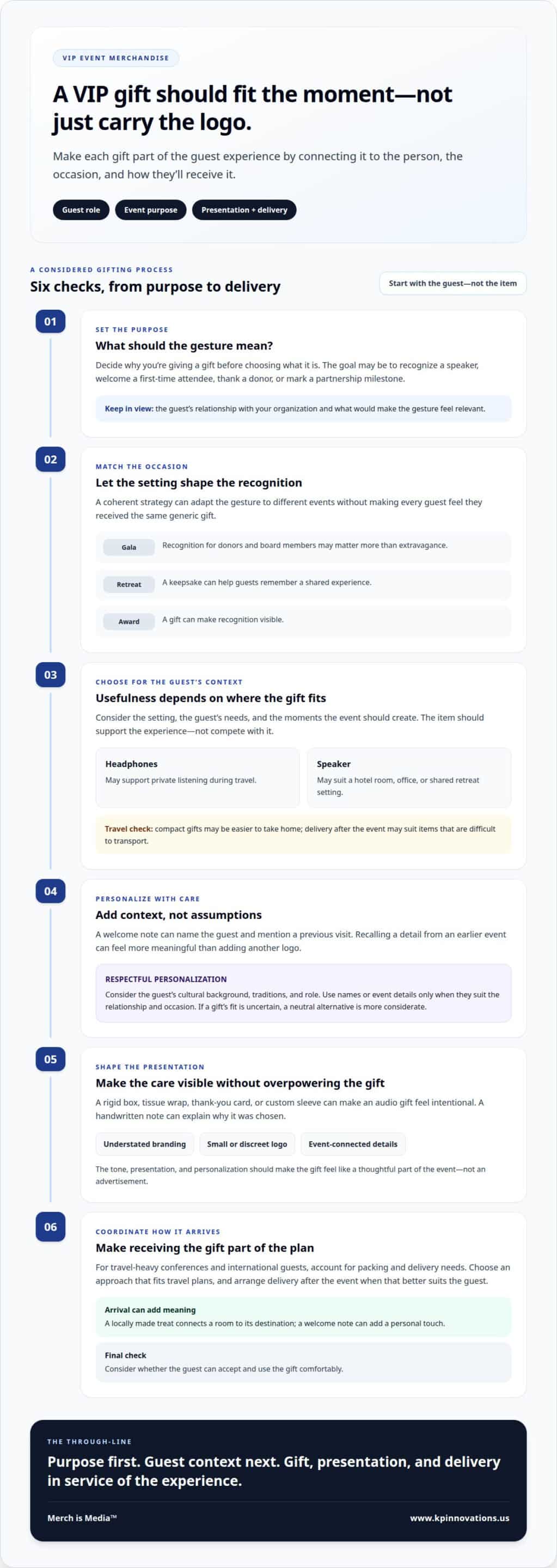
A useful gift reflects why someone is attending, not just the event logo. Start by defining the goal: recognize a speaker, welcome a first-time attendee, thank a donor, or mark a partnership milestone. Then consider the guest’s relationship with your organization and what would make the gesture feel relevant. A coordinated strategy makes each gift part of the event experience, rather than an isolated item.
At nonprofit galas, recognition for donors and board members may matter more than extravagance. At a reflective leadership retreat, a keepsake can help guests remember a shared experience. For an award ceremony or partnership milestone, the gift can make recognition visible. The approach should fit both the relationship and the reason guests gathered.
What VIP gifts work best for galas, award ceremonies, and entertainment events? Begin with the intended experience: a personal expression of thanks at a gala, visible recognition at an award ceremony, or a memento that brings an entertainment event to mind. A consistent strategy can adapt the gesture to each setting without making every guest feel they received the same generic gift.
What eco-friendly luxury gifts are suitable for VIP events? First, consider whether the choice supports the event’s purpose and the guest relationship. If you describe an item as sustainable, make sure its materials support that claim. Pair the gift with understated presentation and a handwritten note that explains why it was chosen.
For travel-heavy conferences, plan for how guests will receive and carry their gifts. Compact gifts may be easier to take home, while delivery after the event may suit items that are difficult to transport. For international guests, account for packing and delivery needs when shaping the experience. What VIP gifts are easy to ship or give to international guests? Choose an approach that fits the guest’s travel plans, and arrange delivery after the event when that better suits the guest.
Room amenities can make arrival feel personal. A welcome note that names the guest and mentions a previous visit adds context; a locally made treat connects the room to its destination. For a returning attendee, recalling a detail from an earlier event can make the gesture more meaningful than adding another logo.
What gift-giving etiquette and cultural considerations apply to VIP events? Consider the guest’s cultural background, traditions, and role before deciding how to recognize them. Keep personalization respectful, and use names or event details only when they suit the relationship and occasion.
Branding should support the memory, not dominate it. The tone, presentation, and personalization can help a gift feel like a thoughtful part of the event rather than an advertisement. A handwritten thank-you note can add context and explain the gesture.
Before choosing, consider the event theme, how guests will receive the gift, and what experience you want them to remember. Avoid making the item the focus when the relationship or occasion should lead. For event merchandise planning, fit and function should support the guest experience and the event’s purpose.
2. Audio gifts as part of the event experience
An audio gift can extend an event experience beyond the venue, but its impact depends on more than the item itself. Headphones might support a guest’s trip home, while a speaker could suit a hotel room or office. Start with the moments the event should create, then consider whether an audio gift helps carry that experience forward.
Electronics also reflect on the host. A poorly considered gift can undermine the care behind an event, so align sourcing and presentation with the occasion rather than prioritizing a prominent logo. Consider the guest’s setting and whether the gift feels relevant there. Headphones suit private listening during travel; a speaker may work better for shared audio in a suitable space.
Presentation is part of the experience. A rigid box, tissue wrap, thank-you card, or custom sleeve can make an audio gift feel intentional. For example, a conference welcome package might pair headphones with a short note explaining their connection to the event. The goal is to make the gift feel considered, not to add another oversized brand mark.
Keep company branding secondary to the guest’s experience. A small logo or discreet placement can identify the host without making the item feel like an advertisement. Personalization can add meaning: include the guest’s name, event title, or date on the card or sleeve. The details should feel connected to the event, not added as an afterthought.
Not every VIP gift needs a battery or speaker. A branded calligraphic set can suit a formal conference or executive gathering, especially when guests will use it for notes or correspondence. Pair it with a card that explains its connection to the event. The choice should reflect the setting and the experience the host wants to create.
A branded prayer mat may be appropriate when a guest’s needs and traditions make it a thoughtful choice. Treat this as a personal, context-dependent gift, not a default for guests from a particular background. Consider respectful presentation and subtle company identification. If the fit is uncertain, a neutral alternative is more considerate.
Plan the gift as part of the event, not as a standalone purchase. Define the recipient and event purpose, choose an item that supports the experience, then coordinate its branding, presentation, and delivery. A branded speaker may suit a shared retreat setting; headphones may better serve an individual traveler. Consider whether the guest can accept and use the gift comfortably. That final check helps distinguish thoughtful personalization from a misplaced assumption.
For corporate events, a gift’s impact depends on the whole experience, from strategy and sourcing to presentation and delivery. An audio item, calligraphic set, or other meaningful choice should fit the event’s purpose and brand. Thoughtful merchandise sourcing can help align the item, personalization, and presentation with that intent.
3. Gifts that reduce travel friction and extend the event
Conference travel can add friction before a guest reaches the event: managing luggage, finding their room, and settling into an unfamiliar place. A thoughtful welcome should make that transition easier and help the event experience begin before the first session. A travel journal may give guests a place to capture ideas, contacts, and reflections, but it is only useful if it fits their needs. Personalize it with the recipient’s name or add the event title or date inside the cover when that makes the experience more meaningful.
Start with the guest’s journey, not a product list. For an international gathering, a passport holder and luggage tag set may be useful; for other guests, a compact journal might fit neatly into a work bag. Choose tools that are easy to pack and useful beyond the trip. When an item continues to serve a real purpose, it can carry a reminder of the experience without asking for attention.
Personalization works best when it adds meaning without making assumptions. A name on a journal, a discreet event mark, or a note recalling a previous visit can create a memorable impression. Avoid adding personal details the guest hasn’t shared for this purpose. The goal is recognition, not displaying how much the host knows.
The event itself can also make the trip more valuable. Conference organizers might offer VIP guests early access to an exhibition before the main crowd arrives. A private breakfast briefing with an early preview of a product launch can make the invitation itself feel exclusive. A travel journal may help guests capture questions or ideas during the session, but the experience is what gives it purpose.
Hospitality details can complement a travel gift when they make arrival easier. For example, a hotel might arrange for a guest’s suitcase to reach their room before check-in. A personalized welcome note or locally inspired room amenity can connect arrival to the event’s destination. These gestures work best when they reduce friction or help guests settle in.
Not every recipient needs a travel item. For executives attending a meeting or leadership event, a desk accessory such as a customized tabletop set may suit their work environment. Choose something that supports a real routine, such as organizing notes or keeping a writing instrument close. Personalization with a name or event date can make it feel considered rather than like standard office supplies.
Match the welcome to the guest’s schedule. A traveler arriving for a conference may value a compact accessory, while a local executive may prefer a useful desk item. For returning guests, a note acknowledging their previous attendance can make the welcome more specific. Thoughtful VIP gifts don’t need to be elaborate; they need to reduce friction or make the moment more meaningful.
Plan delivery and presentation from the start. Compact journals and accessories are easier to distribute at registration or place in a hotel room than bulky items. A neatly packaged journal, luggage tag, and brief handwritten message can create a coherent welcome when each serves the guest’s journey. Every element should support the travel or event experience, not simply add another logo.
4. Make hospitality feel considered
A guest gift can make hospitality feel personal when it reflects the place and purpose of the event. At a conference in a coffee-growing region, a note explaining the connection can turn a local selection into a welcome that feels specific to the destination. The gesture matters more when it gives guests a sense of why they were chosen.
What are affordable VIP gift ideas that still feel premium? Start with the experience you want guests to have, then choose a few thoughtful details to support it. A personal note and a clear connection to the event can make a modest gift feel more considered than a larger, unrelated selection.
Local food, specialty tea, regional olive oil, handmade candles, and small-batch jam can each help express a sense of place or occasion. The right choice depends on the event and the recipient. Rather than defaulting to a luxury gift, consider what would make a guest feel welcomed and understood.
What are the best VIP welcome bags and gift box ideas? Think about what guests need when they arrive and what would help them feel oriented. A destination-inspired welcome, a practical event detail, and a concise note can create a useful first impression without asking guests to manage more than they need.
Build the gesture around a clear purpose, not a target number of items. A selection that reflects the destination may suit a conference, while a quieter welcome may fit a leadership retreat. When each choice supports the occasion, the experience feels coherent rather than assembled.
Wellness gifts work best when they invite a simple pause, not make promises about health. For a leadership retreat, a thoughtful gesture can acknowledge the space for reflection. Keep scents and personal-care choices restrained, since preferences vary. A note can explain the retreat connection without making the gift feel overly personal.
Presentation should support the welcome, not become the focus. Make the gift easy to understand and manage, and use a simple visual connection to the event where appropriate. Avoid excessive layers that leave guests with packaging to manage.
Plan around the moment guests receive the gift. A hotel-room welcome can feel private, while a reception gesture should be easy to carry. For international guests, consider how the gift may travel. Thoughtful timing and a clear message help the gesture feel considered.
Before finalizing a gifting program, consider the recipient, event setting, and known preferences. A locally sourced selection may suit a conference, while a quieter gesture may fit a retreat. The most effective gift isn’t the fullest one; it’s the one guests remember because it made the experience feel more thoughtful.
5. Gifts that make business events more meaningful
Business events create moments to recognize achievement, commemorate shared milestones, and strengthen relationships. Gifts can support those moments when they have a clear role in the experience. An award recognizes achievement, a commemorative gift marks a milestone, and a practical gift can support a guest’s workday. Treat these roles as part of an intentional program, not as interchangeable giveaways.
Recognition gifts can make an award ceremony, partnership milestone, or formal presentation more meaningful. A well-produced award can anchor a speech, create a clear photo moment, and give the recipient a lasting reminder. An engraved stainless steel coin offers a compact alternative for a traveling honoree. Match the recognition to the significance of the moment, rather than only to the event’s visual theme.
Commemorative gifts help people remember a shared achievement. A custom tabletop set can recall a leadership gathering, while an event-dated keepsake can recognize a long-standing partnership. Speakers may receive a distinct gift from general attendees to reflect their contribution. Make that distinction intentional so the gift feels like recognition, not a perk without context.
How much should you spend per VIP event gift? Set the budget according to the recipient’s role, event purpose, and relationship, then account for customization, packaging, and delivery. Tiered budgets can distinguish a guest of honor from general attendees while keeping the gift connected to its purpose.
Practical gifts can support the experience when guests can use them at work or on a trip. A compact journal, luggage accessory, or tabletop item can fit the purpose. For a formal recognition event, an award may carry more meaning than another everyday object. Avoid oversized gifts that guests must carry through a reception or bring onto a flight.
Luxury isn’t a category by itself. Perfume in traditional packaging, a locally sourced gourmet selection, or a carefully made award can each feel elevated in the right setting. Consider the recipient’s preferences and cultural context before choosing personal items. A gift should be appropriate to accept, easy to present, and consistent with the event’s tone.
Plan the experience before selecting individual gifts. Identify the event’s key moments, such as a keynote, award presentation, or partner dinner. Then decide how recognition, commemoration, and practical gifting can support each moment. This helps distinguish gifts meant to build a personal connection from items intended for broad distribution.
Discuss budget and policy together. Consider the host organization’s gift policy and, where relevant, the recipient organization’s policy. Include full presentation and delivery costs in the event plan, not just the item itself. A well-chosen, modest gift can make a stronger impression than an expensive, generic one.
When a business event needs gifts that distinguish recognition from broad distribution, plan gift sourcing around each event moment. That keeps the gift, recipient, and presentation aligned. The result is a considered brand experience, not simply another giveaway.
KP Innovations
KP Innovations helps organizations make event gifts a considered part of the guest experience. The right choice depends on who the gift is for, what the event represents, and how recipients will use or remember it. That’s the thinking behind “Merch Is Media™”: merchandise can carry the meaning of an experience beyond the event itself.
For a VIP gifting program, KP Innovations brings Merchandise Strategy, Creative Development, Product Sourcing, and Fulfillment together, with options including Merchandise Strategy & Program Ownership, Custom Apparel, Awards & Recognition Items, and Print & Display Materials. This approach helps gifts feel consistent across guest groups, event moments, and delivery details, rather than like isolated item choices.
For support shaping event gifts around your guests and setting, contact KP Innovations.
Make the Next Event Feel Intentional
Give your next event a gifting plan with a clear purpose instead of treating gifts as a last-minute task. Decide what you want the gesture to communicate and how it should support the relationship after the event. That intent can guide the experience from selection through delivery.
KP Innovations can shape a gifting approach around your event goals and guest experience. The right planning partner connects individual decisions to a coherent program, so merchandise carries meaning beyond the moment it’s received. Treat each choice as part of the brand experience you want guests to remember.
To plan your next event gifting program, connect with KP Innovations. Start with the impression you want to leave, and build from there.
Frequently Asked Questions
What Makes a Great VIP Conference Gift?
A great conference gift gives the recipient a useful connection to the event after it ends. Consider a small, well-produced item that references a key idea or shared achievement, rather than a generic conference handout. For example, a keepsake can carry a concise phrase from the event’s central message. The best choice feels connected to the program without requiring guests to remember a long explanation.
What is a good gift for a corporate client?
A good corporate client gift recognizes the relationship without making the gesture feel transactional. Consider what the client contributed to a shared project, then choose something that acknowledges it appropriately. Keep internal records of the gift and its context so future gestures feel consistent rather than duplicated. That simple practice also helps teams coordinate gifting across departments.
What VIP event gifts can be personalized with names or logos?
Personalization can include a recipient’s name, an organization’s mark, or a short event identifier. A strategic merchandise partner manages the artwork and recipient details, checking spelling, titles, and layout placement before production. This quality-control process helps ensure personal details don’t feel careless and keeps company identification clear without competing with the recipient’s name.
What are unique VIP gifts for corporate events and conferences?
A distinctive option is a keepsake portrait from an event photo moment, presented after the gathering. Position the event mark so recipients can crop the image for personal use if they prefer. This turns a shared experience into something guests can keep without requiring a standard merchandise item. It works especially well when the photo moment is designed as part of the event experience.