
A gift card or experience voucher can feel more personal than another home-office item, especially when employees can choose what suits them. The best WFH employee gift ideas balance everyday comfort, useful workspace details, apparel, and technology with room for individual preferences. The right choice depends on whether you’re welcoming a new teammate, recognizing an executive milestone with a timeless keepsake from Luxury Time NYC, or showing everyday appreciation.
Cozy clothing and thoughtful desk accessories may seem like natural choices for remote work. But employees have different routines and tastes, so a flexible gift can make appreciation feel personal rather than predictable.
Explore ideas for loungewear, desk accessories, custom apparel, technology, and experience vouchers, along with practical guidance on when each makes sense. Match the gift to the occasion and choose something useful, enjoyable, or meaningful to the recipient.
Key Takeaways
- Match comfort gifts to how employees actually spend their workday, rather than assuming one style suits everyone.
- Choose desk accessories that support a specific routine, such as keeping a workspace tidy or helping structure focused work.
- For apparel, consider comfort, workplace context, and inclusive fit when selecting a gift employees can wear beyond work hours.
- Prioritize tech gifts that solve a practical home-office need, and consider compatibility with the devices employees use.
- Use gift cards and experience vouchers when choice matters most, and connect the gesture to the occasion you’re recognizing.
1. Loungewear and robes for remote workers
A welcome gift can help a new remote employee feel part of the team before their first video call. Start with the moment you want to recognize, then choose a gift that supports it. A soft robe or lounge set can signal that comfort matters, while a personal note connects the gesture to the team. Offer options for fabric, coverage, color, and fit instead of assuming one style suits everyone.
For onboarding, pair a comfortable layer with a small workspace item, such as a mug. Keep the note focused on welcome and belonging, not availability outside working hours. Let employees share apparel sizing privately rather than asking managers to estimate. This respects personal preferences and helps the gift feel thoughtful, not like a uniform.
Comfort gifts can also recognize a specific contribution. A manager might send loungewear after a demanding project, with a message naming the employee’s work. Regular informal communication remains important for remote team engagement, so a gift should complement check-ins rather than stand in for them. For a workspace-focused gesture, an adjustable footrest may suit an employee whose setup needs attention. Most desks are 29 to 30 inches high.
In the United States, employee-gift tax treatment depends on the gift’s nature, value, and employment context. Employers should account for those factors with payroll or tax guidance before distributing gifts. Don’t assume every non-cash item receives the same treatment.
Avoid gifts that presume an employee’s size, taste, home setup, or comfort with intimate clothing. For example, skip loungewear with slogans that could feel awkward during a video meeting. Offer a robe, lounge set, or non-apparel alternative so recipients have a meaningful choice. The goal is recognition, not pressure to wear or display something uncomfortable.
Protect privacy during delivery by collecting only the address details needed to ship the gift. Explain why you need the address, limit access to people handling delivery, and use a secure collection method instead of a shared spreadsheet. Set a deletion schedule after fulfillment. When practical, let employees choose a work address or another delivery option.
Match the gift to its purpose: welcoming a colleague, recognizing a contribution, or supporting a more comfortable workday. A robe can mark a welcome, while a workspace accessory can support a daily routine. The most thoughtful choice gives employees control and shows appreciation without turning comfort into a dress code.
2. Personalized desk mats, crumb cleaners, and timers
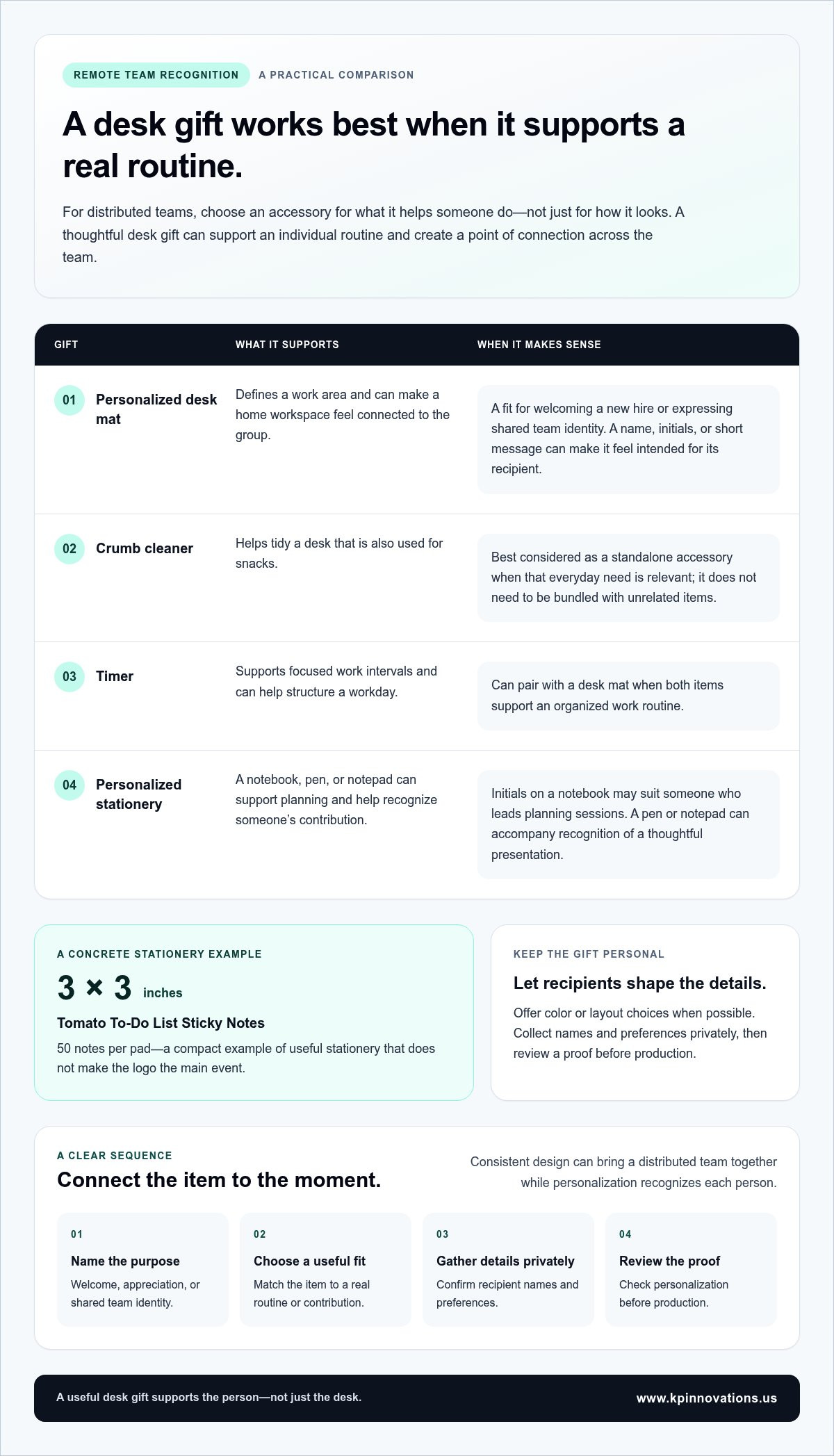
Distributed employees may share a company culture without sharing an office. A thoughtfully designed desk gift can create a point of connection while supporting an individual routine. Decide what the gesture should communicate, such as welcome, appreciation, or shared team identity, then choose an item that serves that purpose. A personalized desk mat, for example, can make a home workspace feel connected to the group.
Keep personalization useful and respectful. A name, initials, or short message can make an item feel intended for its recipient, while a consistent design detail creates a visual thread across the team. Offer color or layout choices when possible. Collect spellings and preferences privately, then review a proof before production. This helps prevent errors and lets employees shape the item.
Think of desk accessories as tools for everyday routines. A mat can define a work area, a crumb cleaner can tidy a desk used for snacks, and a timer can support focused work intervals. Pair items only when they serve the same purpose. A mat and timer, for example, can support an organized workday, while a crumb cleaner may work better on its own.
Personalized or luxury stationery can recognize the way someone contributes, not just decorate a desk. A notebook with initials may suit an employee who leads planning sessions; a pen or notepad can accompany a note recognizing a thoughtful presentation. Tomato To-Do List Sticky Notes measure 3 by 3 inches and contain 50 notes. The format offers one compact example of useful stationery without making the logo the main event.
For distributed teams in the United States, bulk-gifting services can coordinate personalization, recipient details, packaging, and delivery to individual homes. A strong process keeps shared design standards consistent while capturing each recipient’s preferred name or message. This helps a team recognize people individually without creating a disconnected experience at each location.
Before ordering, connect the gift to the occasion and plan how it will reach employees. Confirm the message, personalization details, proof, packaging, and recipient information in a clear sequence. A desk mat for a new hire can carry a welcome message; a personalized notebook can mark a project contribution. Thoughtful sourcing brings these decisions together so each item supports the intended employee experience instead of becoming desk clutter.
3. Apparel for work-from-home employees
Apparel can help a remote team feel connected without requiring everyone to dress alike. Start with the goal: welcoming colleagues, recognizing a contribution, or creating a shared identity for team meetings. Then choose clothing employees might wear beyond a single company event. That makes the gift part of the employee experience, not just a logo placement. A subtle design, for example, can connect the team while keeping the garment comfortable for everyday use.
Fit and choice shape whether the gesture feels inclusive. Provide a size guide and a private selection process, and avoid asking managers to estimate employees’ sizes. If the purpose is team identity, offer a choice between styles rather than assuming every employee wants the same garment. A premium hoodie made from 85% organic cotton and 15% recycled polyester, or a heavyweight T-shirt made with 80% organic cotton, illustrates how material choices can inform selection.
For a video-meeting gift, consider whether the design looks appropriate on screen and whether employees might wear it outside work. Comfortable work-from-home slippers may suit a wellness-focused program, but they’re personal items. Offer a non-apparel alternative, such as a flexible gift, so participation doesn’t depend on footwear preferences or home routines.
Set a work-from-home gift budget around the occasion and intended experience. Establish a per-person limit, then account for garment choice, personalization, packaging, and delivery within it. A welcome gift and a recognition gift may have different priorities. A clear budget framework helps teams compare options without assuming the most expensive garment is the most meaningful.
For a home-office wellness program, an indoor plant or optional exercise accessory can complement apparel without making wellness feel mandatory. A houseplant can potentially boost productivity by 15%. Pairing it with clear care guidance lets the recipient decide where it fits. Home exercise equipment should remain optional, since employees have different interests and available space.
Shipping and delivery costs depend on package size, destination, personalization, and whether items go to one location or individual homes. Include these logistics in the overall gift plan, especially when employees choose different sizes or styles. A consistent process helps the program feel cohesive while accommodating individual choices.
Wellness gifts for remote employees might include a plant, a comfortable garment, or specialized home wellness devices from Pureffect. Keep the message focused on appreciation and choice, not performance expectations. When apparel supports a specific program goal and respects personal preferences, it can reinforce belonging across a distributed team.
4. Tech gifts and charging accessories
A useful tech gift solves a familiar home-office problem. One recipient might appreciate a charging stand; another might need an organized place for pens and notes. Consider the devices and habits employees already have. A curated set should support their routines, not add a gadget that needs storage or setup.
A magnetic wireless charging phone stand featured for remote workers provides 15 W wireless charging. It can keep a phone visible during a workday, but the recipient’s device and charging needs should guide the choice. Include clear product information with the gift so employees can understand its intended use. A stand pairs naturally with a cable organizer or compact notebook.
Mug warmers and coffee accessories can make a home-office break feel more considered. A warmer, coaster, or reusable mug offers a different kind of utility, so think about the recipient’s workspace and coffee habits. A mug may suit someone who moves between rooms, while a stationary accessory works better at a dedicated desk. Keep the gift focused on comfort, not constant availability.
Desk organization can help create a calmer work surface. The Yamazaki Pen + Desk Organizer, for example, gives writing tools a designated place. Before choosing an organizer, consider how it will fit beside a laptop, monitor, or keyboard. An ergonomic workspace depends on the overall setup, so don’t suggest that a decorative item will correct posture or replace a suitable chair.
Stationery remains useful alongside digital tools. Tomato To-Do List Sticky Notes measure 3 by 3 inches and include 50 notes, offering a compact way to capture short reminders. A Blackwing 602 Pencil pack contains 12 pencils, which can complement a notebook or writing pad. These examples work as standalone desk gifts or as part of a set built around planning and note-taking.
A shared palette and personal details can connect a distributed team without making every item identical. Add a recipient’s name or initials where appropriate, keep the branding discreet enough for everyday use, and review spelling and layout before production. A short note explaining why the gift was chosen can make a practical accessory feel like recognition.
Build a gift set around one clear purpose: charging, organizing, or planning. A phone stand and cable accessory support charging; a desk organizer and sticky notes support everyday order. Don’t combine unrelated items just to make a package feel larger. A focused selection makes each piece easier to understand and more likely to earn a place on the recipient’s desk.
5. Gift cards and experience vouchers
A gift card gives remote employees choice, while an experience voucher offers something to look forward to beyond the workday. The right option depends on the occasion and how much flexibility you want recipients to have. For a welcome, a broad-use card leaves room for personal preference. For a team milestone, a virtual cooking class or local experience can create a shared conversation without requiring everyone to live nearby.
Choice matters because employees have different routines, locations, and interests. A voucher for a specific restaurant may not suit someone who lives elsewhere or has different dining preferences. Consider a flexible dining card or an experience with several formats instead. A virtual workshop can connect remote colleagues, while an individual voucher lets each person choose when to participate.
Match the gift to the occasion. A morning coffee card can mark a new hire’s first week; a meal voucher can recognize a demanding project. For a winter appreciation gesture, pair a flexible card with a compact, lightweight item that travels easily. The physical gift provides a tangible reminder, while the voucher gives employees control over the experience.
Make the gift feel curated, not generic. Add a short note naming the contribution or occasion and explain why the gift fits. A learning voucher, for instance, may suit someone who led a knowledge-sharing session, while a wellness experience can mark a team-wide reset. Keep the message focused on appreciation, not on how employees should spend personal time.
For distributed teams, plan delivery as carefully as selection. Decide whether each person will receive a digital code, a mailed card, or a physical package with the voucher. Use a consistent message and keep recipient details organized so the right gift reaches the right person. A clear redemption explanation also helps recipients understand what to do without searching through a long announcement.
Before choosing a gift, ask: Can employees use it from their location? Does the experience require scheduling? Is there a flexible alternative for someone who prefers a different activity? These questions help prevent a thoughtful gesture from becoming another task. A gift card works best when choice is the point; an experience voucher works best when the activity feels relevant.
For a coordinated program, align the gift’s purpose, format, and presentation before selecting items. Plan merchandise sourcing around the employee experience, so any accompanying physical gift supports the same message as the voucher.
KP Innovations: Promotional Products
KP Innovations helps organizations make employee merchandise part of a deliberate brand experience. For remote gifting across welcome moments, team recognition, and milestones, a strategic approach connects the item with the message behind it. Merch Is Media™: what employees receive can shape how they experience the organization.
Promotional Products, Custom Apparel, Awards & Recognition Items, and Print & Display Materials can each serve a different purpose. Start with the employee experience, not a product list. A recognition gift should reflect the contribution being acknowledged; apparel should suit how employees will wear it.
For a remote employee gifting program with a clearer plan, contact KP Innovations to discuss your goals.
Make the next gift part of the employee experience
The best WFH employee gift ideas begin with a purpose, not a product. Decide what the gesture should communicate, who it should reach, and how employees will experience it. That clarity helps teams choose gifts connected to company culture instead of interchangeable items sent on a calendar.
Consider the full journey: how the gift is selected, personalized, delivered, and understood by the recipient. A thoughtful message can give a practical item more meaning, while a consistent process helps the gesture feel intentional across a distributed team. Treat merchandise as part of the brand experience, not an isolated purchase.
If you’re shaping a remote employee gifting program, explore strategic sourcing with KP Innovations to connect your goals with the right merchandise. A clear purpose is a strong place to begin, and it can help your next gift make a more lasting impression.
Frequently Asked Questions
What are the best work-from-home employee gift ideas?
The best choices suit the employee, occasion, and company message. For a project wrap-up, a personal note paired with a flexible gift can recognize a specific contribution. For team connection, choose something employees can enjoy together without requiring the same schedule or location. Consider what kind of recognition feels useful, then select a gift that supports that preference rather than relying on a standard package for everyone.
Use each amount as a spending limit, then choose a gift format to match. Account for packaging and delivery within the total cap rather than treating the item budget separately.
What practical gifts improve a home office setup?
Practical home-office gifts address a specific problem. Cable clips can organize cords, a monitor riser can free desk space, and a screen-cleaning cloth can support routine device care. Consider whether the item fits common desk arrangements and stores easily. A useful gift should fit an employee’s existing setup, not require rearranging the room or buying additional equipment.
What personalized gifts work well for remote employees?
Personalization can be as simple as addressing a note to the recipient and naming a real achievement. For a team gift, use a shared visual detail while letting employees choose from a few formats or colors. This keeps the program cohesive without assuming everyone has the same taste. Review names and message text before production, and limit personal details to what’s needed to create and deliver the gift.
What are good virtual gift cards or subscription gifts for remote workers?
Choose a digital gift that works across recipients’ locations and lets them decide when to use it. Flexible cards for books, entertainment, or food delivery are practical options; learning or audiobook subscriptions may suit employees who enjoy ongoing content. Explain redemption in a short message. For subscriptions, make the renewal terms clear so recipients understand what happens after the gifted period.
How can employers choose inclusive gifts for employees with different preferences and needs?
Offer meaningful choices, such as several gift categories or a digital alternative to a physical item. Avoid gifts that depend on clothing size, dietary habits, home storage, or personal beliefs unless employees can opt in. Use a private preference form with only necessary questions, and provide an accessible way to participate. A consistent recognition message can connect the team while the gift remains adaptable to individual needs.
What are the best bulk-gifting services for distributed teams in the US?
Choose a service that coordinates personalization, recipient details, packaging, and delivery to individual homes while keeping shared design standards consistent.