
Your leftover event merchandise isn’t a storage problem; it’s a failed distribution strategy that’s actively eroding your marketing ROI. According to 2024 industry benchmarks, corporate planners often over-order by 15% to 20% to avoid stockouts, leading to thousands of units in stagnant inventory. It’s frustrating to watch premium apparel collect dust while warehouse invoices climb and sustainability goals slip out of reach. Figuring out what to do with leftover conference swag often feels like a choice between environmental guilt and wasted budget.
At KP Innovations, we believe merch only becomes marketing when it’s in the right hands. We’ll show you how to transform these dormant assets into powerful tools for client retention and community impact using our strategic redistribution framework. This guide outlines five proven paths to clear your physical space and enhance your corporate social responsibility profile. You’ll learn how to treat every remaining SKU as a deliberate marketing touchpoint that builds loyalty long after the keynote ends.
Key Takeaways
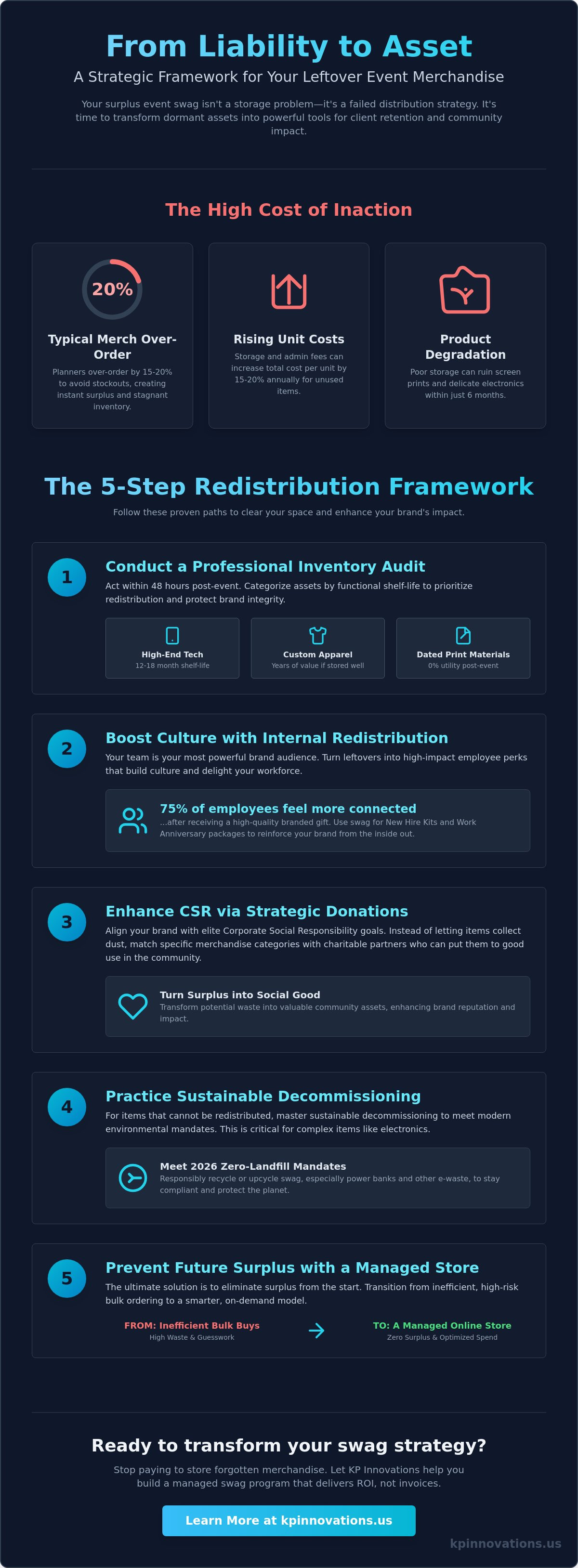
- Learn how to conduct a professional inventory audit to categorize surplus assets by shelf-life and protect your brand integrity.
- Discover strategic internal redistribution methods for what to do with leftover conference swag to build culture and delight your remote workforce.
- Align your brand with elite Corporate Social Responsibility goals by matching specific merchandise categories with the right charitable partners.
- Master sustainable decommissioning strategies to meet 2026 zero-landfill mandates, specifically for complex items like power banks and electronics.
- Transition from inefficient bulk ordering to a managed online company store model that eliminates surplus and optimizes your marketing spend.
The Inventory Audit: Assessing the Value of Your Surplus Swag
The event is over and the crates have returned to your office or warehouse. Deciding what to do with leftover conference swag is not merely a logistical hurdle; it is a strategic branding decision that impacts your bottom line. An immediate audit within 48 hours of your team’s return is critical. When items sit in cardboard boxes, they lose their perceived value and begin to drain your marketing resources. A professional audit ensures that every piece of gear continues to serve as a high-quality brand ambassador rather than a forgotten expense.
Categorize your inventory by its functional shelf-life to prioritize redistribution. High-end tech, such as power banks or Bluetooth speakers, typically has a window of 12 to 18 months before battery degradation or technical obsolescence occurs. Custom apparel built from the thread up remains a premium asset for years if stored correctly. Conversely, dated print materials lose 100% of their utility the moment the event doors close. You must separate these elite assets from the clutter to maintain a “Premium Is Our Baseline” standard.
The “Cost of Inaction” is a tangible drain on your marketing budget. Industry data indicates that warehouse storage fees and administrative overhead can increase your total cost per unit by 15% to 20% annually if inventory remains stagnant. If you are not using it, you are paying to house it. Apply a “Quality Filter” to every SKU. If a product is not “Premium” enough to send to a high-value client or a Fortune 500 executive, it does not belong in your long-term redistribution strategy.
Determining the Marketability of Leftovers
Evaluate if your branding is too event-specific for general use. Items featuring a “2024 Annual Summit” logo have limited reach compared to evergreen, private-label goods. Focus on items that reinforce your long-term campaigns rather than a single point in time. Brand capital is the measurable equity and trust built through the physical touchpoints of promotional products that align with your elite market position.
The Hidden Costs of Swag Storage
Logistics and fulfillment are where budgets suffer if they are not managed with white-glove precision. Managing what to do with leftover conference swag requires understanding these three financial leaks:
- Space vs. Value: Storing $5 water bottles in a facility that costs $25 per square foot is a losing investment.
- Product Degradation: Fluctuating temperatures in non-climate-controlled spaces can ruin screen prints and delicate electronics within 6 months.
- Team Productivity: Cluttered office environments reduce employee focus. Don’t turn your creative marketing suite into a graveyard for Promotional merchandise.
Strategic Internal Redistribution: Turning “Leftovers” into Employee Perks
Your internal team is your most powerful, yet often most overlooked, brand audience. While marketing budgets usually target external prospects, the most valuable brand advocates are already on your payroll. When you’re deciding what to do with leftover conference swag, your first look should be inward. High-quality merchandise isn’t just a giveaway; it’s a tool for building team culture. A 2023 study by the Promotional Products Association International found that 75% of employees feel more connected to their company after receiving a high-quality branded gift. This isn’t about clearing out a closet. It’s about strategic redistribution that reinforces your brand’s elite status from the inside out.
For remote staff, receiving a surprise package in the mail bridges the physical gap between a home office and corporate headquarters. It transforms a digital connection into a tangible experience. For in-office teams, premium items create “surprise and delight” moments that break up the routine. When you treat your employees like your best customers, you build a culture of pride. This internal brand pride translates directly into how your team represents the company to the world.
Employee Appreciation Kits
Don’t let premium items gather dust. Instead, use strategic kitting to bundle surplus items into themed “New Hire” or “Work Anniversary” packages. A high-end hoodie or a heavy-duty tech organizer makes a significant impact when presented as a milestone gift. To ensure these items are actually worn and used, pay close attention to sizing. If you worked with a professional apparel factory, you should have access to a detailed size breakdown. A standard corporate distribution often follows a 10-25-35-20-10 percentage split from Small to 2XL. Using this data ensures your appreciation kits fit perfectly, preventing the “leftover” feel and maintaining a premium experience.
Internal Incentives and Gamification
Turn your surplus into high-value prizes for internal sales contests or wellness challenges. This approach keeps the merchandise feeling exclusive rather than discarded. You can also set up a curated “Swag Corner” in the breakroom, but presentation is key. Avoid dumping items in a cardboard box. Display them as a “Limited Edition Vault” to encourage organic brand advocacy. If the items are framed as rewards for specific achievements, their perceived value remains high. Managing this perception is vital; the goal is to make these items feel like earned perks. If you want to elevate your brand through more sophisticated fulfillment strategies, treating your internal team as a priority market is the best place to start. This strategy ensures that every piece of merchandise contributes to a stronger, more unified company culture.
External Impact: Creative Donation and Community Engagement
Effective redistribution transforms a storage problem into a Corporate Social Responsibility (CSR) win. Brands that align their surplus with specific community needs see a measurable lift in public perception. According to a 2023 report by CECP, 87% of companies now integrate social impact into their core business strategy. When you’re deciding what to do with leftover conference swag, view these items as strategic tools for community engagement rather than just excess inventory. Documenting these donations provides tangible data for your annual sustainability or community report, proving that your brand values environmental stewardship over landfill waste.
Charitable Partnerships That Make Sense
Success in donation depends on matching the item’s utility to the recipient’s specific needs. This isn’t about clearing out a closet; it’s about thoughtful sourcing for the community. Consider these targeted avenues:
- Branded Apparel: Donate premium hoodies or jackets to local shelters or disaster relief agencies. These organizations often face a 30% shortage of weather-appropriate clothing during winter months.
- Stationery and Tech: Distribute notebooks, pens, and chargers to underfunded schools or non-profits. In 2022, the average teacher spent $820 of their own money on supplies. Your surplus directly offsets this burden.
- Hydration and Bags: Partner with youth sports leagues. High-quality backpacks and water bottles provide immediate value to local teams with limited funding.
The “Brand Masking” debate is a key consideration for elite brands. This involves deciding whether to donate items with logos intact or to remove them. While keeping the logo on high-end items can act as a subtle brand impression, some non-profits prefer unbranded goods to preserve the dignity of the recipient. If the item is a premium, private-label piece, the quality of the material often speaks louder than the logo itself. We recommend consulting with your partner organization to see which approach aligns with their mission.
Social Media Giveaways and Brand Reach
Digital distribution turns physical surplus into online momentum. Flash giveaways on LinkedIn or Instagram can increase engagement rates by 40% within a 24-hour window. This strategy keeps your brand top-of-mind long after the conference ends.
Use surplus as “thank you” gifts for your most active 10% of online community members. This rewards loyalty and encourages continued interaction. Managing the “last mile” of this promotional distribution requires a strategic fulfillment partner. Professional logistics ensure that the shipping experience is seamless, maintaining your elite brand standards from the warehouse to the recipient’s doorstep. This managed process removes the stress of individual kitting and allows you to focus on the high-level marketing impact.
Sustainable Decommissioning: Recycling and Upcycling for 2026
By 2026, a zero-landfill policy is no longer an elective CSR goal; it’s a requirement for elite brand protection. Dumping unused items creates a physical paper trail of waste that can damage your reputation. When you’re deciding what to do with leftover conference swag, disposal should be your absolute last resort. Traditional disposal methods carry a 42% higher risk of negative brand sentiment among Gen Z and Millennial stakeholders compared to structured recycling programs. Professional brands don’t just throw things away. They decommission them with intention.
Tech items like power banks and Bluetooth speakers require specialized handling. These products contain lithium-ion batteries and heavy metals that demand certified e-waste processing. Partnering with R2-certified recyclers ensures that 95% of these materials are recovered and kept out of the waste stream. It’s a strategic move that protects the environment and your brand’s integrity simultaneously.
The 5-Step Swag Recycling Process
Managing the end-of-life cycle for your merchandise requires a structured, white-glove approach. This process ensures compliance and brand security:
- Step 1: Separate items by material, grouping textiles, plastics, and electronics into distinct categories.
- Step 2: Remove all batteries and hazardous components from tech products to prevent fire risks during transport.
- Step 3: Securely destroy sensitive or dated brand information, especially on proprietary hardware or restricted access items.
- Step 4: Schedule a pick-up with a certified green-cycle partner specializing in corporate logistics and textile recovery.
- Step 5: Obtain a Certificate of Destruction or Recycling to document your commitment for annual ESG reports and stakeholder reviews.
Creative Upcycling Ideas
Upcycling transforms potential waste into high-quality brand artifacts. Instead of discarding 500 yards of vinyl trade show banners, convert them into durable, limited-edition laptop sleeves or tote bags. This gives your materials a second life while maintaining a premium feel. You can also repurpose dated T-shirts into industrial-grade cleaning rags or high-efficiency insulation material. Working with local artists to create “brand artifacts” from old merchandise turns surplus inventory into exclusive, thoughtful gifts for top-tier clients. This approach shows you’re a strategic partner that values sustainability and innovation.
Preventing the Surplus: The KP Innovations Approach to Managed Swag
Managing a mountain of boxes after an event is a symptom of an outdated procurement model. Most brands fall into the trap of “bulk guessing,” where they order thousands of low-cost items based on a projected attendance count that rarely matches reality. This leads to the common dilemma of what to do with leftover conference swag once the booth is packed away. At KP Innovations, we replace this guesswork with strategic sourcing. We prioritize premium items that offer a higher long-term ROI because quality products are kept, not discarded. A 2023 industry report found that 81% of people keep promotional products for more than a year if they’re functional and high-quality. By investing in elite gear, you ensure your brand stays in front of your audience instead of ending up in a donation bin or a landfill.
On-Demand Fulfillment and Team Stores
We eliminate physical closets through our virtual warehouse model. Our online company stores allow you to maintain global brand consistency without storing a single box at your headquarters. By analyzing data from your previous events, we help you predict order quantities within a 5% margin of error. This precision reduces waste and significantly minimizes your carbon footprint. Localized kitting and shipping can decrease transport-related emissions by up to 30% compared to centralized shipping. You ship only what you need, exactly when you need it. Our white-glove fulfillment handles every aspect of the logistics, so your team focuses on the event instead of the inventory.
Partnering for Strategic Brand Elevation
KP Innovations isn’t your average promotional vendor. We’re a strategic partner that builds brand assets from the thread up. We’ve moved beyond simply putting a logo on a product; we create items that people actually want to use daily. This shift from transactional buying to thoughtful curation is why Fortune 500 companies rely on our end-to-end support. When you stop viewing merch as a giveaway and start seeing it as a marketing tool, the question of what to do with leftover conference swag disappears because there’s rarely a surplus to manage. Our 6-step process ensures that every SKU serves a specific purpose in your marketing funnel. Ready to stop storing and start strategizing? Book a Discovery Call with KP Innovations and let’s elevate your brand together.
Turn Your Surplus Into a Strategic Advantage
Managing surplus inventory isn’t just about clearing shelf space; it’s about maximizing every brand touchpoint. By conducting a detailed inventory audit and implementing a 6-step strategic process, you transform forgotten boxes into valuable assets. Whether you’re repurposing items for internal employee perks or focusing on sustainable upcycling for your 2026 initiatives, every piece of merchandise deserves a purpose. Deciding what to do with leftover conference swag shouldn’t be an afterthought that leads to waste.
Instead of settling for average promotional vendors, partner with a team that treats merch as a core marketing pillar. We provide access to over 1.2M+ premium products and handle everything from initial design to global fulfillment. Our white-glove project management ensures your brand stays elite while eliminating the stress of overstock. It’s time to stop guessing and start growing with a partner that delivers results.
Elevate your brand and eliminate waste with KP Innovations. Your next successful campaign starts with a smarter strategy today.
Frequently Asked Questions
Is it better to donate or recycle leftover conference swag?
Donating is the superior choice for brand elevation because it extends the lifecycle of your investment while supporting social causes. The 2023 Global Ad Impressions Study shows that 46 percent of consumers view a brand more favorably when they receive environmentally or socially responsible items. Recycling remains a secondary option for items that are damaged or no longer functional. It’s a strategic way to ensure your high-quality products continue to provide value.
Can I get a tax deduction for donating branded promotional items?
You can generally claim a tax deduction when you donate branded items to a qualified 501(c)(3) organization. IRS Publication 526 specifies that corporations may deduct the fair market value of donated inventory, which is typically capped at 10 percent of the company’s taxable income. Keep detailed records and receipts from the nonprofit. This ensures your finance team can accurately process these elite contributions during tax season.
How do I remove my company logo from leftover apparel before donating?
Removing a logo depends on the application method, but using a heat gun or a seam ripper is the most effective approach for apparel. A 2022 textile industry report indicates that 85 percent of branded clothing can be successfully repurposed by applying a high-quality cover-up patch over existing embroidery. This strategy maintains the premium feel of the garment. It makes the item suitable for new recipients who may not be affiliated with your brand.
What are the best non-profits for accepting corporate swag donations?
Organizations like SwagCycle and Goodwill are elite choices for handling corporate donations at scale. SwagCycle has diverted over 1,000,000 items from landfills since 2019 by matching corporate donors with vetted charitable partners. These organizations handle the logistics of redistribution for you. They ensure your brand’s former assets reach communities that truly need them without creating an administrative burden for your team.
How can I prevent having too much leftover swag at my next trade show?
Strategizing what to do with leftover conference swag starts with precise, data-driven sourcing before your event begins. PPAI industry benchmarks suggest that 20 percent of trade show attendees decline physical items, so ordering for 80 percent of your expected booth traffic is a smart baseline. This proactive approach prevents overstock. It ensures every piece of merch remains a strategic asset rather than a storage burden in your warehouse.
What should I do with outdated or misprinted promotional items?
Outdated or misprinted items should be sent to specialized upcycling facilities rather than the trash. Companies like TerraCycle provide Zero Waste Boxes designed to process 100 percent of complex materials found in promotional products. This ensures that even your mistakes don’t harm the environment. It maintains your reputation as a thoughtful and responsible brand leader while keeping your storage spaces clear of useless SKUs.
Is it okay to use old conference swag for new employee welcome kits?
Using old conference items for new employee kits is a brilliant way to maximize your ROI, provided the items meet your premium quality standards. A 2023 engagement survey found that 72 percent of new hires feel an immediate connection to company culture when they receive high-quality gear. If the merch is still relevant and elite, it’s a perfect fit for a white glove onboarding experience. Don’t let great products go to waste.
How do I handle the recycling of branded power banks and tech gadgets?
Branded power banks and tech gadgets must be processed through certified e-waste recycling centers to ensure safety and compliance. The EPA reports that lithium-ion batteries are found in 95 percent of portable chargers and require specialized handling to recover rare earth metals. Don’t toss these in standard bins. Instead, partner with a logistics provider that handles electronics responsibly to protect your brand’s integrity and the planet.